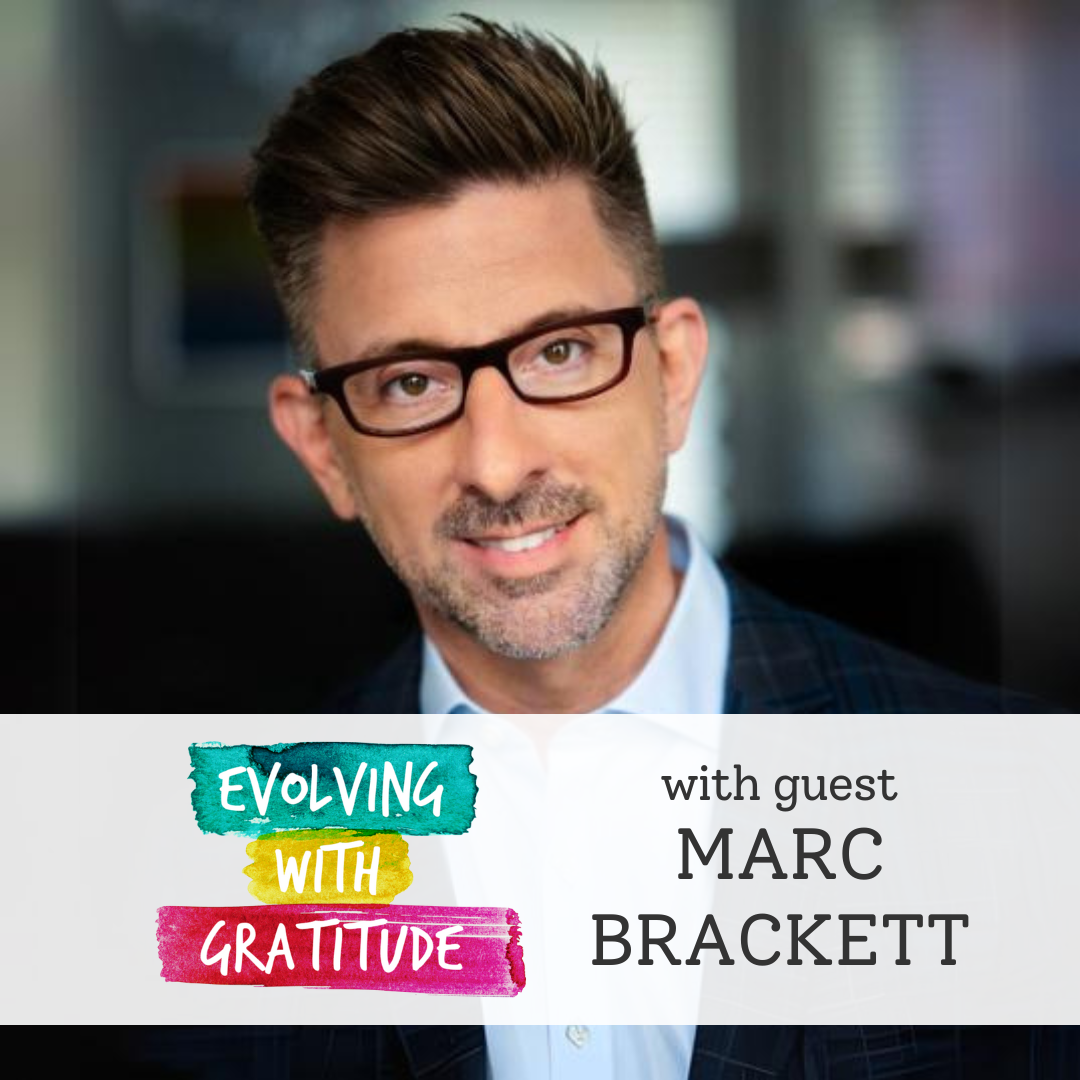
Episode 97 - Dealing with Feelings with Marc Brackett

Shownotes:

Join us for an eye-opening chat with Marc Brackett, where we unravel the secrets behind emotional intelligence and bust some major myths about our feelings. Marc takes us on a journey through the emotional landscape, showing us why there’s no such thing as a "bad" emotion and how understanding our feelings can transform our lives. With a mix of personal stories, science-backed insights, and actionable strategies, this episode is your guide to dealing with feelings. Don’t miss out on this engaging exploration that’s sure to shift your perspective on feelings and emotional intelligence!

Trailer
Full Episode

About Our Guest:

As the founding director of the Yale Center for Emotional Intelligence, Dr. Marc Brackett is professor in the Child Study Center at Yale, and author of the best-selling book, Permission to Feel , which has been translated into 25 languages.

An award-winning researcher for 25 years, Marc has raised over $100 million in grant funding and published 175 scholarly articles on the role of emotional intelligence in learning, decision making, creativity, relationships, physical and mental health, and workplace performance.

Marc is the lead developer of RULER, an evidence-based approach to social and emotional learning (SEL) that has been adopted by over 5,000 schools across the globe, improving the lives of millions of children and adults. RULER infuses the principles and skills of emotional intelligence into school systems, enhancing how administrators lead, educators teach, students learn, and families parent. It has been proven to boost academic performance, decrease school problems like bullying, enrich classroom climates, reduce teacher stress and burnout, and enhance teacher instructional practices.

Thrive Global Article:

From Theory to Practice: Marc Brackett on Dealing with Feelings

Connect with and learn from Marc Brackett:

Website
Book
LinkedIn
Facebook
Instagram
X

About Lainie:

Lainie Rowell is a bestselling author, award-winning educator, and TEDx speaker. She is dedicated to human flourishing, focusing on community building, social-emotional learning, and honoring what makes each of us unique and dynamic through learner-driven design. She earned her degree in psychology and went on to earn both a post-graduate credential and a master's degree in education. An international keynote speaker, Lainie has presented in 41 states as well as in dozens of countries across 4 continents. As a consultant, Lainie’s client list ranges from Fortune 100 companies like Apple and Google to school districts and independent schools. Learn more at ⁠⁠⁠⁠⁠⁠⁠⁠⁠linktr.ee/lainierowell⁠⁠⁠⁠⁠⁠⁠⁠⁠.

Website - ⁠LainieRowell.com⁠

Twitter - ⁠⁠⁠⁠⁠⁠⁠⁠@LainieRowell ⁠⁠⁠⁠⁠⁠⁠⁠

Instagram - ⁠⁠⁠⁠⁠⁠⁠⁠@LainieRowell⁠⁠⁠⁠⁠⁠⁠⁠

Evolving with Gratitude, the book is available ⁠⁠⁠⁠⁠here!⁠⁠⁠⁠⁠⁠⁠ And now, Bold Gratitude: The Journal Designed for You and by You is available too!

Both Evolving with Gratitude & Bold Gratitude have generous bulk pricing for purchasing 10+ copies delivered to the same location.🙌

📚➡️ ⁠bit.ly/ewgbulkdiscount⁠

📚➡️ ⁠bit.ly/bgbulkdiscount⁠

Just fill out the forms linked above and someone will get back to you ASAP! 

Transcript:

Lainie Rowell: Well, hello, Marc. Thank you so much for being with me today.

Marc Brackett: My pleasure to see you again.

Lainie Rowell: So I'm going to say, and I'm not trying to embarrass you, but years and years ago, the first time I met you in person, you were keynoting an event and You absolutely crushed it. It was the first time I'd heard you speak.

You just completely wowed the room, me, and then the organizers happened to sit me at the table. I was a speaker there as well, and you ended up sitting right next to me after your speech, and I didn't even know what to say. I was so like, oh my gosh, this guy is like really smart. I don't know what to say to him, but you are the most nice, genuine, brilliant person.

And I just, I just had to get that out there.

Marc Brackett: I appreciate you saying it. And it's been a lot of fun watching your career as well.

Lainie Rowell: You've been very supportive and I appreciate that. Had to get a little bit of gratitude out there. And I'm so excited to talk about your work.

One of the things that I really appreciate that you share through your books, through the web series, the webcast, all of it, is you say there's no such thing as bad emotions. And I think this is really important because I think a lot of us get it wrong thinking things like anger and stress and anxiety are bad.

But, You like to use the word unpleasant instead of negative emotions, if I've caught that correctly. Can you tell us a little bit more about why you feel like that's an important distinction?

Marc Brackett: Yeah, I think it's mostly because the way it's interpreted. So in psychology, you know, people talk about negative and positive emotions.

Happiness is a positive emotion. Sadness is a negative emotion. You know, people figure that out pretty quickly. But I think then the problem with that language is that it, it makes us think that we don't, like nobody wants to be negative. And so that means that the goal is to get rid of the negative to be positive.

And I wish it were that easy to just like get rid of the negative to be positive. Now that also makes an assumption that being positive all the time is a good thing. And it's not a good thing. Actually I did research on this that was published recently, that when people are overly positive, you know, they make sometimes worse decisions even about their health.

So, going back to the pandemic, people who are happier took more risks and didn't wear masks as much, which is interesting. They didn't engage in social distancing as much as others. And so you know, when you, you know, think about it, like even when you're spending money, right, it's like you're in a good mood.

You're like, yeah, I'm going to buy that outfit or that piece of furniture that might be more expensive than you want to spend. And so again, assumption is that positive emotions are the ones you want to grab and have all the time and negative ones, the ones you want to dump and get rid of. And so when you go to the negative emotions, which I call unpleasant feelings or emotions, Anger, right?

It's a real feeling, you know, and certainly we've seen in our own society very legitimate reasons for different groups of people to feel angry and to say that that's a bad emotion just makes no sense because it's a signal that there was an injustice that needs to be dealt with. And so I hope that kind of makes it clear.

Lainie Rowell: Yeah, I think it does. And if I'm understanding correctly, I feel like we first of all want to have the full human experience. It just wouldn't be...

Marc Brackett: even if you didn't want to have it, you're going to have it.

I mean, like, let's face it, the pandemic hit, you know, we're spraying our groceries with Windex. It's not the most pleasant feeling.

Lainie Rowell: Yeah.

Marc Brackett: And so life is, you know, couple of years ago, I lost one of my close friends to cancer, you know, not a pleasant feeling, but a feeling that I had to deal with, you know, of loss and sadness.

And so to deny people, you know, those feelings, it's to deny people what it means to be human.

Lainie Rowell: And I do think that's one of the things that's really challenging, is finding that point of, okay, how can we help people live their best life, to flourish, if you will, without overly imposing, like, this is what you need to feel, because maybe it makes me feel uncomfortable if you don't look happy or it's like, I want to take care of the people around me, but to me it feels like a difficult needle to thread.

Marc Brackett: Well, it's also, there's assumptions in there, which are that, when we're angry, we're irrational, that when we're sad, we can't be good friends or we can't be present.

It's like, these are kind of stereotypes that we've created around emotions. And I think we have to move beyond the idea that, for example, like, in the parenting world, you know, it's like, it's gotten to a place where sometimes people feel like, well, my kid is sad, so he can't be in school and learn.

It's like, well, you can be sad and still be in class and still learn. You know, sadness is part of reality. We're just going to give you strategies to manage that sadness, because that's what people are missing, are the strategies to help them deal with their emotions. And dealing with your emotions also doesn't mean getting rid of them, you know?

So for example, there's good research to show that just the sound of, of someone you love is a healthy strategy. And think about that for a minute. So just having someone with a soothing, loving voice can help make you feel less activated or unpleasant. And you know, my point of saying this is that, a child, for example, who's in school, who has a parent who may be ill or who is going to be away at work for a few months, you know, and they're feeling lonely or sad. You know, the assumption is that that has to be solved in order for them to be good learners. They have no control over the fact that the parent has to go travel for work or that their parent might be ill.

And so what we have to do is help kids understand their feelings better and have good strategies so that they can have their feelings and also function helpfully too.

Lainie Rowell: That's helpful.

Marc Brackett: I mean, it's a lot.

Lainie Rowell: It's a lot.

Marc Brackett: That's why this is so interesting. It's a lot, but it's just, this is life.

And you know, life is not simple.

Lainie Rowell: Yeah.

Marc Brackett: It's like achieving your dreams in life. You know, it doesn't just happen. You got to work for it.

Lainie Rowell: It's a lot of work. And there's nuance. And I appreciate that. And, with that idea of the nuance and kind of how messy and complicated us as humans are, you have worked in collaboration with others on the How We Feel app.

This is actually an app I use regularly. My son asks to use it. It's really been helpful. And I wonder if you want to share a little bit about this tool that is available to everyone for free.

Marc Brackett: Yeah. Thank you. So something very kind of pleasant happened to me during the pandemic, which was that the co founder and former CEO of the company Pinterest had read my book, Permission to Feel.

And he said, you know, I'm really interested in these concepts. Maybe we could work together to figure out what we can do in terms of building tools to support people and having greater well being. And so we decided to take some of the tools that were in my book and some of the principles and other principles and strategies, too.

And we worked together, a team that that he created and a team that I created. So the scientists and the engineers and the designers, we all came together. And just spent a lot of time thinking about how do you display this in a beautiful way? You know, what are the strategies and tools that people need?

And so that's the How We Feel app, and it has a tool that we call the mood meter that's been around for a while that then asks you to describe your feelings and you can tag your feelings. It has amazing beautiful technology to support you doing breathing exercises or cognitively reframing. We've added new tools like seeing your best self.

And then it has tracking abilities so that you can look for patterns over the course of a week or a month. And you can analyze your data like, is it when I'm with my partner that I'm in the red, you know, or is it when I'm at work that I'm in the green? And then kind of just, you know get some meaning out of that.

Lainie Rowell: I love that you can look for the patterns. I definitely feel like it helps with developing emotional granularity, being able to really with accuracy say this is what I'm feeling right now. Because a lot of times I know I'm preaching to the choir here, but we get into just saying, I feel happy.

I feel sad. It's like, well, what are you really feeling? Right.

Marc Brackett: Yeah, and this is my work in schools primarily, which is giving children specific words to describe their feelings and feelings are made up of other feelings, right? There's some complex emotions. You know, I was doing a lesson actually in California just last week with a bunch of fourth graders on the feeling word of regretful, which by the way, I was going into this lesson thinking to myself.

Like, I have to really sit with this. Like, do I even know the definition myself? You know, like,

Lainie Rowell: Am I going to regret going into regretful? Yeah.

Marc Brackett: Exactly. But the kids were incredible. And I asked them to come up with other feelings that are associated with regretful. Like some kids said, well, sometimes you might feel shame because, you know, when you're regretful, sometimes you might feel guilt.

Sometimes you might feel trapped. Like these were fourth graders having this conversation with me, which, you know, I give the school a lot of credit because they've been working with RULER, which is our program now for 10 years. And so these kids grew up with a lot of emotion talk. But like they understood that concept extraordinarily well.

And they understood the difference between feeling regretful and just feeling sorry or feeling regretful and feeling guilt. And that's what this work is about.

Lainie Rowell: And I love how when you identify where you are. it asks you, do you want to shift? Do you want to move somewhere else?

Marc Brackett: Do you want to not? You must.

Lainie Rowell: Exactly, which is, is very important. And then, like you said, it's, we want to be able to, to identify the emotions and then have strategies if we do want to move. So I think that's really helpful. And I also love the idea of the patterns, which when I share this app with people, I do encourage them to use it to look for the patterns to see, is there something going on that maybe is, is there that we didn't see before.

And so, this is all connected to your book, your best selling book, Permission to Feel, and can you tell us a little bit about that? I know it's a wide question, but you talk about being an emotional scientist, not judgmental, why is that important?

Marc Brackett: Well, you know, I think, the term permission to feel sometimes, you know, throws people off, right? They're like, who are you to give me permission to feel? I've always had the permission. And I question people when they say that too, you know, some people have, you know, so for example, I recently interviewed a professor friend of mine, Ethan Kross, who studies cognitive strategies.

And he's like, you know, I really did grow up with a family that gave me permission to feel. And he's one of the rare people that have. It doesn't mean he still didn't struggle with his feelings, but he always felt like he could be his true, full feeling self and talk about his feelings. I didn't have that.

You know, he was like, I want to interview you, because when he was sharing his experience with me, I'm like, that sounds like a really different childhood. And I had good parents. They loved me a lot. But they didn't really know a lot about feelings, neither their own feelings, and they certainly didn't have to support me with mine.

And I don't blame, you know, now that I'm a 54 year old psychologist, I think back, like they really did the best they could because they had no education in emotional intelligence. They didn't know what to do. And so the Permission to Feel is a longer story, but it's just, it's about my own journey.

In terms of feeling trapped with my emotions as a kid because of abuse and bullying, and then having an uncle who was a teacher who came into my life at just the right time and asked me that question, which was, how are you feeling? And he didn't want to leave me with those feelings. He wanted to make sure I was able to do something with them that was going to be helpful.

And you know, you fast forward, that was 11 or 12 years old kind of completely put me on a different trajectory. And then I went to college decided that emotional intelligence was the thing I wanted to know more about. And then I took my uncle out of retirement and we started writing a curriculum together that then became my whole career.

And so I argue just in a very little piece of the book, it's the opening chapter, the whole book is much more skill based, but that we need feelings mentors. We need people who are deliberately in support of our healthy emotional development and who are making efforts to help us be more aware and helping us to learn strategies to deal with our feelings.

And I, by the way, have now, since my book has come out, launched a whole research project on this where tens of thousands of people have completed my research and people who report having had someone who gave them the permission to feel versus not having had someone, have different lives.

They're much more satisfied in their life, they have more purpose and meaning in their life they have better mental health, better physical health, they sleep better at night, and so there's something to this feelings mentor.

Lainie Rowell: I feel like we live in a time where no matter how amazing the work is, no matter how important the work is, you're gonna get people that push back.

And I'm just curious, what are maybe some of the misconceptions or pushback, if you will, about really encouraging the development of the emotional intelligence, becoming an emotional scientist, what have you experienced there?

Marc Brackett: Yeah, I think there's a lot of misconceptions, firstly, the one misconception is that the field of social and emotional learning, Emotional intelligence is just trying to get people to talk about their feelings all the time.

And I'm the first person to say, like, I don't want to talk about my feelings all the time, and nobody wants to listen to me talking about my feelings all the time. That would not be productive, right? I have a friend who is an oceanographer. I can tolerate maybe 15 minutes of a conversation about oceanography, and I'm like, you gotta go talk to somebody else about it.

And so, we're going to have feelings throughout the day. We want to be aware of our feelings, want to know if our feelings are helping us or hurting us achieve our goals. And then we want to have strategies to deal with our feelings. And so even research would show that it's not productive to just endlessly talk about feelings.

And, you know, we get pushed back on this in the field because some people are like, I just want to vent. And it's like, I know that's what you feel like doing, but actually it's not that productive.

Lainie Rowell: Right.

Marc Brackett: What's more productive is having someone like me or a friend. Listen to you and then say, you know, like, I hear you.

But let's think about what might be helpful for you right now. You don't want to perseverate. That's not helpful. You don't want to ruminate.

A friend of mine posted something online about something that was unpleasant that happened and then everybody commented on that person comments on top of that.

And I was like, Oh, you know, it's just like, that's not helpful in general. We think it is because we want to just get it out. We want to tell everybody what happened, but it tends to not be great for us to do that. What tends to be helpful is getting perspective and kind of managing it effectively, which doesn't mean denying the feeling.

Lainie Rowell: Right. That's where there's nuance.

Marc Brackett: Yeah. Yeah. It's a nuance, but it's a really important piece for people to know. Firstly, I mean, that's just the core that people have feelings. Those feelings need to be expressed. Otherwise, they're controlled or repressed or denied or ignored, they show up in other places like ulcers, like aggression like not living the life you want to live because you feel emotionally stuck, not helpful either.

I think really importantly for your audience, is that it's very, very clear now through multiple which are studies of studies. So recently, my colleague, Chris Cipriano published a paper with a bunch of other friends and colleagues showing very clear effects on the impact of teaching social and emotional learning.

It's like incontrovertible evidence, that you teach these skills and not only do you get better physical and mental health and better relationships, but you do better academically in literature and math and other subject areas. So when people start saying, well, this is taking away from academics, or it's not good for kids.

I always just say, how much have you looked at the research? And by the way, I'm biased because I am, I'm both a program developer, I'm a writer, a researcher, speaker on this stuff. So maybe you don't want to listen to me, even though everything I say is based in science, I don't make stuff up. But if you don't want to believe me, look at the larger studies of studies, and you'll see that it's very clear that these skills are helpful in achieving some of the most important things in life.

Lainie Rowell: You and I both spend a lot of time in education and knowing how, yes, it is going to help us physically, emotionally, also the activating the learning and, That's all really, really important and I wonder what you've seen, because your book is for everyone, it's not specific to education, although you give examples of education, what have you seen in the workplace regarding Permission to Feel?

I'm just kind of curious.

Marc Brackett: Yeah, interestingly enough, so I've done some research, and I also have a company that does training and consulting for big companies, specifically emotional intelligence in the workforce. A.. People are hungry for it. And B, believe it or not, more people feel like they have someone to talk about their feelings with at work than they do at home, which is interesting.

And I've questioned people about this and I think the rationale behind it is that, like, you're a mom or dad or whatever, you have kids and you are, like, you're kind of, you're stuck in a relationship. Right? Meaning that, like, the feelings never go, they're always there, you know, in the morning to the evening to the night, whereas, like, if I have a friend at work who's going through some difficulty and they want to chat about it, we go out for lunch, we talk about it, but then they go home, I go home, and we kind of move away from it.

And I think there's something to that in terms of why it's easier at work than it is at home. But I have found that workplaces are hungry for this. As a matter of fact, I just got off the call. I just literally, as I was taking a walk about an hour and a half ago, I had a phone call.

I can't mention who it was with, but it was with a university department that is falling apart because of the lack of emotional intelligence in the leadership and among the adults. And so they're like, can you come in? This is the best of like, can you come in for a 30 minute workshop to teach everyone how to regulate?

And like, we have to talk about this way. This is a little bit more complex than the 30 minute workshop. But so here that's another one of the challenges, something I'm writing about at present, which is that I think we've identified that people need strategies and skills, but we are a quick fix society, and some people, of course, need to take medication to support their mental health, and I'm a firm believer that that's important for a lot of people.

The question is, for how long do you need to take that? That's one big question. The second is, is it helpful? The third is either way you still have to relate to people in the real world and you need real cognitive and relational strategies to support you in dealing with your feelings because, you know, every time someone triggers you at work, you can't just pop a pill, right?

You've gotta like have a workmate, you've got a boss, you're gonna be in team meetings. Yeah. And we need to help people learn strategies on how to, A, be more emotionally intelligent in the way they interact. And I just published another study in schools, actually, I dunno if you saw this paper just recent.

Schools where there are leaders with higher emotional intelligence, there are teachers who are happier and healthier, more productive. And we even showed that during the pandemic it mattered, that it was actually more important. So if you were an educator who was, impacted, strongly by the pandemic, whether it would be that you got COVID or someone died in your family, something, you know, heavy.

If you worked in a school where the leader demonstrated higher emotional intelligence, you were less burn out, you were more satisfied with your job and you were less likely to wanna leave your job.

Lainie Rowell: Is part of that modeling, is it emotional contagion? Is it both? How is that transferring?

Marc Brackett: Yeah, that's a good question. So there's two ways to think about it. More than two, but I'm just gonna give you two right now. One is the interpersonal piece of it, right? That like, do you ever like, have you been around people who really can't regulate?

Lainie Rowell: Never. Yes, I have.

Marc Brackett: Even for themselves, right? They're, they're just for self regulators.

Like you watch them, you know, just not do a great job at dealing with their emotions. Either they, you know, whatever they do. And then sort of like that, that kind of like, you might lose some trust in that person as your leader, right? Like, my goodness, my boss is falling apart. They can't handle the stress, so how are they going to be helpful for me?

So that's one piece of it. And then the other piece of it is that the interpersonal aspects of emotional intelligence are really important. Meaning that you have to know how to talk to people. You have to know how to say, like, if I come to you as my boss Lainie, and I say, you know, Lainie, I'm just like overwhelmed, you know, and if you say to me, like, Marc, get over it.

Not helpful. If you say, let's talk about it for the next three hours,

you know, you're not going to get anything done. I'm not getting anything done. But if you have ways of kind of supporting me and saying, I hear you, why don't you try this? Or, let's try this.

Or even if it's in a team meeting, like for school, if a principal is hiring an emotional child, there's a pandemic, right? The principal can walk into that meeting and say, I'm just letting you know, like, I'm, I'm freaked out. The world's coming to an end. And like, I don't know what's happening with anything.

And everybody's like, oh shit, you know, like versus someone who comes in and says, you know. These are really weird times and none of us can make the predictions about what's going to happen. There's a lot of unknowns. A couple of things I want to share. One is we're in this together. I got you. I'm going to be here for you.

We're going to find ways for us to get together, have conversations around it, to help each other, to co regulate, maybe not using those terms, but to be supportive of each other. Totally, same exact feeling of anxiety. One is expressed that activates everybody and makes everybody freak out. The other does it in a way that is helpful and supportive and makes people feel held.

Lainie Rowell: Yes, and that reminds me of, I don't know who came up with this saying and let me know if you don't agree with it, but that concept of be a thermostat, not a thermometer, because that thermometer is just saying, it's hot in here. But that thermostat is regulating the temperature and trying to make a difference.

And so when you gave that example of someone like a principal coming in, that's anxiety I'm feeling because now I'm like, Oh, I don't, I don't know what's coming.

Marc Brackett: Yeah,

Lainie Rowell: it's contagious. I might have walked into that meeting totally fine, or, at least, better than when I walk out of it, right?

It is really contagious, so. Ooh. Now, moving into the webcast. Am I saying that right? You call it a webcast?

Marc Brackett: I do. It's not the most probably popular term, but it's all I could think of,

Lainie Rowell: No, it's fine because you know, podcast is like saturated. So I like that it's something different to say.

So in Dealing with Feelings, you have a focus on emotion regulation tips. And you're bringing in these thought leaders and you're interviewing them and you're really asking for them to share what are the evidence based strategies that you use. So tell us a little bit more about the webcast which just started. Ethan Kross came out today and I haven't had a chance to listen to it but I'm very excited to because I really love his work, but I listened to Jewel and I listened to Angela Duckworth, so tell us more.

Marc Brackett: Yeah, so I decided to do this project because for two reasons.

One is that I use social media and I was getting really annoyed with what I was seeing celebrities or influencers just saying stuff like, you know, throw your anxiety out the door and I'm like, really? Like that's your advice? You know, it just, it was really irritating for me.

And I noticed that a lot of the YouTubers. that were doing the work, or Instagrammers, TikTokers. It was all like big personalities, kind of know it alls. And it just, it really was offensive to me, you know, as a neurotic introvert, who's also a scientist, and I'm like, not working for me and not really sure it's working for anybody because it's not actual thoughtful content.

And so I said, I know that people don't love long form content. But I wanted to show people what the research shows is helpful, and I also want to do it with interesting people. And so Jewel I've known for many years, and she had a very serious mental health crisis growing up, and she's dedicated a significant aspect of her life to healing and also helping.

And so what I wanted to do was interview her to see and learn what she had learned and then pull what I heard from her and then for other people show that that actually is a research based strategy. And so like the way she was using self talk or the way she was reframing or the way she was doing breathing exercises well, you know, she's not a licensed psychologist.

She's learned from many people. And so like Let's pull and show people that what she's doing is actually research based and helpful, and how do you do it? It's the how that people want to learn. And with Angela Duckworth, interestingly enough as the person who studied grit and wrote a book on it she basically said, that she kind of lost her grit when she was working on her next book, and like, confidence was really low, and I was like, what's your strategy?

And her number one strategy was social support and perspective taking, not. Just staying up three to four o'clock in the morning and trying to write when she was kind of losing it. She kind of took a step back and just sort of like talking with people about what was going on and hearing what they had to say.

And I appreciated that. And there's a lot of research that shows, that getting some distance from whatever is bothering you can help you deal with it better later on. Ethan is going to be talking about distancing. I have James Gross coming on in a couple of weeks.

And then I have also some really interesting people, one, her name is Dr. Alfie Berlin Nolan, who studies Black mental health, and Dr. Jenny Wang, who studies Asian mental health. So really getting a cross cultural perspective on this and how different identities may require different approaches to dealing with emotions.

Lainie Rowell: I'm hooked already. I'm going to listen to every episode. Thank you, very much. Thank you. I, I really do think it's very empowering and it was really helpful to me to hear that even someone like Angela Duckworth can have struggles because, you know, she's a best selling author, she's brilliant, U Penn, all this stuff, and so when you get to hear that it's not sunshine and rainbow and chasing bunnies through the field for everyone and that there are times that we all go through.

That was really, really helpful for me. And I love, I won't say it correctly, but I love when she talks about, the thing about perspective taking is you don't always know when you need help getting a perspective. And so I'm,

Marc Brackett: yeah, when you're in it, when you're deep in it, you don't know that you need it.

It's just like when you're yelling and screaming at someone, you don't realize in that moment that your emotions are driving your behavior, right? Otherwise you'd be like, well, why am I doing this?

Lainie Rowell: Exactly. Marc, what is something that you just cannot say enough? I mean, you would stand on rooftops and yell it. You just can't tell people enough. You really want them to understand this message.

Marc Brackett: I think, you know, again, this varies by day, by week, by month for me, because I have so many things that I think are important. Right now, what I'm thinking about is that it's not on the individual to develop emotional intelligence.

It's on the community and that to do this work, it has to be done, across communities. So that means homes, schools, workplaces. We think of a skill development as like, I'm going to go learn how to do the skill. This is different. You need to be developing these skills on your own when no one else is developing them is not as helpful.

Lainie Rowell: It needs to be contextual, right? You need to be in those experiences to develop and practice. Is that fair to say?

Marc Brackett: That's the second piece of it. Actually, it's a little slightly different, which is also really important. What I'm saying is that, a kid who's being bullied in school can't go to emotional intelligence training only by themselves to figure out how to deal with the crappy environment, right?

That we've got to create emotionally intelligent environments, which means that the other kids in the classroom have to be learning this stuff, the teachers have to be learning this stuff, the bus drivers have to learn it, you know, the community members need to learn it because we want to create emotionally intelligent communities, not just emotionally intelligent individuals.

Lainie Rowell: So Marc, I get the sense with the Dealing with Feelings that maybe there's more to come and you know this already, 'cause I've told you this, I've read your book twice.

Permission to Feel, I've read twice, so I'm very much anticipating I've heard you say there's another book coming. Any, any little hints you wanna give us about that?

Marc Brackett: Yeah, so Permission to Feel was my first kind of book for the real world. I've done a lot of academic stuff, but I wanted to put out something that would help people understand why emotions matter and why we need to give each other permission to feel and learn the basics of emotional intelligence. And that's been around for a couple of years now. It's still doing well. I'm grateful for that. But what I learned throughout the pandemic was that people want more around the regulation and I wanted more around the regulation.

And, you know, for me one of the things I always say is that I don't really think I know something until I can write about it. And so until I can explain it well, that other people can understand what's going on in my head and what I know and what I read about it doesn't feel real to me. And so that's when I decided to write a second book called Dealing with Feelings.

Which will be out in about a year from now, meaning like March or April of 2025. And one way to do that was to start my webcast so I could interview really smart people and learn from them because I don't know everything for sure and I wanted to kind of meet smart people and, and ask them questions that would help me think more critically about my own work.

Lainie Rowell: It's so great. I will be eagle eye for the pre order link when that comes. I know we've got some time, but I'm eagerly anticipating it. And I know that people are going to want to connect more with you and your work. So Permission to Feel the book, I will put the link in the show notes. I will also put a link to the webcast for Dealing with Feelings.

And how else would you suggest people connect with you?

Marc Brackett: I think, you know, my website, which is, I've just redone, which is just Marc with a C, Brackett, B R A C K E T T dot com. It has links to everything from our school based programming, which is RULER, to the How We Feel app, to my work in organization, which is called Oji LifeLab, to the webcast.

If you want to read recent articles that I've written it's all there, so just MarcBrackett.com, and then you can follow me on socials from there as well.

Lainie Rowell: Marc, I know I mentioned this at the front side, that you have been not only an inspiration from afar and watching all the great work you're doing, but you have been very generous to me, dare I say, as a friend.

And so I am very grateful to you and the work that you're doing for me and for others. So thank you for this time.

Marc Brackett: You're welcome. I appreciate the work you're doing.

Lainie Rowell: Thank you.
Episode 96 - Does Flourishing Mean We Need to Be Constantly in Bloom?

Shownotes:

In case you haven't heard, I'm thrilled to bring you something new: I'm aligning podcast episodes with ⁠⁠⁠⁠Thrive Global articles⁠⁠⁠⁠ so you can choose your adventure with each story - read the article, listen to the episode, or explore both.

This episode is "Does Flourishing Mean We Need to Be Constantly in Bloom?" and you can find the article on Thrive Global!

I hope you enjoy whatever adventure you choose!

Full Episode

About Lainie:

Lainie Rowell is a bestselling author, award-winning educator, and TEDx speaker. She is dedicated to human flourishing, focusing on community building, social-emotional learning, and honoring what makes each of us unique and dynamic through learner-driven design. She earned her degree in psychology and went on to earn both a post-graduate credential and a master's degree in education. An international keynote speaker, Lainie has presented in 41 states as well as in dozens of countries across 4 continents. As a consultant, Lainie’s client list ranges from Fortune 100 companies like Apple and Google to school districts and independent schools. Learn more at ⁠⁠⁠⁠⁠⁠⁠⁠⁠linktr.ee/lainierowell⁠⁠⁠⁠⁠⁠⁠⁠⁠.

Website - ⁠LainieRowell.com⁠

Twitter - ⁠⁠⁠⁠⁠⁠⁠⁠@LainieRowell ⁠⁠⁠⁠⁠⁠⁠⁠

Instagram - ⁠⁠⁠⁠⁠⁠⁠⁠@LainieRowell⁠⁠⁠⁠⁠⁠⁠⁠

Evolving with Gratitude, the book is available ⁠⁠⁠⁠⁠here!⁠⁠⁠⁠⁠⁠⁠ And now, Bold Gratitude: The Journal Designed for You and by You is available too!

Both Evolving with Gratitude & Bold Gratitude have generous bulk pricing for purchasing 10+ copies delivered to the same location.🙌

📚➡️ ⁠bit.ly/ewgbulkdiscount⁠

📚➡️ ⁠bit.ly/bgbulkdiscount⁠

Just fill out the forms linked above and someone will get back to you ASAP! 

Episode 95 - A Limitless Mind with Jim Kwik

Shownotes:

Have you ever wondered what it takes to transform your brain from being your biggest obstacle to your most powerful ally? Let's dive into the world of Jim Kwik, a renowned brain coach whose life-changing journey from a childhood brain injury to becoming a global leader in accelerated learning and brain performance offers invaluable lessons. In our chat, we discuss the power of meta-learning, and navigating the digital deluge. Our conversation also ventured into the areas of brain nutrition, nootropics, and the fascinating concept of identifying your "brain animal type." This is one episode you don't want to miss!

Trailer
Full Episode

About Our Guest:

Jim Kwik, the founder of Kwik Brain, is a world expert in speed-reading, memory improvement, brain performance, and accelerated learning. After a childhood brain injury left him learning-challenged, Jim created strategies to dramatically enhance his mental performance. He has since dedicated his life to helping others unleash their true genius and brainpower to learn anything faster and live a life of greater power, productivity, and purpose. 

Thrive Global Article:

Your Brain is Your Superpower: Jim Kwik's Guide to a Limitless Mind

Connect with and learn from Jim Kwik:

Website: JimKwik.com
Instagram: @KwikLearning
LinkedIn: Linkedin.com/in/JimKwik
Facebook: facebook.com/KwikLearning
Twitter/X: @JimKwik
YouTube: youtube.com/c/JimKwik
Book: Limitless EXPANDED: Upgrade Your Brain, Learn Anything Faster, and Unlock Your Exceptional Life

About Lainie:

Lainie Rowell is a bestselling author, award-winning educator, and TEDx speaker. She is dedicated to human flourishing, focusing on community building, social-emotional learning, and honoring what makes each of us unique and dynamic through learner-driven design. She earned her degree in psychology and went on to earn both a post-graduate credential and a master's degree in education. An international keynote speaker, Lainie has presented in 41 states as well as in dozens of countries across 4 continents. As a consultant, Lainie’s client list ranges from Fortune 100 companies like Apple and Google to school districts and independent schools. Learn more at ⁠⁠⁠⁠⁠⁠⁠⁠⁠linktr.ee/lainierowell⁠⁠⁠⁠⁠⁠⁠⁠⁠.

Website - ⁠LainieRowell.com⁠

Twitter - ⁠⁠⁠⁠⁠⁠⁠⁠@LainieRowell ⁠⁠⁠⁠⁠⁠⁠⁠

Instagram - ⁠⁠⁠⁠⁠⁠⁠⁠@LainieRowell⁠⁠⁠⁠⁠⁠⁠⁠

Evolving with Gratitude, the book is available ⁠⁠⁠⁠⁠here!⁠⁠⁠⁠⁠⁠⁠ And now, Bold Gratitude: The Journal Designed for You and by You is available too!

Both Evolving with Gratitude & Bold Gratitude have generous bulk pricing for purchasing 10+ copies delivered to the same location.🙌

📚➡️ ⁠bit.ly/ewgbulkdiscount⁠

📚➡️ ⁠bit.ly/bgbulkdiscount⁠

Just fill out the forms linked above and someone will get back to you ASAP! 

Transcript:

Lainie Rowell: [00:00:00] Well, hello, Jim. Thank you so much for being here.

Jim Kwik: Lainie, so good to be here.

Looking forward to this conversation.

Lainie Rowell: Oh, me too. By the way, is it okay if I call you

Jim Kwik: Jim? Yeah, yeah, of course.

Lainie Rowell: You know, I always like to hear people's backstory. There's no one that's more important to ask this question to than you, and I want to frame it in a way that is very specific to you. I'd love for you to share a little bit about your origin story.

Superheroes have, right? Superheroes have stories, and I think you're a superhero, so.

Jim Kwik: Oh, you do your research for sure. Yeah, I mean, my inspiration was my desperation. You know,, by trade, my mission really as a brain coach is to help people have their best brain possible.

I didn't have one for a good part of my life. When I was five years old, I had an unfortunate accident, or fortunate, depending on how you look at it. In kindergarten class, I took a very bad fall headfirst into a radiator, and I had this traumatic brain injury. And from it, I had these what people labeled as learning disabilities, processing issues.

At the age of five, six, seven, I would get these migraines every single day, really poor balance, poor focus. Teachers would repeat themselves over and over again, and I would just pretend to understand, but I didn't really, nothing really registered. It took me three years longer to learn how to read, and when I was nine years old, I remember slowing down in class, and I was being teased by the other kids, because I just didn't understand the lessons like everybody else.

And a teacher came to my defense. She pointed to me for the whole class and said, leave that kid alone. That's, That's the boy with the broken brain. And so that really became my, my moniker, that label became my limit. And it's something I heard on a, on a regular basis. Not only being teased using that, you know, broken brain, but I said it to myself all the time.

So every single time I did badly in school or wasn't picked for sports or you name it, I would always say, Oh, cause I have the broken brain. And eventually when I was 18, I met a mentor that turned me on to some more resources and resourcefulness. And I really got curious about how the brain works so I could work my brain.

Like, how does my memory work so I could work my memory? How do I learn how to learn as opposed to just learning what to learn? Like math and history and science all the classes they teach in school And so really what I'm known for the past 32 years is teaching people two things, Brain optimization in terms of really taking care of the hardware that three pound matter between our ears, which is our number one wealth building asset that we have and Also the software which is how to focus how to concentrate how to how to memorize things how to read faster and understand more how to think more clearly how to solve problems.

I want this world to be just better and brighter one brain at a time.

Lainie Rowell: I've read your book, Limitless Expanded Edition just released in November, which I really encourage people to read my five star Amazon review already out there.

It just is such a compelling story, and even if someone hasn't had something to the extreme of the brain trauma that you experienced, I think there's a good portion of us that can relate on some level to school not working for them. And, there's such importance in your work, and particularly, this, learning how to learn.

And you overcame such tremendous struggles. And I even just talked to you about the migraines, like migraines are so debilitating. It's such a lot to overcome. And then you made it your mission to help everyone. Can we talk a little bit more about meta learning and how important it is to learn how to learn?

Jim Kwik: Yeah, so meta learning is the art and science of learning how to learn. So Limitless really is a book on brain optimization, mindset, and learning how to learn with chapters on memory and focus and studying. And I just always thought it was interesting. And again, in school where they teach you what to learn, but not how to learn, you know, you go to somebody and say, like a teammate or your children, or whatever, say focus, or remember, or study. It's like, kind of like going to somebody saying, play the ukulele, who's never really been taught how to do that. And I think if there's one skill to master today, it's our ability to learn rapidly, and translate that learning into action is an incredible competitive advantage.

In a world where there's so much information, I believe the faster you can learn, the faster you can earn. Because knowledge, today, is not only power, knowledge is profit. And I don't just mean financial, that's kind of obvious. When you can easily remember client information, product information, and give sales scripts or speeches without notes.

When you can read substantially faster and absorb more information, clearly you have a big advantage in your career, in school, in life. But I also mean just like all the treasures and, you know, for your relationship, everything gets better when your brain is better and everything gets better in your career and your personal health and your productivity and your overall performance.

So yeah, and it's one of those things in school where I feel like they take it for granted, where you just assume, you know, how to be able to memorize something. It's really hard nowadays, especially with technology to maintain your focus with our devices, right? With every ring and ping and ding and app notification, social media alert, we're like, driven to distraction.

We're also driven to overwhelm. Nowadays, to keep up with, you know, your industry or your schooling, your subjects that you're studying, it feels like you're taking a sip of water out of a fire hose. And it's just gonna get worse, that distraction, that deluge, you know, that Another thing about forgetfulness, they call it digital dementia, where we're outsourcing our memories to our devices, and it's storing everything you need to remember.

It's keeping your to dos, it's keeping your schedules, it's memorizing, it's holding all your phone numbers, all that stuff. And again, I don't want to memorize hundreds of phone numbers, but it should be very concerning when we've lost the ability to remember one, or remember our PIN number, our passcode, or something we just You know, we're going to say, or something we just read, or something that was said to us, or somebody's name.

I feel like when we, we have these lapses, we lose time, we lose precious opportunity, we can lose trust. And on the other side, you know, it's been my experience. We have the largest academy on accelerated learning and brain optimization in the world. Students in every country in the world, so we get a lot of feedback.

I, I realize that regardless of your age, your background, your education level, your financial situation, gender history, IQ, you know, certainly genetics could play a part of it, but really we have more control than we realize. And it's important to be able to really delve into our brain.

I often wear brains on my shirts or points to my brain in photographs. Cause I want people to just, realize that we need to take care of the thing that we don't see all the time. Like, you see, your skin or your hair, your clothes, your car, so you know when it's kind of getting messy or deteriorating, but we don't see the thing that controls everything in our life which is our brain, and I really think it's our superpower.

And so, yeah, it's a real mission.

Lainie Rowell: When you talk about the digital deluge and the digital dementia, that really resonates with me. I have almost tried to gamify the gamifying that I know is happening to me through my phone. So I'm trying to use some of the things that are in there to not get distracted all the time. So there's parental controls and all these things.

I turn time limits on for myself. I have it on my phone that I actually cannot get to any social media until a certain time of the day. Because I just find, for me personally, if I start my day...

Jim Kwik: How's that been for you?

Lainie Rowell: It's been life changing. So I have for years had my phone on silent. Do not disturb is basically how I live, which can sometimes be annoying. And I do sometimes have to turn it off. Like, our house is quiet because no one has notifications turned on at our house.

My husband has his phone on silent, I have my phone on silent.

Jim Kwik: Wow.

Lainie Rowell: But I will have guests stay at our house sometimes, and their work doesn't permit that. They have to be available. It is anxiety for me. I am so stressed out when I hear it. I know not everyone can live in silent or do not disturb, but it's been life changing for me.

Jim Kwik: Yeah, I think do not disturb. I think airplane mode are two of the most important functions on our phone. I'm pretty pro technology. It allows even this conversation to happen. It's a wonderful way to educate, to empower people, but sometimes our devices do drive us to distraction or forgetfulness, or sometimes our devices do the thinking for us, or sometimes with all the information and doom scrolling, we can be overloaded, overwhelmed, and it could zap our mental energy, and we wonder why we're just spent so early, or we feel like a little bit sad or depressed because there's all this comparison online that we have unconsciously, and, you know, just to remind everyone who's listening.

And they might be listening on their device which is pretty meta. I would say that technology is a tool for us to use, but if the technology is using us, then we become the tool. And I think you're a great example that we can influence and control these devices to really manage the input.

And because I feel like sometimes it's important to disconnect, to reconnect to ourselves. And it's great when you're using technology for something that's purposeful, even entertainment or distraction, if you need that. But if we're doing it out of like habit, because we're conditioned to do it because every like, and share, and comment, and cat video, whatever, we have this dopamine flood, the molecule more, and it just makes us like keep on going to infinity then I, then I feel like if it's taking us away from the things that are important in life, then we should have some kind of intention or mindfulness to the things that we put our focus on.

Lainie Rowell: I love technology. I worked for Apple for six years. I was in the room when Steve announced the iPhone.

I am a huge advocate of technology. I'm also a real advocate of just being super intentional. Everything you're saying, like just being really thoughtful about when is it helping and when is it hindering. And that's such, to me, an important point in your work is you're talking about well, yes, we want to use the device to capture the phone numbers.

But when are we challenging our memory? When are we exercising that muscle, right? So what are some tips you have for helping us to either improve our memory or be less distracted? Something to get out of that digital deluge and digital dementia.

Jim Kwik: Yeah, we could go through quite a few practical, pragmatic things that I feel like could really make a difference in our productivity and our performance and definitely our peace of mind.

So obviously I don't think anyone would say it would be good to be on their phones all day, 24 seven, right? And also I think everyone could agree, you know, zero is not really an option, you know, in today's age. So there's something in between and it's always different for, for each person.

There's a quote in Limitless Expanded that says life is the letter C between the letters B and D or B stands for birth and D is death and life is C is choice. That we always have a choice. to, to engage into something, you know, we always choice what, what to eat that day or who to spend time with or what we're going to feed our minds, you know, and so much more when it comes to our devices my protocol personally, and I invite people to just maybe test it and on themselves, because ultimately I think the listener is the best expert about themselves.

I have a non negotiable where I just won't touch my phone in the first 30 minutes of the day in the last 30 minutes a day. It just works for me. I'm not saying it's practical for every single person, but here's why. Because behind every principle, there's a promise. When you wake up in the morning, you're very relaxed and you're very suggestible.

And if the first thing you do is pick up your device, which I did for years, I just feel like afterwards, I'm very sensitive to how I feel. And I don't feel any more mentally healthy after everything. I feel very distracted. I feel more overwhelmed and very reactive, meaning that I feel like when you pick up your phone, it wires your brain in that very relaxed state when you first wake up to be distracted.

And you wonder why you can't focus later on that day because the first thing you started your day with was flexing your distraction muscles. And whatever you do consistently, you get better at. And I think we're getting better at being distracted. And we wonder why we can't focus with our significant others with, people at work, with our clients and customers, and it's not only just making us distracted, it's making us more reactive, meaning you can get one message, social media message, a voicemail message email, all day.

text message, WhatsApp, whatever, and it could highjack your mooood for hours! And I just don't know anybody who could build a quality life to the way they want if they're just reacting to things, as opposed to being proactive. For me, the alternative is what do I do? I mean, I have my morning routine, which people can see online.

And I'm not saying do everything, but just everything is very intentional and I have a family, and I have a pretty, pretty intensive career, but I still make time because I think if you want to win the day, you just have to win that first hour of the day.

So what I do is I just, , for my mind's sake and my mental health sake and my performance sake, I would just keep my eyes closed. When I wake up instead of grabbing my device off my nightstand, I just don't keep it on my nightstand. I keep it in our bathroom. So it just, habit design 101 is in your environment, setting you up for success, and you wanna make the things that are good for you easier and you wanna make the things that are not so good for you, more difficult. So you don't have to use willpower. But I just lie in bed for two minutes and I imagine myself coming back to bed like.

I finished the day and my wife asked me how my day was and I just imagined myself saying, wow, today was really great. You know, we crushed it today. It was amazing. And then I asked myself what had to happen in order for me to feel that way. And then I work backwards from there because it's clear in let's say sports when you celebrate, because there's a clear scoreboard, but I don't think people have a really scoreboard and most people use our to do list. I don't think that's probably the best way because we can have 100, 200 things on that to do list and never get through those things.

So I go backwards, I say, in order for me to feel that excited about how that day went, what are three things personally and three things professionally that happened? And I focus on those six things throughout the day, because it's not even about time management. For me, it's about priority management.

And the maxim there is the most important thing is to keep the most important thing, the most important thing. And I make those six things the most important thing that day, and it's very achievable. I find that if you're persistent, you could achieve it, but if you're consistent, you get to keep it, right?

And so I focus on those six things. I usually don't touch my phone, honestly, until I get one of those six things done. So that's kind of my. Just simple things that I do. And then the last half hour a day, I just don't want to touch my phone for a number of reasons. One is the light that comes out of it.

You know, could fool your mind into thinking it's still daylight and you know, create that melatonin, which is the, the hormone to help you relax and kind of a trigger to. to go in that parasympathetic, rest and digest, that sleep kind of space. But I also don't pick up my phone, not only for that, is I just don't want to see a thousand different contexts.

I don't want my executive functioning to be stimulated like that, especially a lot of the stuff that's coming in unfiltered. And I think it's so important to stand guard to your mind with all the news and some of the things that might not be the most empowering thing to look at before you want to just rest and be safe and go in that place. And so I just make the choice not to do those things. And instead I have like an evening routine that just really works for me to get good sleep and perform well the next day.

And then throughout the day, there are times where like, like even now I haven't been on my phone for the past couple hours and I just, I feel like I'm more creative that way.

And again, Not everybody can do that. So I'm not suggesting that they can, but when I'm on it, I mean, I'm not so strict about it where it creates anxiety. It's similar to diet. I realized that when I was so strict with my diet, it kind of canceled out. I had so much anxiety around eating that I, it just canceled out any benefit that I would get from that specific diet.

We always make these choices. There's always a trade off for it. And, you know, if I need to just turn off and just kind of binge watch something for half an hour, then I'll do that because it serves a purpose. But I also won't complain about the things like, so I don't mind people could do whatever they want to do.

Who am I to. just, you know, to impose, like, you know, my thoughts on people. But if people are complaining about things and they're not doing something about it, then I feel like that we can't be upset by the results we didn't get from the work we're not doing. And if our devices are keeping us from doing that work that could advance some area of our life, then I feel like then it's, it's something we should.

Be intentional. More intentional about.

Lainie Rowell: Absolutely. And I really appreciate you framing it, how you're starting your day and ending your day. And when you're managing those priorities, you are allowing yourself to be in a better state of learning and flow, which to me, flow is really important.

That's just something I wanna get into is often as I can, ideally at least once a day. So you have to make that space. I appreciate that.

Jim Kwik: No doubt. Yeah. Yeah. I hope everyone who's listening would challenge themselves they don't have to take our words for it, but maybe they could see how they react, you know, and maybe do a little bit of a a digital detox or set borders and boundaries because I think part of self care is not just eating well and going to the spa. I really think part of self care is putting borders and boundaries around the things that are important to you. Like, your peace, your time your relationships, , the place, because sometimes we do just doing so much and people get burnt out.

And I found that sometimes we're Burnt out not because we're doing too much. Sometimes we feel burnt out because we're doing too little of the things that really matter. And sometimes what's taking us off the things that are focusing on things that matter and things that don't matter as much. And those could include our devices.

Lainie Rowell: Okay. I have like 20 questions for you.

Jim Kwik: Yeah, yeah, yeah. Let's go. We could do rapid fire.

Lainie Rowell: What are some of the things that we can do to increase the health of our brain. I'll let you take it there. If that's cool.

Jim Kwik: Yeah. There's a whole chapter in the new book on brain nutrition. This is something that people often ask about.

And I think it's important again, taking care of the hardware, right? You can learn the processes and we have plenty of free content online and podcasts and teaching people how to read faster and improve their memory, but you also have to take care of that three pound organ between our ears called our brain.

So there's a higher science called neuro nutrition. And these are elements that help you to be able to have the best brain possible. Now, I always prefer people can get it through food. We talk about some of the best brain foods like avocados and everyone's a little bio individual, right?

So take that in mind. Some people have certain allergies to certain foods or food sensitivities, but generally Some of my favorite brain foods, avocados, which are high in monounsaturated fat and your brain is mostly fat. Blueberries, I call them brain berries. They're very neuroprotective. Broccoli has an ingredient called sulforaphane, which is very important for cognitive health and performance.

Olive oil You know, we've heard a lot about olive oil, eggs if your diet allows, the choline in eggs is a nutrient that plays a vital role in, in brain health. It's a critical component of acetylcholine, which is a neurotransmitter that supports memory and cognitive function. Wild salmon and sardines.

Again, you hear about the omega 3 fatty acids. So if you're not getting like the choline from eggs or potentially other different sources like soybeans, you might want to supplement with it. If you're not getting the the omega 3 DHA, those fatty acids that are crucial for brain health from like fish clean, clean sources.

You might want to supplement with them, but supplementing with the B vitamins are so very important to brain health. You know, B6, B9, B12, Magnesium is vital for brain health, promoting better learning, memory also your mood. And then there's an area that we talk about in the book called nootropics or nootropics.

People pronounce it differently. And these are a little different than supplements. These are very specific substances that can enhance cognitive function executive function, memory, creativity, mental energy, motivation. So, so we put A lot of them in the book and reference the human studies in there.

People get a comprehensive list at BrainNutrition.com as our gift. BrainNutrition.com. Some of the ones that I'll highlight in this conversation, Ashwagandha. Ashwagandha is an adaptogenic herb. It improves mental and physical resilience and may help you to reduce stress. And we know chronic stress has been shown to shrink the human brain.

So it helps with stress, anxiety, improves cognitive function. There is a whole coffee fruit extract that I write about in the book it's a by product of the coffee plant, so it's usually discarded, it doesn't have any caffeine, but it has strong antioxidant effects, a positive impact on cognitive function, there's another nootropic, nootropic called phosphatidylserine, which is a phospholipid, and these are kind of, you know, kind of big, big words for people that didn't Study this, but it's an integral part to brain cell membranes, it's been shown to improve memory, learning, cognitive function.

There's another favorite is Altheanine, which is an amino acid found in green tea, which is if you're watching this on video, I'm drinking it now it's a popular nootropic, it promotes relaxation without the drowsiness, and it can enhance brain function Bacopa. is another one probably aligned with that.

It's an herb used in Ayurvedic medicine to improve cognition and memory. And then going back to the foods, turmeric is a brain food, but it's the active ingredient, which could also be useful to supplement with as curcumin which is a potent anti inflammatory and toxin and benefits. It's been shown potentially to cross the blood brain barrier.

Could lead improvements in cognitive function particularly in patients with Alzheimer's. And so I'm very passionate about that. I lost my grandmother to Alzheimer's when I was seven years old. So these are just some of my favorites. And again, people can get a comprehensive list at brainnutrition.com. And we update it regularly with the ones that that I'm, I'm excited about in our team and our family uses.

Lainie Rowell: I really appreciate you pointing out the bio individual, as I believe I phrased it. And I think this transcends every aspect of our life. We're all unique and dynamic.

So there's no like one recipe for this is how to do it for every single person, right? So that's why going back to when we were talking about being intentional with our devices, there's no recipe. It's like, that's what works for you. This is what works for me. Same thing with the neuro nutrition. And I also think it's helpful to kind of know, and you talk about this in the book too, the brain types by animal, you, can you, I can't, I'm not going to explain it well, so I'm just going to throw it to you, you can go from here.

Jim Kwik: That's a great, that's a great transition. Similar to how foods, people are bio individual. And not everything works for everybody, whether it's supplements or food. Same thing with learning. I realized that after coaching, you know, for as long as I have that some people will really thrive with a technique.

Other people, it won't really work for them quite as well. And so, because everybody is different, have. Different kinds of brains and we've kind of identified four different brain types. And just like there's personalized medicine based on your genetics, or personalized nutrition based on like your microbiome.

You know, so you can see what you really would thrive with. There's personalized learning and leading based on your, your dominant brain type. And so There's an assessment we put online at mybrainanimal.com, mybrainanimal.com, and it's a four minute assessment. There's also a full chapter in the book, and in four minutes, very easy, you could see what your dominant brain type is.

And just really as quick summary, think about brain code, CODE, and these are the letters and it's an acronym. The C is your cheetah, and the cheetah , their dominant trait is action, and so they have strong intuition, they're very fast implementers, they thrive in fast paced environments because they can adapt very quickly, and you might identify as a cheetah or know somebody, you know, who would fit those traits.

The O in code are your owls, and your owls, their dominant trait is logic. And so they love data, they love facts, and they love figures. They make decisions very rationally, right? And these two animals, they would invest different, they would buy different, right? They would also read and remember differently.

So we give people a personalized learning track based on their assessment after they take the assessment in the book or online. The D are your dolphins, and their dominant trait is creativity. They have very strong pattern recognition, great problem solvers. They could often have a vision for themselves or maybe their business or their brand that other people can't yet see.

And they're very passionate about what they see in their minds. And then finally, the E are your elephants, and these their dominant trait is empathy. And these are your community builders. These are people that they have high levels of empathy, so they are very compassionate, they are very supportive, they bring people together.

And it was interesting, when my team took this assessment, A hundred percent of the people on our team were on my customer service team. They're elephants because they, and we didn't hire for them, but people will go and choose roles and responsibilities based on their strengths. So they, they have high empathy.

There are community builders in our app and, on social media. They want people to feel seen and heard. Our CFO, they took the test and they are, they are an owl. And I assume you want an owl, someone who loves numbers and loves the data, could do forecasting and projections and expense reports.

My business partner, our CEO, she's a dolphin. She has this vision, you know, like a Walt Disney or a, And JK Rawlings. And she's bringing us closer to that vision and mission. And so everybody's a little bit different. But I realize, you know, again, after three decades, it's not, it's not how smart you are. It's how are you smart?

It's not how smart you are. It's how are you smart? And we all have ways of expressing genius. And so this way, once you understand your brain type, then we give you protocols on how to read better based on which animal you are and how to remember names based on which brain animal you are.

You could also use this for parenting to see what your kids are, what your spouse is. You can use this for hiring. You can use this for managing. You can use this for sales, right? You know, a cheetah wants, if they're selling to you, they're going to get right to the point.

They don't want to waste time beating around the bush because they have a very clear goal in mind. They sprint, right? But an owl could respect a well thought out presentation, social proof and case studies showing that your product or service works. A dolphin, you would sell them by talking about the vision and how their future aligns with that vision.

Or an elephant. If you're selling to an elephant, great, give them facts, you know, and, and great, give them a set goal and a vision, but really what they want is the relationship, right? They want to feel that they trust you, that there's a rapport, that they feel seen, that they feel heard, and those elephant qualities.

And we're not anyone one animal, just like if you're right handed doesn't mean you don't use your left hand. It's just, we have a natural propensity to go to our strengths. And when we understand what our strengths are, we could find roles, responsibilities, career paths, where we could be in our element, where we really thrive, where there's less friction and more passion and purpose.

And so I feel like it's so important nowadays to, to have the curiosity to know yourself. And that's why people. You can go to therapy or you journal or you meditate or you take assessments like this because it gives you greater insight and introspection to who you are. And then once you have the curiosity and know yourself, also having the courage to be that person, right, to be yourself also to be bold.

And then I feel like. Life is difficult for one of two reasons, either you're leaving your comfort zone, right, and sometimes it's hard to be that person that you think that you are, you claim that you are, and then I think life is also difficult if we stay in our comfort zone too long, and life can get very difficult also, and so I feel like there's this balance, and even getting that flow state is that balance of where challenge and competency, you know there's a collision there where the challenge is not so great where in our competencies isn't so high where we feel bored, but also we don't want to be in an environment where our challenge is so great and our capability is too low, then we're stressed, right?

But again, in a flow state where we lose a sense of self, lose our sense of time, where things become effortless, where we'd be able to feel our best and perform our best, part of that is really understanding who we are and leaning into it, because I truly believe to all the listeners and readers that there is a version of yourself that's patiently waiting, right?

And. The goal is we show up every single day until we're introduced, because you are the greatest project you're ever going to get to work on, and so we need to take time, make time, to to create magic.

Lainie Rowell: That was beautiful to me, especially what I hear you saying is know yourself and also know that you're not finished.

I always say unique and dynamic because I think we are all so different, but we're also constantly changing and evolving and that's. That's the goal, right? We're getting better every day. I hope to be better tomorrow than I am today. Okay, I'm looking at the clock. I would talk to you for hours if I could, but I want to respect your time.

So, first of all, I want to just say I really want people to check out the book, check you out on the socials. What would you say is the best way for people to connect with you and your work, Jim?

Jim Kwik: In whatever the learning style they prefer, if they like to read Limitless Expanded is we're very proud.

Limitless, the first edition, which came out a few years ago, did over a million copies. So we donate all the proceeds to charity to build schools for children in need and Alzheimer's research for women. Women are twice as likely to experienced, experienced Alzheimer's than men. If you'd like to listen, certainly the book's on Audible.

And we have a podcast, 400 episodes. Roughly every episode is only 20 minutes social media is a wonderful place I mentioned a couple of assessments and downloads at brainnutrition.com and mybrainanimal.com, but yeah, 95 percent of what we put out there is absolutely free, and so we really want to democratize this and bring this information out to the world, so I really appreciate the opportunity to share this with your community and, I want to thank you so much.

I feel like nowadays so many people like out of fear, they're shrinking what's possible to fit their minds, and I understand that because, you know, fear, you want to be safe, and maybe, and be a little bit I don't know, Less risk averse, but I feel like also that we could do the opposite.

We could expand our minds to fit all that's possible and that would be my invitation to everybody to take one small simple step. I don't know what it is maybe it's taking a screenshot of you know, wherever you're consuming this and tagging us both there so we get to see it and share one choice that you're going to make for a better, brighter brain or share your brain animal or, you know, share one thing you're going to do.

Maybe it's not going on your phone in the morning first thing or at night, or maybe you're going to eat more blueberries or you want to share your brain animal or something like that. But I feel like when you share it, you get to learn it better because when we teach something, we get to learn it twice, and that way your fans, your followers, your family, your friends, whoever is following the person listening or reading this right now can have a positive impact also, you know, on them.

Lainie Rowell: Oh my, okay, so my K 12 educator heart is just bursting because I love, I always talk about teaching others.

Because that is one of the best ways to learn. Also, you've universally designed, we talk about universal design for learning in K 12, you've universally designed your content, you make it so accessible and that is just so powerful. So thank you so much for your time. I know I have to let you go. I'm going to put all of your contact information in the show notes.

Thank you so much, Jim.

Jim Kwik: All right, have a great one. Bye now.

Episode 94 - Emotional Contagion: Catching Feelings That Improve Well-Being

Shownotes:

In case you haven't heard, I'm thrilled to bring you something new: I'm aligning podcast episodes with ⁠⁠⁠Thrive Global articles⁠⁠⁠!

That’s right, my friends, this means you can choose your adventure with each story - read the article, listen to the episode, or explore both.

This episode is about "Emotional Contagion: Catching Feelings That Improve Well-Being" and you can find the article on Thrive Global!

I hope you enjoy whatever adventure you choose!

Full Episode

About Lainie:

Lainie Rowell is a bestselling author, award-winning educator, and TEDx speaker. She is dedicated to human flourishing, focusing on community building, social-emotional learning, and honoring what makes each of us unique and dynamic through learner-driven design. She earned her degree in psychology and went on to earn both a post-graduate credential and a master's degree in education. An international keynote speaker, Lainie has presented in 41 states as well as in dozens of countries across 4 continents. As a consultant, Lainie’s client list ranges from Fortune 100 companies like Apple and Google to school districts and independent schools. Learn more at ⁠⁠⁠⁠⁠⁠⁠⁠⁠linktr.ee/lainierowell⁠⁠⁠⁠⁠⁠⁠⁠⁠.

Website - ⁠LainieRowell.com⁠

Twitter - ⁠⁠⁠⁠⁠⁠⁠⁠@LainieRowell ⁠⁠⁠⁠⁠⁠⁠⁠

Instagram - ⁠⁠⁠⁠⁠⁠⁠⁠@LainieRowell⁠⁠⁠⁠⁠⁠⁠⁠

Evolving with Gratitude, the book is available ⁠⁠⁠⁠⁠here!⁠⁠⁠⁠⁠⁠⁠ And now, Bold Gratitude: The Journal Designed for You and by You is available too!

Both Evolving with Gratitude & Bold Gratitude have generous bulk pricing for purchasing 10+ copies delivered to the same location.🙌

📚➡️ ⁠bit.ly/ewgbulkdiscount⁠

📚➡️ ⁠bit.ly/bgbulkdiscount⁠

Just fill out the forms linked above and someone will get back to you ASAP! 

Episode 93 - Shattering Collective Illusions About Learning and Working with Todd Rose

Shownotes:

Join me for an eye-opening chat with Todd Rose, where we dive into the intersection of neuroscience, psychology, and learning. Ever wondered why the one-size-fits-all approach in schools and workplaces feels so limiting? Todd's here to explore how we can move beyond that, appreciating everyone's unique talents and paving the way for systems that truly nurture individual potential. This conversation is all about challenging the status quo and discovering how we can all thrive by being ourselves. If you're ready for a fresh take on unlocking human potential, this episode is for you.

Trailer
Full Episode

About Our Guest:

Todd Rose is the co-founder and CEO of Populace, a nonpartisan think tank committed to ensuring that all people have the opportunity to pursue fulfilling lives in a thriving society. Prior to Populace, he was a faculty member at Harvard University where he founded the Laboratory for the Science of Individuality and directed the Mind, Brain, and Education program. Todd is the best selling author of Collective Illusions, Dark Horse, and The End of Average. He lives in Burlington, Massachusetts.

Thrive Global Article:

The End of One-Size-Fits All: Shattering Collective Illusions About Learning and Working

Connect with and learn from Todd Rose:

Website – ToddRose.com

Books – Collective Illusions, Dark Horse, and The End of Average

About Lainie:

Lainie Rowell is a bestselling author, award-winning educator, and TEDx speaker. She is dedicated to human flourishing, focusing on community building, social-emotional learning, and honoring what makes each of us unique and dynamic through learner-driven design. She earned her degree in psychology and went on to earn both a post-graduate credential and a master's degree in education. An international keynote speaker, Lainie has presented in 41 states as well as in dozens of countries across 4 continents. As a consultant, Lainie’s client list ranges from Fortune 100 companies like Apple and Google to school districts and independent schools. Learn more at ⁠⁠⁠⁠⁠⁠⁠⁠⁠linktr.ee/lainierowell⁠⁠⁠⁠⁠⁠⁠⁠⁠.

Website - ⁠LainieRowell.com⁠

Twitter - ⁠⁠⁠⁠⁠⁠⁠⁠@LainieRowell ⁠⁠⁠⁠⁠⁠⁠⁠

Instagram - ⁠⁠⁠⁠⁠⁠⁠⁠@LainieRowell⁠⁠⁠⁠⁠⁠⁠⁠

Evolving with Gratitude, the book is available ⁠⁠⁠⁠⁠here!⁠⁠⁠⁠⁠⁠⁠ And now, Bold Gratitude: The Journal Designed for You and by You is available too!

Both Evolving with Gratitude & Bold Gratitude have generous bulk pricing for purchasing 10+ copies delivered to the same location.🙌

📚➡️ ⁠bit.ly/ewgbulkdiscount⁠

📚➡️ ⁠bit.ly/bgbulkdiscount⁠

Just fill out the forms linked above and someone will get back to you ASAP! 

Transcript:

Lainie Rowell: Hello friends. Wow. Get ready. Todd rose is someone I have had on my guest wishlist for a very long time. So I'm super excited to share this conversation. Where we're going to talk about the intersection of some of my favorite topics, neuroscience, psychology, and learning. Todd is absolutely brilliant and he makes these concepts.

We talk about very accessible. We're going to get into the importance of appreciating the unique and dynamic in each of us. We talk about challenging. The one size fits all model that we see in education and the workplace. We also talk about designing. Cultivation systems that unlock human potential.

A little bit about Todd before we jump in.

Dr. Todd rose is the co-founder and CEO of populace, a non-partisan think tank committed to ensuring that all people have the opportunity to pursue fulfilling lives in a thriving society. Before. Populace. He was a faculty member at Harvard university where he founded the laboratory for the science of individuality. And directed the mind brain and education program. Todd is the best-selling author of collective illusions, dark horse, and the end of average. I am a long time fan and follower of Todd's work. And you're going to love this episode with that here's Todd.

Welcome, Todd. Thank you for being here with us today.

Todd Rose: It's great to be here.

Lainie Rowell: I'm very excited to chat with you about your work.

You have been someone I have been looking to and following for quite a while, not to creep you out, but I am very familiar with your work and so I'm excited for this conversation. Now, this is me partly being a linear person, but also I just don't feel like there's any way to not start with your story.

So can you tell us a little bit about just the early days that whole journey, if you will.

Todd Rose: Yeah, no, I think, I think you're right. I mean, in this case, there, it, there's a through line. Yeah, so I grew up in, you know, rural America, and for me, which is sort of funny given the things that I do now school did not work.

And, and I will say, I, I definitely contributed to that not working, you know, I probably was not the easiest kid, but, as you know being in education, as you are, the way our system's structured now, if you struggle, that tends to compound, you know what I mean? You don't learn certain things, you get moved on, and then you just, it, it culminated for me I like to say I chose to drop out of school but in reality, they just kicked me out, because it was like, early in my senior year in high school, I had a 0.9 GPA, and there's no way I can graduate, so the principal called my parents and said, He's just messing around so I will say we mutually agreed that I would leave I was oblivious to like what that could actually mean for my life That's fine. It'll be fine. Shortly after that my girlfriend at the time found out she was pregnant.

We got married It ended up by the time I was 20, one we had two kids And I'd had a string of minimum wage jobs probably a dozen of them and we were on welfare and it was just not going well. And so, really out of desperation, it wasn't out of like an epiphany of like, I knew a lot, I just knew this wasn't working.

As you know, look, when you have kids, it's your life. It does change. You feel a responsibility for these innocent human beings. They didn't ask to be born. They didn't ask to be born to me as a parent and so I decided, I was like, I don't know what else to do, but my dad was the first high school graduate in our family and the first college graduate, and I watched him go back to school, and he was a mechanic and became a mechanical engineer, and I watched that change our lives, And so I thought, well, maybe that.

So I got my GED and I went to school at night at Weber State University in Ogden, Utah. It was open enrollment. And we had just enough money, my parents and my in laws to pay for one year of school. And they just said, basically, if you want it badly enough, you'll figure out how to get good grades which I've never done.

And so that was the beginning, right? And, I'll say, I'm happy to keep rolling, because Weber State taught me so much that would then shape everything if you don't mind.

Lainie Rowell: Please, please.

Todd Rose: Okay, great, so at Weber, here, here's the thing, you know you're on the clock, if I don't figure out how to make it work, I have to go back to, like, which just didn't work, I, it was so bad, and so all I knew was that the way I had done things in the past didn't work, and so I was paying a lot of attention.

I knew a lot more about myself. Not, not great, but I was making choices that were closer to who I was, the kinds of classes I would take, the kinds of professors I would engage with. I started learning what didn't work. But there's this like really, really pivotal moment for me.

I'd been there for about a year. I was actually doing okay, just out of like brute force, I have to make this work and I'm sitting in a, a big history class in an auditorium, which didn't work very well for me, but I couldn't get out of it and I was complaining to my, my buddy Steve about this just does not work.

I've got to figure out how to pay attention and do okay. And he said, oh, this is nothing compared to, he was in the honors program, he told me, and I didn't even know what that was, but he starts explaining that he is, oh, I wish it was just lectures, he's like, in the honors program, there's no lectures, there's just 10 to 12 students, you sit around in a circle, and you, you talk, and he's like, there are no tests, you just have to write things, and he's like, I don't think there are right answers, He said, all we do is debate.

And I was like, this sounds so amazing. Like, I, I honestly, I honestly thought that can't be how education is. He was like, no, this is, so I, as soon as class was over, I made a beeline to the honors program, which was the top of the hill on the second floor of the library had its own floor. I went right in, went up to the secretary, a woman named Marilyn Diamond.

And I said, I want to be in the honors program. And she said, great, let's have you meet with the director, see if I can get you in. They did. I sit down with him, and he's so nice, and he's like, hey, we're really proud of the honors program, I'm excited that you're excited, here's just formality, let's just go through, let's fill this out together, and we'll get you going.

But pretty soon we get to the, so, so what was your high school GPA? , I said .9, and I'm not kidding, his response, he actually said, what .9? Like I had left off the most important number there, and, and, it's in that moment, it dawns on me, that was impulsive, what am I doing?

This is really embarrassing. And I said, well, 0.9, and I was gonna say a bunch of stuff, but then he just kind of, he was really nice, I will say, very kind about it, he, but he said, I'm sorry, you can't be in the honors program. And so I was humiliated. And so I'm gathering my stuff as fast as possible and I'm going to just get out of there.

Like go crawl into a hole, leave, and I go out the door and Marilyn Diamond, the secretary, her desk is just right outside the door and one of those life changing moments I rush out and she actually just grabs my arm, gently, as I'm walking past. And she said, Hey, I overheard the conversation. If you want this, don't take no for an answer.

And it didn't dawn on me that that was an option, right? So she tells me to sit down on the couch and I did. And it felt like an entire day. It was just a couple of hours probably. She's like, just wait. And the director had to go teach a class. He's like, what are you doing? You know? So funny. He comes back.

And he says, all right, come, come in here. And he said, why do you want to be in the honors program? Because on paper, it doesn't make any sense. So I explained what I'd learned about myself in the year and in college, and that I actually thought this was a really, really good fit. And he said, well, you know what?

I can't let you in, you know, permanently, but what we can do is create a provisional acceptance. And he said, I want you to pick one class and if you do well, I'll let you pick another, and we'll go from there. So I did, and it turned out to be , I mean, just perfect, the best fit, like it was such a good fit to who I was.

And flash forward, I ended up graduating from Weber State with a 3. 97 GPA as the honor student of the year. And it was amazing. And I, I tell you this story for a couple of reasons, one, it does tee up a lot of things that we'll talk about in a minute, but there's two things that I think are really important to that story.

One is, the profound importance of fit, because we often think that people are just talented, or smart, and especially kids, when you're in these standardized environments, and they don't go well, you just assume it's you. Why wouldn't I assume it's me? Some kids are doing just fine. Some kids are doing really well.

So it must be me. But just to live that, to feel the difference between an environment that didn't fit my individuality very well and one that was just perfect for me. And just what it unlocked in terms of not just my ability and my potential, but my confidence in myself was just, I never forgot that and that will play a role as we'll talk about, but there's a second piece that I think is critical because we'll talk a lot about individuality, which I think is really, really important.

But we often, if we're not careful And think of that as like selfishness or isolation or whatever, right? Like individualism. But for me and this Marilyn Diamond thing is like, I worked really, really hard. I put the work in and I'm proud of what I accomplished. But let's be honest, if there's no Marilyn Diamond, this is a different story.

A couple years ago, I got asked back to Weber State, I got an award, for whatever, and I'm there, and it turns out Marilyn's retiring that year. And I thought, what a great opportunity to tell some version of this story, with her in the audience. So I did, and it was great, and the dean who's kind of emceeing, he says, Well, Marilyn, you want to come up and say a few words?

I thought, this is amazing. She comes up, she gives me a hug, she grabs the mic, and she said, You know, it's a really nice story, Todd I don't remember it. And, I thought she was saying, like, you're lying, like it didn't happen. But what it really was, was that everybody had a Marilyn Diamond story.

It was just the way she was as a person. So, what was funny to me, and I think that the takeaway is like, how much we depend on each other, and how much we can do for each other. Because, for me, it was literally life changing, and for her, it was so inconsequential, she didn't even remember it. And I think that's how supporting each other really works.

We tend to think that it's going to be this heavy lift, but once you start to realize, you're part of other people's context, and the things you can do if you're thinking about it right can have life changing effects on other people, and really not be that big of a lift for you.

Lainie Rowell: I really make the connection to, I work deeply in gratitude and thinking of the definition of gratitude is noticing the good, but also acknowledging that often it comes from sources beyond ourselves.

And I appreciate that you're teasing out individuality versus individualism. It's not saying like, we're only out for ourselves, but honoring what makes each of us unique and dynamic and I appreciate that. And I just want to go back to the part of your story where you're talking about at the university, you've got someone, your friend who has been kind of progressed automatically into this program for honors, and he sounds like did not appreciate it, didn't like it, like, you know.

Todd Rose: No, in fact, in fact, he ended up washing out of it.

Lainie Rowell: And I'm not surprised, and I think this is something that we see in education, is that certain individuals who like to perform a certain way will do well in certain contexts.

I tend to think about I have a child, I'm taking them both down by not naming which one, but like very much into, they both like to please, so don't get me wrong, but whose motivation for doing well academically has been to please others, and just, I want to get the A, and I want to do well for others.

But the motivation hasn't necessarily been intrinsic, like, I want to learn. And when you don't have that, and you're getting into this honors, where it's a very innovative approach to honors, by the way, so kudos to Weber State, because I don't know that that's how a lot of honors programs were working, because that's very different from what the K 12 experienced.

Todd Rose: And they have, and they have most honors programs are rigidly like standardized tests, grades, it's about prestige. I will say that one of the things I'm most proud of is because of my achievements at Harvard and beyond Weber State changed their honors program permanently. So they actually have interviews.

It's about explaining the fit and it's not about test scores and grades, which I love.

Lainie Rowell: I love that too. And so, yes, and let's not leave out that part of the story because I think that's interesting that you had the 0.9 GPA and It wasn't a fit at the time. You weren't motivated at the time. Is that fair to say?

Todd Rose: That's definitely fair to say.

Lainie Rowell: And so I relate to this and I was one of my children who, for a good portion of my K 12 experience, I just cared about making good grades for my family and for the teachers and this is what I'm supposed to do, so I'll do it. And then I got put into a different education experience where things were very different and I was like, oh, I don't know if I can do this.

And I did not thrive and then I thought, well, that's who I am. I don't thrive anymore. And it took me a really long time. It wasn't actually until I did scrape by to get into college. But it wasn't actually until college that I actually started to love learning again. And it wasn't until almost the very end of college.

But so fast forward in your really inspiring story, you end up getting your doctorate at Harvard.

Todd Rose: Yeah. Yeah. It was funny, at Weber State, I was getting fascinated about individuality mainly out of like, it was a good explanation for my own experience, but at the time there was this rise of what was called the science of individuality, which was a new approach to science in general, which was getting away from aggregate data groups and, and being able to truly study individuals.

And that was so fascinating to me. It was rooted in complex systems instead of just statistics, and I was like, this is amazing, and I was reading up on it, and I read about this scholar, Kurt Fischer, and I was like, whoa, wow, this is amazing, I wanna work with this guy, and at the time, I was reading papers by him, and it said he was at the University of Denver, and I was like, hey, that's like eight hours.

That would be doable. So I got really excited and it turned out my advisor at Weber State knew him and he was like, Oh, this is gonna be so great. You guys are gonna, you have similar backstories. You're gonna love it. So we start talking and it turns out Kurt has moved on to Harvard, which I didn't even know where Harvard was.

I honestly didn't. It just was not even part of the world for me. But I was like, well, I really want to be a part of this. And so, I thought, well that's too bad. Like, it's too bad that he's at Harvard, cause obviously I'm not gonna get into Harvard, but luckily I did and packed up everything we had in a minivan and drove across country and ended up in Cambridge and had a really interesting and bumpy experience, it's like a whole nother country, basically, but had a wonderful education and then I graduated and then I was fortunate, Kurt Fischer had founded the My Unbranded Education Program at Harvard, the first interdisciplinary program in the world that integrated neuroscience, psychology, and learning.

Applied. And one of the things I was most proud of is when he retired, I became the director of that program and was a faculty member, maybe 10 to 12 years at Harvard, and then I left right before the pandemic.

Lainie Rowell: Well, so that's just like so close to my heart because I was a psychology major, went in to be education and have a new fascination with neuroscience, so those all coming together is really a beautiful place to be, right?

And, and I want to say that one of the ways that I came across your work is I do work in universal design for learning, a good portion of my work is professional learning and a lot of times it's for educators and that's one of the things that I'm trying to to move the needle on because we are all so unique and dynamic and you'll hear me use that phrase which I get from one of my besties, Dr Katie Novak because to me it's not enough just to say unique, it's the dynamic that we're constantly changing and your story is so clear that in a different context with different motivation you're thriving compared to in a system that was not serving you well that you were not excited to be in and gladly left as soon as you could.

Todd Rose: Right?

Lainie Rowell: Until you came back.

Todd Rose: You're really hitting on something important and I love that, and Katie's brilliant, obviously. The unique and dynamic because this is all part of it, we're distinct not only in our composition at any given time, but we change systematically depending on the context we're in, and we change over time.

Which is funny, right? Because we often don't take that into account, and especially in education now, look, the idea of, like, mass educating the public is one of the greatest accomplishments in human history, and back in the day when we did that, when we started that, you know, over 100 years ago, there was only one way to do that.

It was either everyone would get a one size fits all education, or rich kids would get bespoke education and the rest of us would get nothing. That was really the bargain. And so if we were having this conversation 100 years ago, I would have been the biggest champion of mass standardized education there was.

Not because it was the best way to do it, because it was the only way to do it. And what I think people have to appreciate now, and I think if we can get there, we're going to be able to get somewhere really great in education, which is That was never optimal, it was just practical, but things have changed so substantially for the better.

Our technology has changed, our understanding of human dynamics, human uniqueness, has changed, right? Such that we can do something about it. It's actually not impossible to give every single child in this country a phenomenal individualized education. That is doable. And, you know, one of the things that is my biggest pet peeve, if you don't mind, just so I can be frustrated by it, is even as we recognize kids, their distinctiveness, we often, and this will get back to the universal design for learning, we often still keep putting in these kids in these environments that are standardized.

We give them standardized learning materials. And then as a cop out, we tell teachers to differentiate their instruction. Like, that's ridiculous. Come on. Like, how about we expect the stuff that we pay for to be flexible and responsive to the known human differences that you will see in every learning environment?

And that, I think, is the genius of Universal Design for Learning, which is, it doesn't capture all human uniqueness, but there are dimensions of how we process information, how we engage, and how we actually demonstrate knowledge that you know in advance. people will differ on. And if you know it in advance, and it's not so idiosyncratic that like, you can design for it.

So, it's like, why not expect that these environments are designed as flexibly as possible, that then supports the human to human relationship, the teacher, the student, the student, the student, that is the actual core of great learning. And so, it's like, we're sort of stuck right now because we have all this capability, but we've got a mindset that is still, like, a hundred years old.

And so, I think that the good news is, is that we're on the cusp of something pretty profound, and I think education is going to look extremely different in the not too distant future.

Lainie Rowell: I agree. And I do appreciate you bringing up technology. Couple things I wanted to process through with you.

One, technology is giving us opportunities to scale that universal design in ways that just were not there, definitely not a hundred years ago. And it's so interesting when you just take a step back and you think, Oh, wow, like our system's only a hundred years old in the grand scheme of things it's just so recent but it's incredibly hard to adapt the system, but we can, we can. And another thing I wanted to say you are so good at acknowledging how amazing teachers are and they're in a tough situation with the system that they're put in, this very resilient system but universal design for learning is upstream it ultimately is what has to be the way that our system is designed because otherwise we are just playing whack a mole trying to differentiate downstream, when we can already assume variability, we can already assume, I know that I'm going to have some kids who are really gifted in understanding scientific concepts, but reading is going to be the barrier.

I know that I have some kids that are going to understand a piece of literature in a way that I can't even understand, but if I ask them to just write it versus put it into art or articulate it verbally. I'm not going to get what's inside of them, right?

Todd Rose: Well, and I think that, one of the unfortunate consequences of having a standardized system for a hundred years, is there's other ideas that kind of came in through like eugenics and some of the darker things which have such a well dark view of human potential and capability and so they give you the bell curve they give you the like only some kids are capable and so what we've had as a result is a zero sum system of education that is really it's just a selection mechanism right it's like let's give everyone some basic experience And then we can't give everyone everything so let's figure out who deserves more resources. And look, if those assumptions were correct, that's a reasonably fair way to do it, right? If we're living in scarcity, if not everyone has potential, then a selection system makes sense. None of those things are true now, none. The I idea of a bell curve is the most nonsensical thing on the planet when it comes to people.

It's demonstrably false. This will sound like a bumper sticker slogan, but I think one of the most important assumptions in modern education and the workplace has to do with human potential. To put it bluntly, I think it is objectively true that every human being is capable of excellence of some kind, which means they have something meaningful to contribute to society.

They do. And we've learned, despite all my colleagues who love IQ tests and other things, notwithstanding, because of the complexity, because of the distinctiveness, the uniqueness, and the dynamics of human beings, you don't know in advance what any one person is capable of. You just don't. You can pretend you can force them into your little world, but it's not how it works.

And so I believe that the major change to education now is that it is not a selection system anymore. It is a cultivation system. And when you realize that the goal of education is the cultivation of every child's God given potential, if you just think of it that way, then it starts to make a ton of sense why it would be unacceptable to do anything other than universal design for learning.

Because anything short of that flexibility is an arbitrary obstacle to the cultivation of some child's potential. Right? It also then leads naturally to, well, why wouldn't we use bell curve tests? It's because they're just, they're just comparative. We're going to use mastery based assessments, right?

Once you just get over that hump of like, oh, no, everybody's got something to offer, our job is to cultivate their full potential, then a lot of this other stuff you and I are talking about it just makes a lot of sense for people.

Lainie Rowell: Yeah, and I have a book coming to mind.

Katie gets twice the love in this episode, but George Couros and Katie Novak wrote the book, Innovate Inside the Box. And this is where I think our amazing teachers can get creative. And yes, there are going to be some constraints that they can, you know, advocate. I don't want this, but maybe they don't always have the choice.

But there's still a lot of things I feel like we as educators have the ability to make a change.

Todd Rose: I do not envy the place that educators are in right now. So, you know, my background, my interests now are in, this will just sound wonky, but paradigm shifts.

This is where we're at, we're in a paradigm crisis. The fundamental assumptions of society are up for grabs, and it can go bad, it can go better and so we work to actually shift, like, what can democracies deliver on? What can our society do that it doesn't do now? And in education, the transformation of this institution is what's taking place right now.

We can talk about why I think that's the case, but like the trick , is you're not going to just close down shop and open up five years later under new management. You have to literally like transform this institution while you're still participating in it. And that means that there's no more important constituency than teachers.

And I think that teachers have a really important role for parents in that they can signal that this is valuable. That things like mastery based learning, like flexible time, flexible design, that it's actually valuable, that it's good for learning. Because all of our research shows parents look to teachers to know about that, and then they look to local and regional employers to tell them whether the outcomes are okay.

Lainie Rowell: Well, and I want to connect it to that too, because, to me, this is a system that is so incredibly resilient, it's also the system that Virtually everyone goes through, and I think this feeds the workplace in some of the ways that I would love it if the workplace was more universally designed, if the workplace was more focused on cultivation versus selection, and so I think there's some opportunities there, and I've heard you talk about this before, the principles of scientific management.

I mean, that's what influenced a lot of things, right?

Todd Rose: Yeah, it's rare that when you look back and say, man, who did this to us? That it's, like, one dude, right? Frederick Taylor in the late 20s, early 30s. He's obsessed with the idea that one of the problems in society is we had a lot of waste.

That wasn't wrong. He was right. And that we could be better off if we were more efficient. Also correct. But he believes in this very top down, like this idea that everybody has autonomy and capabilities and potential, he just thought was ridiculous. And the scientific management is probably the most important idea that we all live under that no one knows about.

This is the guy literally that invented the concept of a manager. His proposal was I can give us more stuff by making us more efficient. If you become a cog quite literally, let's divide up labor, the workers, just do what you're told and do it well and do it fast and have managers that plan everything and then we'll all have more stuff.

Which, by the way, he was correct. We got a lot more stuff that way, but we sort of lost our soul. Right? And at the end of the day, what's the point of life? It's not just more stuff. It's the joy. It's the psychological abundance. It's whatever you want to call it, right? Flourishing, self actualization.

But that always depended on things like autonomy and self direction and the ability to pursue fulfilling lives, not just do what you're told. And so that idea of scientific management, it transforms work. And then not surprisingly, what happens in, in the business world will eventually trickle down into education, because if we're all having factories and we're having, you know, standardized systems, then what's the point of education except for to feed that?

And so you see that creep in and things like bells, you know, and rotating through classes and all, okay, fine, whatever. But the idea is we're still like, We're still stuck with that, right? Work is sort of this devil's bargain that like, okay, it's not meant to be enjoyed, you just go do it so they can go find fulfillment somewhere else, but at my think tank, Populace, we have more private opinion data on the American public than anybody else.

And I say private opinion because no one's telling the truth about what they think right now. And so you've got to have methods to get around that. And some of the most interesting things to me, of all the work we've done have to do with the transformation of the workplace in terms of what people really want out of work now, and then also what they want out of education.

And people don't want a better mousetrap. They don't want more of the same. They want pretty profoundly different things. So, for example, at work, the trade off priorities for people are about being able to do work that has a positive impact on other people, to, to be able to show up as yourself, right? That craving for authenticity, which to me is just the expression of your individuality. And yeah, they want to get paid a decent wage. They want, you know, all the normal things, but there's this aspect of they don't need work to be everything, but they do now expect work to be a positive force for the life they want to live.

Same with education. If I could tell you like the one line to sum up what's going on in education in America today is that people want different, not better. And so they want a different purpose for this system. Again, they don't want the selection system anymore. They just don't. They believe their kids have something to offer.

They believe other people's kids do. And they are expecting that this thing actually cultivate that. And it's just that gap between what they want and the reality of the system as it is right now that is causing such a lack of confidence and trust in the System.

Lainie Rowell: When you're talking about your work at Populace, I want you to just quickly explain, because I think the methodology is really interesting, how you get to the private opinion. Because your most recent book, Collective Illusion, talking about, how we are beings of conformity, and so we tend to say things that we think, you'll say it better, so I'm going to stop talking, but you know, kind of, how do you see all that?

Todd Rose: Collective illusions are just basically social phenomena where A majority of people in a group end up going along with something they don't privately agree with just because they incorrectly think most everybody else in the group likes it or believes it, right?

So, as a result, entire groups end up doing something that most nobody wanted to do. Now, we've actually known about these things for a long time. You think about, like, the Emperor's New Clothes, is a, Cautionary tale of that, right? Everyone just keeps going along with this naked emperor, right?

Like, whatever. But the scientific study of it is about a hundred years old. And up until ten years ago, you could have counted on one hand the number of societal Influencing Collective Illusions that existed. But since the rise of social media, for reasons I'll explain, like they're just out of control.

Like if you name anything that matters in American society today, it's a 50 50. Like it's a coin toss whether you are even right about what the majority believes. It's shocking. And so the underlying reason for this is, as you mentioned, all human beings have a conformity bias. We all do. We are not a lone wolf species.

We're a pack species, right? And all that means is, all else equal, you'd rather be with your group, not against your group. This is a survival thing, right? It also is how we get culture and social learning. So we don't have to learn everything the hard way. So there's some benefit to conformity within reason.

But for conforming to work, you actually have to know what your group thinks. Because then what are you conforming to? And this is where we get in trouble. So, your brain for how awesome as it is, it's actually not terribly smart. Because, here's how your brain estimates group consensus. This is no kidding.

Your brain assumes the loudest voices, repeated the most, are the majority. So, let's just focus on social media for a second. So on what was called Twitter, or on X, Pew Research has shown 80 percent of all content is created by 10 percent of the users. And it turns out those 10 percent aren't even remotely representative of the general public.

They are extreme on almost every social issue. So you can see the problem. If 10 percent of people hold an idea, but you think it's 80%, unless you're willing to go against your group, you're gonna either say nothing at all, or you might even lie about what you think to go along with the group. But if enough people stop talking, they start self silencing, then the only voices anybody hears from are these fringes and The Results of Collective Illusion. So, this is where we're at today. We have research on this, but so do a lot of people, that consistently, somewhere between 52-60 percent of Americans, admit to self silencing. Admit! Those are the people who will admit it! That they're, oh yeah, I'm not, I don't, I can't tell the truth about my opinions on most things, like, and so, how does a democracy function if we can't be honest with each other?

We knew for the things we want to do in terms of paradigm shifts, we had to have an accurate understanding of, what do people really want? And it was funny, we started into the private opinion stuff right after the 2016 election, because it was like, well, I mean, whatever you think of that, that was not what anyone thought was about to happen.

And, so, it turned out that there's all kinds of methodologies in academia. For how you get around, say social pressure, complex trade-offs. It's just they weren't widely applied because they, they take a level of sort of expertise. They're, because it's not just polling. They're expensive to do and they're time consuming.

But, from our standpoint, it was like, but if no one's telling the truth, what choice do you have, right? You, you need to do this. So we started doing that and to your point, how do you get to private opinion? Every method that works offers some combination of anonymity and plausible deniability.

Like, that's the key. Here's what's interesting. So we have a couple of methods that we use. We have one coming out in about a month called the Social Pressure Index that literally is measuring across the entire landscape of American culture where are we flat out lying to each other?

Not just self sciencing. We are lying. And what's the truth. These kind of methods, the one I'll talk about right now that, that is, we've done a lot in education is, you can't have everything. This is the funny thing. Like, in education, there's not enough time and money to have everything. So it's not enough to say, do you want social emotional learning?

It's not the right question. Lots of people will say yes to that. What will you sacrifice for it? So it's about trade offs. So we have this methodology we've used called conjoined analysis, which is widely used. In fact, here's my, you know, iPhone. Apple uses that methodology to decide what combination of features and price point go into an iPhone, right?

Because if I say, do you want an OLED screen? Of course, you're going to say yes. But do you want that if it costs $300 more? Do you want it more than you want more memory? Like, those are trade offs. So, Conjoint, instead of saying, Do you want X for education? What we do is we build all these attributes that everything in education could be.

So the last one we did was like, 60 some odd trade off priorities. From outcomes, to processes, to assessments, to what they learn, to who decides. And it's kind of cool. If you take this instrument, and You're never just point blank asked one thing. It will be like, hey, we're thinking about the future of education, like if you're making a choice for your child or for whatever, and you're shown two education or school A, school B.

And it just randomly grabs five of the attributes from the pool of say 60, and that's what school A has. School B has randomly grabs five other ones. That's all you know. Okay, if those were your two choices, which one is a better education to you? And then you do it again, and again, and again, and unbeknownst to you, you're literally trading off every attribute against every other attribute.

Why that works so well is, let's say I'm like, oh, I know I'm not supposed to say, college prep should be the goal, but college prep will show up with other things you care about, it'll show up with other things you don't, so you can't really game it, and we were the first to apply that socially the New York Times ran a front page thing on, eventually showing it's the best predictor of elections, that methodology, so now everybody likes it, which is great but it's into that space. We always do it where you, we can develop a model of like, what are your trade off priorities personally, for education?

And then we always do it again with you saying, what do you think most Americans would say? So now we know what you want, and we know what you think everybody wants. And, it's just ridiculous. When you look at the American public's trade off priorities for K 12, in private, it is all the things we've been talking about.

It's individualized, not standardized. In fact, every individualized attribute ranks higher than every single standardized attribute in America now. When you ask about the purpose, it's like people want to be prepared for college, but they don't want it to be the purpose. It's about prep for careers and meaningful work for kids.

And it's really pretty remarkable. Mastery learning, not standardized assessments, bell curve assessments. Okay, great. Everything you'd hope for, you'd want flexible learning environments. When you ask them what they think most people will say, You get a completely different picture. You get something that looks exactly like the system we have.

They think that the number one trade off priority for people for K 12 is college prep. It's just not true. So we're operating under these illusions. And that, that might sound, okay, well it's just an illusion, well the problem is in education, I can't solve that myself, right? Unless I go to private school, it's sort of like, if no one else wants it, why am I going to agitate for it?

It'll never change. So we all want something different, we don't think we all want something different, so we're all ticked off, right? So we do a lot of work shattering those illusions, using pop culture. television, movies, where you just seed the private opinion in the backgrounds of things that people watch, and you can, you can have quite an effect.

But, I'll just say, the good news is, the fact that these illusions exist, history shows us if you can shatter them, you can unlock change at a scale and a pace that would seem unimaginable otherwise.

Lainie Rowell: I think it's so fascinating how, especially because kind of what I'm hearing, and correct me if I'm wrong, is that we're potentially closer together and more in alignment in areas than we think we are, but we don't want to speak out because we feel like we're the minority, but we're actually the silent majority.

Todd Rose: It is shocking, and I'm not just trying to have good things to say. So we have studied private opinion on everything from K 12, higher ed, the workplace, criminal justice, health care, broader culture stuff, our views of success in the American dream, our aspirations for the country, you name it, right?

Yeah, we are divided on a few things, but you will be shocked in private how much common ground we have. The problem is, we just don't think that's true. We genuinely believe that we're in this minority. When we are a silent majority, and so the problem is, is it becomes self fulfilling, right? You're sitting in a society going, I don't want this, but I am pretty sure everyone around me...

Imagine if you thought that most everyone in your neighborhood would steal from you if they could. How would that change how you treat them? You know what I mean? How you engage. This is true in our most fundamental principles, our values, our aspirations for life, for our country. We are walking around, with so much in common, but we believe we are so far apart, and so we behave that way.

Lainie Rowell: And our brains, trying to be efficient, are making these assumptions. We just need to stop assuming we know what people are thinking and feeling and be more curious. Ask the question.

Todd Rose: That's it. That's it.

Social media and our broader technologies have led to a place where you can no longer trust your brain to tell you what your group thinks anymore. And that's never going to change. The good news is, the easy way out of this is a deep commitment to tolerance. Pluralism, right? Knowing that, that every time we try to silence someone we disagree with, we are contributing to these illusions.

And at some point, we have to know better. And we have to know that the only people that don't want you to speak up are people who know they are in the minority. Because it is the only tool they have to win. Because if you really believe that most people agreed with you, all you would want is for people to be able to speak freely.

Right? So, just know, if I had one call to the audience is, we can get somewhere pretty amazing as a society. We're not in decline. We're a young country. We're going through our adolescent phase, right? Little identity crisis. Every one of us has a role to play. And it will sound so simple, but I promise you, you will be amazed where we can go together if you do this basic thing.

We've got to find the moral courage to be honest with each other about what we believe. Doesn't mean we're right. We could be terribly wrong. So we can do this respectfully, but you, you owe it to each other to be honest about your views. And we have to find the civic courage to make it safe for other people to do the same thing.

If we do that, these illusions will shatter, our shared values will be revealed, and those will help guide where we go together as a society, including in education.

Lainie Rowell: Moral courage, civic courage, and intellectual humility.

Todd Rose: Absolutely.

Lainie Rowell: I love that. Okay, I'm so sad to end this conversation, but I gotta let you go.

What's the best way for people to connect with you?

Todd Rose: So you can find me online, ToddRose.com. All of our research is at Populace.Org but just Google. It comes up.

Lainie Rowell: Amazing. This has been super enlightening for me, and I'm really familiar with your work. I hope others will check out Collective Illusions, your most recent book.

There's also Dark Horse, the book before that, and The End of Average, where I became a super fan. So, Todd, thank you for this time, and thank you all for listening.

Todd Rose: Thank you.

Episode 92 - The Art of Doing Less and Overcoming Overfunctioning

Shownotes:

Are you an overfunctioner? It’s not a feeling, it’s not a way of being, it’s a way of doing (constantly). And this behavior can lead to loneliness and threaten others’ sense of belonging.

BTW- In case you haven't heard, I'm thrilled to bring you something new: I'm aligning podcast episodes with ⁠⁠⁠⁠Thrive Global articles⁠⁠⁠⁠!

That’s right, my friends, this means you can choose your adventure with each story - read the article, listen to the episode, or explore both.

I hope you enjoy whatever adventure you choose!

⁠⁠⁠⁠⁠⁠The Art of Doing Less and Overcoming Overfunctioning⁠⁠⁠ on Thrive!

Full Episode

About Lainie:

Lainie Rowell is a bestselling author, award-winning educator, and TEDx speaker. She is dedicated to human flourishing, focusing on community building, social-emotional learning, and honoring what makes each of us unique and dynamic through learner-driven design. She earned her degree in psychology and went on to earn both a post-graduate credential and a master's degree in education. An international keynote speaker, Lainie has presented in 41 states as well as in dozens of countries across 4 continents. As a consultant, Lainie’s client list ranges from Fortune 100 companies like Apple and Google to school districts and independent schools. Learn more at ⁠⁠⁠⁠⁠⁠⁠⁠⁠linktr.ee/lainierowell⁠⁠⁠⁠⁠⁠⁠⁠⁠.

Website - ⁠LainieRowell.com⁠

Twitter - ⁠⁠⁠⁠⁠⁠⁠⁠@LainieRowell ⁠⁠⁠⁠⁠⁠⁠⁠

Instagram - ⁠⁠⁠⁠⁠⁠⁠⁠@LainieRowell⁠⁠⁠⁠⁠⁠⁠⁠

Evolving with Gratitude, the book is available ⁠⁠⁠⁠⁠here!⁠⁠⁠⁠⁠⁠⁠ And now, Bold Gratitude: The Journal Designed for You and by You is available too!

Both Evolving with Gratitude & Bold Gratitude have generous bulk pricing for purchasing 10+ copies delivered to the same location.🙌

📚➡️ ⁠bit.ly/ewgbulkdiscount⁠

📚➡️ ⁠bit.ly/bgbulkdiscount⁠

Just fill out the forms linked above and someone will get back to you ASAP! 

Episode 91 - Nourishment for a JoyFull Life with Radhi Devlukia

Shownotes:

Have you ever had such a joyful conversation with someone that you find yourself fully immersed in the experience? That describes my wholehearted conversation with Radhi Devlukia. Adored by millions of followers on the socials for her dedication to cultivating a mindful lifestyle with her vibrant, delicious recipes, wellness insights, and genuine authenticity, Radhi brings deep joy through conscious cooking and eating. As Joyfull, her brand new book, makes its way into our hearts, minds, and kitchens, I’m delighted to share the wisdom and inspiration that flowed from our chat.

Trailer
Full Episode

About Our Guest:

Radhi is a plant based cook and recipe developer, mission-driven entrepreneur, a fitness & well-being enthusiast and a trained dietitian, nutritionist and ayurvedic student.

Whether it’s her recipes for a hearty main dish, decadent desserts or lighter bites, Radhi creates recipes to bring more joy into your life, more spice into your kitchen and more vitality into your body!

Thrive Global Article:

JoyFull Cooking, Eating, and Living with Radhi Devlukia

Connect with and learn from Radhi Devlukia:

Book: Joyfull 

Website: RadhiDevlukia.com

Instagram: @radhidevlukia

YouTube: @radhidevlu

TikTok: @radhidevlukia

Facebook: @radhidevlukia1

About Lainie:

Lainie Rowell is a bestselling author, award-winning educator, and TEDx speaker. She is dedicated to human flourishing, focusing on community building, social-emotional learning, and honoring what makes each of us unique and dynamic through learner-driven design. She earned her degree in psychology and went on to earn both a post-graduate credential and a master's degree in education. An international keynote speaker, Lainie has presented in 41 states as well as in dozens of countries across 4 continents. As a consultant, Lainie’s client list ranges from Fortune 100 companies like Apple and Google to school districts and independent schools. Learn more at ⁠⁠⁠⁠⁠⁠⁠⁠⁠linktr.ee/lainierowell⁠⁠⁠⁠⁠⁠⁠⁠⁠.

Website - ⁠LainieRowell.com⁠

Twitter - ⁠⁠⁠⁠⁠⁠⁠⁠@LainieRowell ⁠⁠⁠⁠⁠⁠⁠⁠

Instagram - ⁠⁠⁠⁠⁠⁠⁠⁠@LainieRowell⁠⁠⁠⁠⁠⁠⁠⁠

Evolving with Gratitude, the book is available ⁠⁠⁠⁠⁠here!⁠⁠⁠⁠⁠⁠⁠ And now, Bold Gratitude: The Journal Designed for You and by You is available too!

Both Evolving with Gratitude & Bold Gratitude have generous bulk pricing for purchasing 10+ copies delivered to the same location.🙌

📚➡️ ⁠bit.ly/ewgbulkdiscount⁠

📚➡️ ⁠bit.ly/bgbulkdiscount⁠

Just fill out the forms linked above and someone will get back to you ASAP! 

Transcript:

Lainie Rowell: [00:00:00] Hello friends. I hope you are ready to be joyful because that is what you are going to get from this episode.

I was incredibly blessed to have this powerful conversation with Radhi Devlukia .

I'm so deeply inspired by her work in cultivating a conscious lifestyle through her recipes, health tips, wellness videos, and so much more. You may have already seen her on Instagram. And as we're releasing this episode and I'm sharing the article on Thrive Global, her book Joyfull is being released. No matter when you're listening to this, you are going to get so much out of this conversation. We talk about our relationship with food, the journey from being a seeker to a sharer. We talk about gratitude and savoring. She shares a hugely important practice that is highly underrated and very impactful. There's so many important topics that come up in this conversation that I think we connect to all different aspects of our lives.

I'm so excited you get to hear Rahdi's wisdom. Enjoy.

So welcome, Radhi. How are you today?

Radhi Devlukia: Yeah, I'm doing really well. How are you?

Lainie Rowell: I'm amazing now that I get to talk to you. And I'm so grateful to your team that they gave me a sneak peek at the book, Joyfull, coming out... By the time people are listening to this, it's out. Like, launch day is when I'm releasing this.

Radhi Devlukia: I know!

I'm so glad that you managed to look through it. Did anything scream out at you?

Lainie Rowell: I actually made a recipe for my family last night. And. I just couldn't wait. And so I got a chance to start looking at it. I was like, I'm going for it. And first of all, the recipe started with "one- pot". So you had me right there.

And it was Lemony Spaghetti. And I'm, I'm like obsessed with lemon. It's one of my favorite ingredients. And so I made that for my family. I actually have quotes for you that I want to share from my kids because my husband's out of town so he didn't get to try it. He's very jealous because we had a lovely meal without him but he's he's away on work and he'll get to have some when he gets back.

So my daughter who's 13, Kendall said, "I'm super selective with my food and I loved it." And then my son Blake who's 10, his... first of all his eyes just completely lit up when he took his first bite and he had it without the gremolata.

So he had it without that first and then I'm like, do you want to try it with this on it?

And he's like, yeah, I'll try it. And he goes, wow, that's even better. And I was just like, that's amazing. So he said "it's my new favorite pasta".

Radhi Devlukia: Oh my god, you know what? Hearing that from children, because children have very specific palates as well. I find that, you know, if, I always think that if my niece and nephew love, I do like a 10 minute pasta sauce for them.

And when they tell me they love it, it means way more to me than when, you know, even a food critic comes and tells me that they love the food. I'm like, this is everything.

Lainie Rowell: Well, I had to start off with sharing that because, first of all, My daughter, she called herself selective. There are other words that other people would use, but I appreciated her word choice.

And so she doesn't have a huge spectrum of foods that she selects from. But my son, we actually think he might be a super taster because he has like, he doesn't, he doesn't like chocolate, which sometimes, I don't know if this is like a myth or not, but sometimes they say super tasters, people who are really sensitive to taste don't like chocolate.

Anyways, they both loved it. We are super excited to make our way through the book. It's just amazing.

Radhi Devlukia: Well, thank you so much for trying the recipes. That honestly is like, there's one thing about buying the book and one thing about having the book, but then when people start just, you know, diving into it, like that's why you write it because you want people to experience it.

And so thank you. Thank you for introducing it to your children. That has made my day hearing that they enjoyed it. And yeah, I can't wait for you to try more and give me some good feedback about them.

Lainie Rowell: Well, we're super excited.

Let's take a step back. I just, I couldn't wait. And by the way, I I've been through the whole book. It's so beautiful. And it's really more than a collection of recipes. And I want to hear about your relationship with food, how you went from you know, to use your words, a serial seeker to authoring this book that is about really conscious cooking, conscious eating, and just thriving.

So tell us a little bit about the journey.

Radhi Devlukia: Yeah, sure. So I born and raised in London. And I come from an Indian family where food was and is and always will be the center of everything. It's how we share love, it's how we share laughter. It's how we just create our relationships with each other.

It's always been through eating great food every single day. And my mom had a full time job when I was growing up. And still every single day there was fresh breakfast, lunch, and dinner that was served to us from so much love. And I, at the time, you know, it kind of was so normal to me because that's what I had grown up as.

But as I grew up, I realized how sacred and how wonderful that is to have a mom that has been able to create, not just You know, so it's such thoughtful meals and they were just vibrant and delicious. And she would think about all the ingredients she was putting in and how she was nourishing us. And I grew up and I was born vegetarian.

And so and obviously from an Indian background. And so all the flavors were just so colorful and vibrant, so many spices in there. So I think I feel like a lot of my. love for food and my elevated palate, as I definitely feel like I had growing up was because I experienced her, my mom's love through cooking and then also experienced such delicious food.

And so my palate and my love for food definitely comes from experiencing that love through her. And then I actually studied nutrition and became a dietician in hospital for. For my college degree, that's what I did. And it was great because I always wanted to be in a patient facing job.

At first I wanted to be a doctor, but I didn't get the grades for that. And so I ended up doing nutrition, but I'm so grateful that I did that because it just began this journey of having a healthy relationship with food and really understanding like what food does to our body, how it fuels our body, what it breaks down to and how those different parts affect our body and how it can cause disease in our body.

And it was the foundation of understanding the science behind food. And then I moved to New York and I started, I came across the practice of Ayurveda. Now Ayurveda for anybody who doesn't know is a Ancient health science over 5, 000 years old, and it's all based on holistic and natural means of healing our body.

And what I realized was I had already been practicing that from a young age because so much of it was passed down from my ancestors to my parents, my grandparents, and they passed on through our family. And so whether it's having specific spices when we've got a cough or a cold or whether my mum's making a tumeric patty to put whenever I've had cuts or bruises on my leg, you know, spices and healing the body through nature has been such an integral part of my growing up.

But when I got the opportunity to study and learn about it, it felt like. You know, when you find the people that feel like home, this practice felt like home to me because it felt like the most natural way of connecting to my body, the most natural way to connecting to people and the environment around me.

And so I just fell in love with it. And so that brought me closer to the way that I wanted to live my own life. And so I tried out all these Ayurvedic practices, the way you can, the way you cook your food, conscious cooking, mindful eating. And it really is just a practice of understanding your body. Iro means life, by the way, and veda means knowledge.

So essentially it's a, it's a science of life. And so essentially what it teaches you, it sounds more complicated than it is, but it brings you back to yourself. It teaches you how to take your health back into your own hands, how you can understand your body deeply, what it needs on an individual basis, not based on what this influencer told you or what this book told you to do.

No. What does my body need? How do I tune into it? And how do I create an environment externally and internally to have optimal health? And all the different ways of doing that. So that's basically what I've done in a nutshell and how I got to write this book is honestly, I see myself as a grateful student of many incredible teachers, and I'm so my way of showing gratitude to the teachers that I've had in my life is by pouring it into a book where I feel I can share them with other people.

So really, I see myself as a bridge and a vessel for people to connect to them and the knowledge that they've given me, but for me to be able to, I have a platform for me to be able to share it with, it would be a lost opportunity when I've gained so much from it. And so my teacher once said, knowledge is so useless unless it's shared.

And so it's just my way of trying to, yeah, share whatever has brought me joy in my life and, and give it to other people.

Lainie Rowell: It's so beautiful. So I'm just gonna, you know, Amazon doesn't let you do a review for a book that you can't actually hold in your hands yet. , and so I have it.

Radhi Devlukia: I know. I heard about that.

Lainie Rowell: Yeah, so, but I already have it written, and so I will, as soon as soon as...

Radhi Devlukia: You're just so sweet. Thank, thank you.

Lainie Rowell: Oh no, it's my love language and so gratitude, and when I hear you talking about it, and that's one of the reasons that I am so drawn to you and the things that you share. And I love how you're talking about this conscious cooking, mindful eating, and you know, gratitude is a huge part of my life, that is my focus for the last, you know, so many years.

And I love that on your website, every recipe you end with, say a prayer of gratitude, serve with love, and eat with joy. And it's just like I'm getting like all the warm fuzzies just right now even just reading that it's such a beautiful like take a moment And I just wonder if you want to expand a little bit more on kind of what should we be doing to be more consciously cooking, consciously eating?

Radhi Devlukia: For me, it starts with everything from when we just start to pick the ingredients that we're cooking. And so what I mean by that is, one, is this going to benefit my body? Is this going to benefit the people that I'm about to feed?

Well, whoever you're cooking for, taking into consideration from the moment you start buying those ingredients, how is this going to affect me? And so whether that means looking in at the back and looking at the ingredients. List trying to identify the things that you don't necessarily want to invite into your body and you don't want to have in your body to picking foods that might be seasonal, to really help to nourish your body in that environment.

That it's been, that it's been growing in and that it is used to. Am I picking foods, which will affect my body in the right way for this season that I'm living in. And so we can start from when we're buying the ingredients and then when you get to cooking it, there's a, there's so much evidence around.

You know, I don't know whether you've heard of that study where they play different music to different waters, and then they froze them, and then they saw all the different particles and how they combine after having been played all these different types of music, some aggressive, some calm. And so, what that taught me and what Ayurveda taught me is that energy is everywhere.

It's in everything. And so we have the ability to transfer energy. And so through our hands, through our intentions, when we start to cook, not only do we have the opportunity to fuel our physical body through the food we're eating, yes, but we also have the ability to fuel someone even deeper than that through what we pour into the food, which is why when you eat your mom's food, there is nothing like it.

It's not the food. It's the love that gets poured into it. And so the next step would be, what am I pouring into this? What do I want to feed this person, not just physically, but emotionally and spiritually for them to feel more than just a physical nourishment. And so there's that process of when you're creating the meal and then there's a really beautiful practice where you know, everything that we receive and everything that keeps us alive comes from the universe.

It comes from the earth that we live on and so there's a lovely practice in my culture and in Ayurveda where you offer back whatever the meal that you have got in front of you, you offer it back to the universe, you offer it back to everyone and everything that has been instrumental in bringing that dish to you, to your plate.

And essentially what that brings about is gratitude. And so having a moment of prayer or a moment of gratitude before you eat. You know, there's been studies to show that when your body's in anxiety and it's doing so many different things, you know, eating your burrito while you are, do reading something or while you're online, your body actually doesn't get a moment to realize that, oh, food is coming.

Let me start creating the enzymes on my tongue that is necessary to break the food down. Let me start creating the juices, the digestive juices that need to be flowing through my stomach to get ready for the food that's coming. We forget to send those cues because we're so distracted. And so the food actually digests so much better when you have a moment just before where you are having peace, mindfulness, and a little bit of gratitude.

And people may say, you know, I don't have time for that. Well, it takes 10 seconds. "Thank you so much for this food that's been put in front of me. I appreciate it so deeply, and I hope that it nourishes my body, my mind, and my heart." That took like 10 seconds. And so having that practice before you eat, and then, you know, conscious eating is... Consciousness just means presence. I'm presence. Am I being present with this food? So when I'm eating it, what can I notice? What flavors am I picking up on? You know, what, how is it making me feel as I'm eating? Is there a warmness that comes by eating this comforting food?

Is it salad that's making me feel a little bit lighter in my body? You know, starting to recognize how the food we are eating is also affecting our body. And so that can be when eating and then afterwards It's starting that process all over again when we eat our next meal. And so it can take us all the way from buying the food to the moment that it actually comes through our body.

Lainie Rowell: Basically to me, the book is about nourishing the body, the mind, and the soul. It's really very, very, I don't have a good word for it right now, but it's, it's all encompassing. And the love that you talk about with like a mom making food for her kids, like that comes through in the book, you to us, like I feel that. And so there's so much in the book. There's There's a grace that comes through in that you're making recommendations, but you're not trying to push something on people in a way that's like If you don't do this, you have failed or, you know, there's, it's such a, it's such a lovely way that you approach this.

Radhi Devlukia: Through my life, I think about the ways that I've learned and deeply been able to create change in my life. And it's never through fear. It's never through feeling someone is pressuring me into something. It's actually either having seen people lead by example and watching and observing them.

Or it's been through love and knowledge. And so I've noticed that in my life. And so for me, I don't even think about like the, the idea of judgment or scaring someone into something doesn't create sustainable change at all. But education and love has like the power to do that completely and, and create such transformative behaviors and habits.

And so I'm so happy that you felt that through the book too.

Lainie Rowell: The love and the knowledge come through and even when you're giving recipes and you're saying you could use this and then in parentheses or this and it's, it's very freeing and liberating to feel like, okay, it's not a, it has to be so rigid and this, or it's not good at all.

And so that to me is just something I wanted to share as, as a reader and a fan. Now again, this is more than a collection of recipes. There's so much you share in Joyfull. One of the things that you say is, "what you eat, along with your daily habits and the thoughts you think, has the ability to completely transform every aspect of your health".

So I would love for you to share a specific practice or, I love the word ritual, because to me ritual is hopefully more mindful, but something that is underrated yet impactful. Something that you're like, I wish everyone knew this.

Radhi Devlukia: Breath. Honestly, breathwork has changed the way that I exist through the day.

Like, whether it's breathwork that eases my anxiety in the morning, that energizes me midday, or that puts me to sleep and relaxes me in the evening, I use breath to really navigate my emotions and my moods. So, when I first, before I came onto here, I took three deep breaths and when I notice myself speaking really fast and I'm getting a little bit excited or anxious, all I have to do is actually notice my breath and pay attention to it and it completely changes how fast my mind is going, how my body's feeling.

Just by taking three breaths now, if anybody just did it that's listening, you'll notice your shoulders soften, you'll notice things like slow down in your mind, your body, everything just changes and so One of the biggest powers that I have found that has helped me strengthen my workouts when I'm wanting to do an intense workout, my breath will help me get through it.

And so every part of your life is impacted by breath. And actually it's in Ayurveda it talks about how nowadays there's very few of us that take actual deep breaths. We all live in shallow breath. That's how we function throughout the day. And so that one reduces our energy levels because we're actually not efficiently breathing.

We're not getting enough oxygen through our body our mental focus, our attention, our anxiety levels, like all of that is impacted by just not breathing right. And so it's something we take for granted because we do it however many times a day, so many times a day. But how many times are you paying attention to it?

How many times are you noticing, Oh my gosh, my breath is only coming up to my neck. Do I actually take a full deep breath where I feel the air travelling down my throat, my chest, my stomach, and into my entire body? How often are we doing that? And so Breath has been really powerful for me, and so breath is definitely, and actually in the book I talk about the different types of breathworks that there are, because depending on the speed or the pace or the style of breath you do, there's different breathworks that do different things for your body, which is incredible.

And so I share a lot of the different types of breathworks you can do to induce a different effect on the body.

Lainie Rowell: It's so powerful. And I'm just going to share a quick little story. Cause this is, this will start to sound like a champagne problem. I don't get massages very often, but I remember years ago,

Radhi Devlukia: I love a champagne problem hit me with it.

Lainie Rowell: Years ago, I was getting a massage and I had a masseuse that was a very loud breather, but intentional. I now realize what this masseuse was doing. They were intentionally trying to get me to breathe more deeply and more intentionally because I'm in a massage and I'm shallow breathing and I'm like, I'm like tense in a massage.

This should be when I am really relaxing. And so ever since then, I have been so much more aware of how it's contagious and you can actually do this. Like, if you're not going to want to say like. Hey, you should do this breath, like. Do it kind of loud and exaggerated and the person around you will actually pick it up.

It's kind of amazing.

Radhi Devlukia: Definitely. I found that in my yoga classes and honestly, even my niece and my nephew, like whenever I find them, I'm like, let's just breathe together. Like just for a second, if you're getting, if we're getting overwhelmed, you're getting upset, like, let's just breathe for a second. Me, I mean, I do that with Jay as well.

I'm like, if we're in bed and he's like, Oh, I'm struggling to sleep. Or, you know, if we're, we're talking a lot, I'm like, okay, let's just, let's just take three deep breaths together. And it makes such a difference. But just, again, that's through observation, right? If you end up doing something, it filters out through to everybody else that's even around you.

So I do that when I see someone, you know, it's like when we see someone yawning or you see someone take a deep breath, you're like, Oh, okay. Yeah, that felt good.

Lainie Rowell: It really does. And one of the things that I noticed throughout the things that you share in your work is this appreciation for the unique and dynamic.

Earlier you were talking about with your diet, the seasons in your life, there might be different choices that you make for that. And then I hear that in the practices you're sharing too, right? Because you do the three deep breaths, and you were mentioning there's different breaths for different purposes.

And so. Is, is the three deep breaths, is that your, is that your go to, is that your favorite, or do you have some that you're like, these are my go to?

Radhi Devlukia: Yeah, so if I'm trying to just get out of my mind and be present again in my body, like they say, your breath connects your mind back to your body, so usually when we're in anxiety it's either we're worrying about the past or our mind has flown to the future.

And so breath can be the anchor between our mind and our body. And so, for me on a, if I'm doing it, like just before this interview, I will take three deep breaths. And what I mean by that is exactly what I said before, where you're taking the breath through and you're noticing it traveled down your throat, your chest, your stomach, and then filtering out through the rest of your body.

And that is a deep breath. And you're feeling your stomach being, you know, blowing up like a balloon as you're breathing in. And when you're exhaling, you're emptying the breath from the stale breath that's stagnant in you, the energy that's stagnant in you, you are pouring it back out. And so that is usually my go-to as I'm making my way through the day, if I'm like, got a hundred things to do and suddenly I'm like, okay, wait, lemme just take three deep breaths.

But then there's breathwork. That does different things. So one of my favorites you know, when you get that midday slump and you don't want to reach for a coffee and you don't want to reach for any kind of caffeine or sugar, there's this one breath called Kapalbhati, which translates to skull shining breath? That's essentially what it translates to because it just increases the oxygen that travels through your body. And so it's this practice of you're doing fast, short exhales with deep inhales. So should I give you an example of what it sounds like?

Lainie Rowell: I'd love that.

Radhi Devlukia: Okay, so this is how it goes.

Radhi Devlukia: And so essentially what you're doing is short, short, deep exhales and deeper inhales. And what that does is you'll suddenly find yourself going a little bit lightheaded. Like you do 20 of them and you, you will suddenly notice this tingling in your head. That's because there is so much oxygen kind of traveling through your body.

And so I use that midday to really get my energy levels back up to get me focused and attentive. So if you're struggling to pay attention and you're scrolling and you're all over the place, try that breath out. It's great. And one more I will share because there's the left side and the right side of the brain.

I'm like, constantly in a creative mode where I can just be all over the place. I'm like, let me do the bit of this and then a bit of this and then a bit of this. And so if you need to be logical when you're someone who's used to being quite free and creative or the other way around, our left and right hemispheres of our brain are connected to our left and right nostrils.

So left connects to right and right connects to the left. And so to rebalance. And to get back into like a, a balance zone, if you've been using one side more than the other, there's a breathwork called Anulam Vilam, which means the alternate nostril breathing. And essentially what you do is you are closing one nostril and breathing in from one side blocking the side you just breathed it in from and then releasing from. So breathing in from the left, releasing from the right, breathing in from the right, releasing from the left. And so you hold each side as you're doing it, each nostril. I mean, if anybody's listening and they didn't understand that, there's so many, you know, Google, you can Google it and you'll find it, but that is an amazing one to help just rebalance both sides of your brain and to become neutral with both. So I, I love that breathwork.

Lainie Rowell: That's a good one. I know, I know some breathwork and I hadn't heard of that one. So that's a very good one. Is that one in the book?

Radhi Devlukia: Yes. Yes. Both of them are in the book. And there's a few other breathworks in the book too to invoke different things in your body.

Lainie Rowell: So I hope those who are listening slash reading understand that there's so much to the book and I wish I had a more powerful word to describe how it is just about living well. And that's really it really is.

Radhi Devlukia: A little bit more Joyfull like every single thing that we do throughout the day. It's like, Every single little thing that we allow into our senses that we do every single day has the ability to either bring us joy or take us the other way.

And so it's about creating these little tiny moments throughout the day that slowly increase the joy that we're feeling. And I think it doesn't have to be, you know, we always end up thinking things have to be a big leap or a big practice and huge changes. But actually, it just takes these little things, like breath, like eating food that makes us, that doesn't just, and that was one of the reasons I wanted to call it Joyfull too, was because, like, we shouldn't have to choose, and I think we've gotten used to thinking we do.

We don't have to choose between food that makes us feel good and brings us joy. Food can be both. That can be both. And so I think we're so used to thinking if I want to be healthy and if I want my body to feel good, I have to eat food that doesn't taste good, but that's not the case.

And so I really wanted to marry the two and remind people that, you know, food can make us feel good and bring us a whole lot of joy too. And we don't have to choose between that to feel great in our body.

Lainie Rowell: Thousand percent. And that actually brings me to... we talked about the importance of family and how that's part of your story, is that this was how love was shown to you and how you're now sending it out to the universe.

For those who are working with littles, whether it's through parenting or maybe they're educators or whatever their role is, and they want to really promote this healthy, mindful lifestyle, what are some things they can maybe do to involve kids or bring kids into this?

Radhi Devlukia: Yeah, good question.

I think as soon as children and even adults get to start playing with their hands and using things and touching ingredients and different textures and experimenting with things, I think allowing a child to get into the kitchen and explore is such an important part of them creating healthy habits with food.

So even if it's a little bit, like my, my sister does this with the kids, they'll take part together in making the food and it may just be a small part where maybe they get to have their little plastic knife or whatever, the safety knife and they get to do a bit of the chopping. And then introducing new, different flavors all the time.

You know, we think that with children, we should limit them to really simple flavors, but actually spices are such a beautiful way to elevate the palate of children from a young age. So they get to experience not just the flavors of the food, but the benefits of them to the benefits of the spices and the healing benefits of them also.

And so I think actually incorporating more spices and more flavor from a young age is a great way to create that relationship with food from a young age. And then I think it should be okay where if, you know, if you think about how fast our palates change, there'll be, you know, a few years ago I really didn't like okra and now I love okra.

And so I feel like we have to give children grace also where if they said no to something last week, let them try again this week. And they may still say no, and that's fine. But we all have gone through our experiential phase of knowing what we like and don't like. And so allowing children the space to do that too.

It's okay if they say this week they don't like something, but then maybe next week or next month they might. And trying to cook it all in different ways. You can hide vegetables in a lot of ways. And you can hide a lot of things by making them just look cute or pretty or doing them in different shapes, you know taking a tomato and like cutting it into different shapes or, you know, making the salad feel a little bit more exciting with colors. I always think when you have a variety of colors on your plate, whether you're an adult or a child, it makes it so much more exciting. So when you're doing your shop, like pick colors that are different from each other. Pick colors of vegetables that are from different parts because that also allows you to have more nutrients in your diet because the colors represent different vitamins and minerals that are in the foods, but also makes it feels so much more fun.

Lainie Rowell: It does. Eat the rainbow, right?

Radhi Devlukia: Eat the rainbow, exactly. Yeah.

Lainie Rowell: You want all those different colors. I learned that from you watching one of your Instagram reels talking about you really want to try and get all these different colors so you can get all your different vitamins. So, always learning from you.

I know I have to start to wrap up because you're launching a book! And so.

Radhi Devlukia: This went so fast. It was such a great conversation, wasn't it?

Lainie Rowell: I am so excited for people to get their hands on Joyfull and you've shared so many nuggets of wisdom and it's just, I'm so happy for you to get to put this out to the world. I'm happy for everyone who gets to, to be a part of it. And just what is your biggest hope for what people take away from Joyfull?

Radhi Devlukia: Good question. My biggest hope is, yeah, my intention around this book was one for people to connect back to their own bodies, to connect back to the food that they're eating, and for them to become active participants in their health, to really know that they can have the ability to transform their health just through the choices that they are making on a daily basis.

I also want people's spice cupboards to be filled by the end of this book. This book is about creating vibrant, delicious food that is also healing for their body. And spices are such an integral part of that. And I have a whole table in my book of all the different spices, their benefits, and how to use them.

And so I hope and pray that this book allows you to explore more into spices. And thirdly, what I said before that, you don't have to pick between the food that makes you feel good and brings you joy. It can and should be both. And I hope this book serves as a reminder of that.

Lainie Rowell: I am happy to report that my spice cupboard is fuller, thanks to you.

It still has a little bit of room. I'm going to keep adding as I go through Joyfull. And it's really, I'm not going to give this away because I want people to get the book, but there were some real aha moments I had about ingredients that I had been putting in food to get a certain type of flavor that in small amounts is actually good for you, but as I was reading I reflected on Wow, these ingredients are like base in most of my recipes and the results are not good and wait a minute this is all starting to fall into place like oh I think I'm starting to like connect the dots here so that's it.

Radhi Devlukia: I know exactly what you're talking about but thank you for leaving us a little cliffhanger for people.

Lainie Rowell: Little teaser, you gotta, you gotta grab your copy of Joyfull. Which by the time people are listening to this or reading the Thrive article is out and I already pre ordered my physical copy again thank you to your team for getting me a a preview copy, but I want to hold it in my hand and hug it. That's what my friends and I do we hug our books.

Radhi Devlukia: Can't wait!

Lainie Rowell: Well, where can people purchase Joyfull and how can they stay connected with you?

Radhi Devlukia: Yeah, so the book is available at www.Joyfullbook.com, so that's J-O-Y-F-U-L-L book com. And I'm @RadhiDevlukia on Instagram and I share recipes there, wellness practices and everything that brings my life a little bit more joy.

Lainie Rowell: Well, you are in my feed and you bring me joy. I love you are so authentic, so real, and it is very much appreciated that you put out things that make, make me feel better. So, and

Radhi Devlukia: I just want to say that I honestly feel, you know, you, you mentioned that you had been practicing gratitude for a good few years now, and it's been a focus of yours.

And I honestly feel such genuine, loving energy through this laptop from you, like the way that the enthusiasm that you felt about my book made me feel more enthusiastic about my book. Like it's been so wonderful speaking to you and honestly, you've made me feel excited and more confident about my book just through speaking to you.

So thank you for that.

Lainie Rowell: That's so nice. Thank you so much.

Radhi Devlukia: I mean it.

Lainie Rowell: I talk about, I struggle with indebtedness, so I'm going to, but I'm going to take that fully because that was really lovely of you to say that. Thank you very much. Okay. We're going to, in the show notes, make sure all the links are there to connect with you.

I really want people to just reach out. And obviously I've said it a few times, but I'll say it one more time. Grab Joyfull. It's amazing. And okay. I just have to throw this out there because. The first impression is the visual, right? So, wow, just like stunning, like stunning, your food, your photographer I have so much love and respect for photographers.

It's not an easy job. Good ones make it look easy, but wow. Wow.

Radhi Devlukia: She's incredible. Alana, shout out to you. You are phenomenal. You made all my visions come true for the book and I could not be more grateful.

Lainie Rowell: So it is, it is a delight for the eyes as much as the mind, body, and soul. Again, Radhi, thank you so much for being here.

Radhi Devlukia: Yeah, it was so nice to to speak to you and hopefully we'll get to meet one day. I'd love that.

Lainie Rowell: I would love that.

Episode 90 - Unlocking the Power of Heartfelt Praise: The Magic Ratio for Stronger Relationships

Shownotes:

Podcasting is one of the most rewarding ways I learn and I’m delighted that I get to share it with you. 

And now, I'm thrilled to bring you something new: I'm aligning podcast episodes with ⁠⁠Thrive Global articles⁠⁠!

That’s right, my friends, this means you can choose your adventure with each story - read the article, listen to the episode, or explore both.

This episode is about "Unlocking the Power of Heartfelt Praise: The Magic Ratio for Stronger Relationships" and you can find the article on Thrive Global!

I hope you enjoy whatever adventure you choose!

Full Episode

About Lainie:

Lainie Rowell is a bestselling author, award-winning educator, and TEDx speaker. She is dedicated to human flourishing, focusing on community building, social-emotional learning, and honoring what makes each of us unique and dynamic through learner-driven design. She earned her degree in psychology and went on to earn both a post-graduate credential and a master's degree in education. An international keynote speaker, Lainie has presented in 41 states as well as in dozens of countries across 4 continents. As a consultant, Lainie’s client list ranges from Fortune 100 companies like Apple and Google to school districts and independent schools. Learn more at ⁠⁠⁠⁠⁠⁠⁠⁠⁠linktr.ee/lainierowell⁠⁠⁠⁠⁠⁠⁠⁠⁠.

Website - ⁠LainieRowell.com⁠

Twitter - ⁠⁠⁠⁠⁠⁠⁠⁠@LainieRowell ⁠⁠⁠⁠⁠⁠⁠⁠

Instagram - ⁠⁠⁠⁠⁠⁠⁠⁠@LainieRowell⁠⁠⁠⁠⁠⁠⁠⁠

Evolving with Gratitude, the book is available ⁠⁠⁠⁠⁠here!⁠⁠⁠⁠⁠⁠⁠ And now, Bold Gratitude: The Journal Designed for You and by You is available too!

Both Evolving with Gratitude & Bold Gratitude have generous bulk pricing for purchasing 10+ copies delivered to the same location.🙌

📚➡️ ⁠bit.ly/ewgbulkdiscount⁠

📚➡️ ⁠bit.ly/bgbulkdiscount⁠

Just fill out the forms linked above and someone will get back to you ASAP! 

Episode 89 - A Guide to The Good Life with Dr. Robert Waldinger

Shownotes:

In this heartwarming and eye-opening episode of the pod, we dive deep into what truly makes life meaningful with Dr. Robert Waldinger. He shares groundbreaking insights from the longest scientific study of happiness ever conducted on how relationships, attention, and gratitude shape our well-being. Uncover the truth behind lasting happiness and how simple, everyday practices can lead to profound joy. Join us for a conversation that could change the way you see your life. Tune in and transform your approach to happiness!

Trailer
Full Episode

About Our Guest:

Dr. Robert Waldinger is a distinguished American author, professor, and Zen priest. He is the director of the Harvard Study of Adult Development, one of the longest studies on adult life, emphasizing the importance of relationships for well-being. In his psychiatric practice, he uses psychodynamic therapy, exploring unconscious impacts on mental health. Dr. Waldinger’s work bridges scientific research with spiritual practice, offering insights into living a fulfilling life.

Thrive Global Article:

Beyond Happiness: Dr. Robert Waldinger's Guide to The Good Life

Connect with and learn from Dr. Robert Waldinger:

Website – RobertWaldinger.com

Book – The Good Life: Lessons from the World’s Longest Scientific Study of Happiness by Robert Waldinger M.D. and Marc Schulz Ph.D

About Lainie:

Lainie Rowell is a bestselling author, award-winning educator, and TEDx speaker. She is dedicated to human flourishing, focusing on community building, social-emotional learning, and honoring what makes each of us unique and dynamic through learner-driven design. She earned her degree in psychology and went on to earn both a post-graduate credential and a master's degree in education. An international keynote speaker, Lainie has presented in 41 states as well as in dozens of countries across 4 continents. As a consultant, Lainie’s client list ranges from Fortune 100 companies like Apple and Google to school districts and independent schools. Learn more at ⁠⁠⁠⁠⁠⁠⁠⁠⁠linktr.ee/lainierowell⁠⁠⁠⁠⁠⁠⁠⁠⁠.

Website - ⁠LainieRowell.com⁠

Twitter - ⁠⁠⁠⁠⁠⁠⁠⁠@LainieRowell ⁠⁠⁠⁠⁠⁠⁠⁠

Instagram - ⁠⁠⁠⁠⁠⁠⁠⁠@LainieRowell⁠⁠⁠⁠⁠⁠⁠⁠

Evolving with Gratitude, the book is available ⁠⁠⁠⁠⁠here!⁠⁠⁠⁠⁠⁠⁠ And now, Bold Gratitude: The Journal Designed for You and by You is available too!

Both Evolving with Gratitude & Bold Gratitude have generous bulk pricing for purchasing 10+ copies delivered to the same location.🙌

📚➡️ ⁠bit.ly/ewgbulkdiscount⁠

📚➡️ ⁠bit.ly/bgbulkdiscount⁠

Just fill out the forms linked above and someone will get back to you ASAP! 

Transcript:

[00:00:00]

Lainie Rowell: Well, hello friends.

As someone who is endlessly fascinated by the intricacies of human behavior and the secrets to our flourishing, I was delighted to have the privilege to interview Dr. Robert Waldinger, author, professor, Zen priest, and leader of the world's longest scientific study on happiness. As Director of the Harvard Study of Adult Development, Dr. Waldinger watches entire lives play out over 85 years and two generations. His insights, offer practical wisdom and inspiration for anyone seeking a fulfilling life.

On top of that, he was just genuine and kind. He even said I could call him Bob. I felt like we became friends. It was so joyful having this conversation. And I hope that you feel that as you hear us talk. And really one of the many things he does exceptionally well is how he has this compelling blend of science and storytelling.

It's just amazing.

I know you're going to love it.

Bob, thank you so much for being here, and I really want to open up with kind of a background question, if you will. You are the director of the world's longest scientific study of happiness. And I'd love for you to talk more about it. And I just want to say, as a psych major, who, I'm going to date myself here, but. I was a psych major before the positive psychology movement. So a lot of my coursework was about how can we identify what's wrong with people. And I feel like this study was so innovative because it wasn't about what's wrong. It was about what's right.

Dr. Robert Waldinger: It was so innovative in 1938. No one was doing that when the study was founded, you know, and we were founded as two separate studies at Harvard that didn't even know about each other. One was a study of Harvard College sophomores, 19 year olds.

And the idea was to study normal development from adolescence to young adulthood. So, of course, if you want to study normal development, you study all white guys from Harvard, right? But at that time, that's what they did. And then the other study was a study of juvenile delinquency, and particularly, how some children from really poor and disadvantaged homes managed to stay on good developmental paths and thrive. So they were both studies of thriving, of what goes right in development, at a time when almost all the research had been about what goes wrong.

Lainie Rowell: And labeling it, right? This is what's wrong. This is what we can call it. This is how we can diagnose it. To me, that was just one of the things that I was so drawn to is like, wow, this is about what went right.

And I didn't know before that it was actually two different studies initially. And how did this keep going for this long and it's still going? This is fascinating to me.

Dr. Robert Waldinger: Well, it's almost unheard of. So, you know, most studies stop before the 10 year mark because they, they fall apart.

Too many people drop out. The study directors lose interest. So many things happen, right? So almost every study stops, even when they intend to go longer. This study was granted so much luck and also the dedication of my predecessors. So I'm the fourth director and the first three directors and their staff were so dedicated and dogged and they kept writing to the participants and say, will you please participate with us again?

And, and they'd send thank you notes when they returned a questionnaire. They'd send birthday cards. These young men would come to us and say, I need a doctor. Can you find me a doctor? I need a therapist. And the study would find them help. And so we were not a hands off study, which is kind of interesting.

You know, in the purest science, you're hands off completely. But I think one of the reasons why we were able to keep people involved with us was we wanted them to feel like they were part of a community and that they mattered to us.

Lainie Rowell: Well, in perfect alignment with the findings and I know you are very good about saying, as far as we know, the world's longest scientific study of happiness, so I always appreciate the intellectual humility.

I love this term that is in the book. And for those who are not familiar, I cannot recommend this book enough. I already gave it the five star review on Amazon. It didn't need my help. There are plenty of other five star reviews on Amazon. Greater Good Science Center, one of their favorite books of the year.

I mean, it's editor's choice. There's so many accolades for this book and so well deserved. The book is called The Good Life. And please, at any point, dig into the book, but one of the phrases I love that you talk about in the book is social fitness and that's, that's a really big idea.

Dr. Robert Waldinger: Well, and we made that up.

And I'll tell you why we made it up. We realized that the best analogy we could think of to doing your relationships well throughout your life was an analogy with physical fitness. You know, with physical fitness, we go and exercise and then you don't come home and say, Good. I'm done. I don't ever have to do that again.

We think of it as an ongoing practice. And what we found with the people in our study who seem to have the strongest social networks and the best relationships was that they kept at it. It was a practice for them. And so social fitness was a way to signal this is something you want to do every day, every week, small actions, just to keep contact with the people you care about and to strengthen the connections you have with the people who are most important to you.

Lainie Rowell: Another reason I love the phrase fitness, yes, it's an ongoing, it's a never like, okay, check the box, we're done with that. In my mind, directly connects to physical health and I feel like that's one of the big takeaways, right?

It's not just about happiness, it's not just about mental well being. It's also about physical well being.

Dr. Robert Waldinger: Well, that's the thing. When we first began to see in our data that the people who stayed healthy and lived longest, were the people who had the best relationships, that it was more important than your cholesterol level and your blood pressure.

We didn't believe it at first because, you know, it stands to reason that you'd be happier if you had more relationships, better relationships, but how could having better relationships predict that you'd be less likely to get heart disease? Or type 2 diabetes or arthritis? Like how could that even be a thing?

And then many other studies began to find the same thing and we began to realize, okay, this is a robust finding. This is a real finding. It wasn't just a fluke in our study. And then we began to work on trying to unpack, well, how does that happen? How do relationships actually get inside us and change our physiology?

So we've been doing a lot of work in that area for the last 10 years.

Lainie Rowell: Now, is it fair to say, this is not my original thought, I think I'm borrowing from you, but does it have to do with the fact that the good relationships are stress regulators? Is that kind of what's impacting the physiological benefits?

Dr. Robert Waldinger: That is the best hypothesis we have, with some pretty good data, that relationships seem to help us manage our upset, right? So if you think about it, like stressors are happening all day long. I might have something happen an hour from now that's stressful. My heart rate will go up. My blood pressure will go up.

I'll start to sweat. I'll have, you know, higher levels of cortisol circulating, right? That's normal. So what we know is that the body is meant to go back to equilibrium. That's normal. And what we think happens is that if we have somebody we can talk to, you know, if I go home tonight and I can complain to my wife, or I can call a friend and say, you wouldn't believe what happened.

I can literally feel my body start to calm down. Right. And if you don't have anybody, if you're lonely, if you're isolated, what we think happens is that your body stays in a low level fight or flight response with all those stress hormones. All those, you know, weakening of the immune system, all that stuff going on and on and on, rather than subsiding as you get help with stress relief.

So that's how we think this happens.

Lainie Rowell: Again, appreciate the intellectual humility always. The evidence is suggesting that's the best explanation.

If you're open to it, I would love to, talk a bit about attention.

This is something that fascinates me. In the book you talk about the power of attention in relationships. And I think this is a really tough thing.

We're leading very distracted lives. I've heard the cell phone referred to as the dopamine casino, and (laughter)

It's a good one, right?

Dr. Robert Waldinger: Yeah, I like it.

Lainie Rowell: And as much as they can be used to make connections, they are more often than not causing us distraction. So we have to get better at that.

And one of the things that you say in the book is attention is the most valuable thing we possess. And so what can we do to really nurture these relationships using our attention? What are some practical strategies?

Dr. Robert Waldinger: Much of it is just being aware of it. So noticing when am I giving my full attention and when am I not?

My wife and I come down to the kitchen every morning for breakfast and she's looking at her email and I'm on my phone scrolling through the news and we realize we're not looking at each other. We've hardly said good morning, right? And so what I've had to do personally is stop and say, wow, I haven't paid any attention to my partner.

Right? And you think about that at work, like, what if you are multitasking? What if you're looking at your computer screen and you're also talking to your colleague who is trying to get your attention? Or, you know, as a doctor, many doctors feel that they're forced to look at their computer screens while they talk to their patient.

It's really difficult for your patient to feel like you're there with them, giving your full attention when you're looking at your computer. So we're trying to find all kinds of new ways for doctors to be able to do it differently. But all of this involves simply noticing first. Am I giving my full attention or not?

So here, I have a second screen open here because of the way my Zoom is set up, but I am only giving you my attention. I'm not looking at this, and it's very deliberate, because if I looked at this, I'd go down some rabbit hole, right? There was a study that showed that when someone has their cell phone out, even if it's face down on the table between you and another person, the conversations are less deep than when there's no screen or cell phone in sight because the subliminal message is, we could get interrupted at any moment.

So part of it is not just to give someone your full attention, but put those screens away.

Lainie Rowell: I have a daughter who at the time of this recording, she's about to turn 13 and I'm probably not the most popular mom on the block for this policy I have, but when there's a group at my house, I collect their cell phones.

Dr. Robert Waldinger: Yes!

Lainie Rowell: And I just say, we're gonna be cell phone free to enjoy each other's company, because otherwise it's just so easy to get distracted. And I think especially when we're talking about kids who don't have the life experience or the abstract thinking, it's pretty easy for them to take it personally that they're not getting the attention from another one.

Even though you and I have the life experience to know like, oh, that thing is distracting so I appreciate you sharing that study too about even just having it in the physical proximity.

Dr. Robert Waldinger: Well, and how do the teenagers do when you take away their phones?

Lainie Rowell: Oh, they play music and they're doing crafts and it's, it's a completely different vibe. And it's just, I can be the bad guy for that.

Oh, well, thank you. That wasn't meant to be a humble brag, but it's...

Dr. Robert Waldinger: No, no, no, no, no. It's an important message to get out there that it's possible to do this and that people have different experiences when they do it the way you're doing it.

Lainie Rowell: Well, and this is an interesting age, too, because you have the spectrum of who's had a cell phone since eight years old, I don't want to come off judgy and there's circumstances where that's required, I get there's family situations where that's required, but that was too early for our family, and so she's the last one in her friend group to have one.

So we have a different perspective and we're trying to do our best and there's things we'll look back and go, oh wow, why did we do that? But to get back to what you were talking about with the attention, I have become profoundly aware of the word noticing or notice.

And my work with gratitude, I, look Dr. Hussong and her team out of University of North Carolina talking about the four essential elements of gratitude, notice, think, feel, and do. And as I'm aware of that noticing is a really important thing in many aspects of our life.

And it's also one of the hardest things right now.

Dr. Robert Waldinger: Absolutely. And the thing about gratitude is it's noticing what's not wrong because our minds are built to notice what's wrong. It's actually protective. You know, if you, if you notice the threats out there, you can protect your family, you can protect yourself, right?

It's good to notice what's wrong. But the problem is that these minds that evolved to pay most attention to what's wrong aren't very good for keeping us happy. And so if we deliberately notice what's right, what's okay, It makes us happier. One of my Zen teachers, Thich Nhat Hanh, who you may know.

He once, he said something which is repeated a lot. He said, let's celebrate because today is a no toothache day. And he means, you know, there's so much that's right that we never celebrate, right? We take for granted.

Lainie Rowell: It's so true. I remember having shoulder pain years ago, and I went and it ended up being I was dehydrated, I wasn't drinking enough water, started drinking the water, and then I went back to the doctor and they're like, so how's it been?

And I go, oh, it's actually been good. I hadn't really noticed. It's like you just are, cause that negativity bias and you're always looking for the threats and so I can tell there's something wrong with my shoulders, but I don't go, there's nothing wrong with my shoulders, my shoulders are amazing today.

Dr. Robert Waldinger: You know what else older people get better at it, because as we get more aware of our own mortality, it turns out to make us more grateful for being alive and for feeling okay, right?

And that actually that makes people happier as they get older, believe it or not. Which is kind of interesting that recognizing, oh gosh, life is short as we get older, makes us happier.

Lainie Rowell: I think that's a blessing for getting older. There are good things, right?

Dr. Robert Waldinger: Yeah.

Lainie Rowell: I'd love to talk about workplace, always trying to cover the whole gamut, personal and professional, but I'd really love to talk about workplace and relationships. This is something that I find to be a little bit tricky, so I'd love your guidance on, and really thinking about navigating cultivating these friendships when there's things like evaluations and thinking about professional boundaries. In The Good Life, you tell the story of Ellen, I'm doing air quotes, which listeners can't hear, but talking about this specific story, which by the way, one of my favorite things about the book is the stories that you share.

Because that's how we remember things, right? The stories really resonate. And the story of Ellen, which I don't know how much you're okay with me giving away, but it's kind of this heartbreaking situation. And so would you be up for sharing it?

Dr. Robert Waldinger: Yeah. Well, she she was very friendly with her work group and she became the supervisor of her friends. They were the employees and as she became the supervisor, she had to evaluate them. And that including, including giving some negative feedback. And then it really soured some of the relationships. And it was a real loss for her because they couldn't be social friends anymore in the same way.

And so it was an important story about the complications of friendships at work. Now that said, what we know is that it's really important to have friends at work, so the hope is you could be friends with someone who's a peer, or who you don't work with, but who's maybe in the same building, or in a different department but the idea is to have friends, but to also try to navigate the trickiness of different power relationships, right?

Where someone's your supervisor, or someone's your employee, and that, that makes work a little more complicated.

Lainie Rowell: I'd love your thoughts on something that I share with people, and this is something that I actually did learn in my psych program.

I was taught the praise to correction ratio. I was actually taught six to one, but we can go five to one or four to one. I think varying studies will give you somewhere within that range of the overwhelmingly acknowledging the good versus the constructive feedback. Is that maybe part of what could help these work relationships cause I know it's romantic relationships, family relationships, you know, we need to overwhelmingly acknowledge the good. To me, praise is a form of gratitude and that's a way to do it. So can that help?

Dr. Robert Waldinger: Well, and, and partly we need to acknowledge the good because we are so focused on the negative, both as evaluators, but also then, you know, if I get 10 pieces of good feedback and one piece of negative feedback, I dwell on the negative.

We all do. That's what our minds do. So we really need to bring in the whole smorgasbord of feedback, including what's positive , because otherwise the person we're evaluating is just going to hear the negative. It's a way to try to counteract that negative bias that we've been talking about.

We just have to, we have to do it.

Lainie Rowell: Yeah, and I think when it's specific and authentic, it actually helps people to, yes, they're going to focus on the negative, but maybe in a more constructive way. It's not just that this person's always picking on me for doing things wrong, they genuinely seem to notice the good, so this seems like this could be something I should really focus on.

Dr. Robert Waldinger: Yes, and the other thing to think about when you're giving feedback is to give feedback, if you possibly can, in a way that you're offering something that someone could do about it. Like, what if I give you feedback saying, You're just not very interesting. What are you going to do with that? Right. You know, or if, if I say, you know, you're, you're just kind of lazy as a worker, what are you going to do with that?

But what if I could concretely say, it would be very helpful if you could get these tasks done in this amount of time, could we set a plan for that? In other words, if you're saying, I would like things to be different, give someone a path, a very concrete path for making it different rather than just leaving them with, well, how do I be less lazy?

Lainie Rowell: It's like saying you're too short. I don't know how to be more tall.

Dr. Robert Waldinger: Exactly. Exactly.

Lainie Rowell: That's really not helpful. So on the positive side, the specific and authentic and on the feedback side, also specific, but actionable, right?

Dr. Robert Waldinger: Actionable.

Lainie Rowell: I mean, we could make this entire discussion about all the things I love about the book and we'd go hours because it's really lovely. There's many wonderful things that you and Dr. Schultz do in the book, but you make it so accessible through the stories. And another one of the things that I loved is when you talked about curiosity and the role of enhancing relationships.

To me, this is very fascinating because I do think that whether it's the person we come home to every day, the person in the cubicle next to us, whoever it is, it's very easy to make assumptions. Or just, we've been together so long, there's nothing new to learn, and so, can you tell us a little bit more about that, curiosity and relationships?

Dr. Robert Waldinger: Yeah, well, you know, if you think about it, we all want to feel seen for who we are, right? I mean, just that I notice you and I pay attention to who you are and how you're coming across. And the difficulty with long relationships is we start taking each other for granted. Oh, I know what you're going to say.

I know the next thing you're going to ask me. I know, you know, and we do this boy. I mean, you can sure do it with your spouse. I've had dinner with. my partner most nights for 37 years, that's a big deal. And it's hard not to take things for granted. Right. And with work colleagues as well.

Oh, I know what my boss is going to say. So curiosity makes people feel like you're really interested in today. Like, who am I today? Not how predictable I am, but what's here right now. And actually one of my meditation teachers taught me this. He gave me the assignment when I sat on the cushion.

So I've met thousands of times. And he said, one of the things to do to enliven your meditation is to ask yourself, as you meditate, what's here now that I've never noticed before? And you can do that with a relationship. So I can have dinner with my partner and as we're talking about the usual stuff, I can think to myself, well, what's here right now that I've never noticed before?

And it enlivens you, it enlivens your interaction with this other person. Even if you're just noticing that they have a new sweater or new earbuds or whatever, just, just noticing something.

Lainie Rowell: That's so lovely. It reminds me, so my husband and I have some catching up to do. We've got 14 years in the books and I remember when we met with our priest as we were getting married, he said, I want you to think about going to Niagara Falls for the first time, and how you're just filled with awe and wonder. And it's just so amazing. And now I want you to imagine that you live at Niagara Falls.

Getting married is like living in Niagara Falls. And I thought that was a really good analogy because you, when something is new, you do notice all the amazing things, but you get used to it. So I really love what's here now that I've never noticed before. I think that's a great strategy and it works in all relationships.

Dr. Robert Waldinger: It does. It does.

Lainie Rowell: I even think of my kids as they're like constantly changing. That's they're more noticeably changing than any others, but My daughter is now almost as tall as me. Amazing.

Dr. Robert Waldinger: I know, isn't that amazing? Right? Yeah.

Lainie Rowell: You're just so delightful. I don't want this conversation to end, but I really will honor your time. I promise.

Dr. Robert Waldinger: Well, thank you. I'm enjoying the conversation.

Lainie Rowell: You're so kind. So, thinking about parents and educators and those who get to shape the lives of our littles and help them. And I'm thinking about the study, which is watching them from adolescence to adulthood and later in life. Just in general, what advice do you have for parents and educators who are really helping to shape these young lives?

Dr. Robert Waldinger: One big piece of advice, I think, is help kids tune in to what excites them, right? We spend so much time suppressing that awareness of what excites me. Like, oh, this excites me, and that thing, not so much. That kind of drains my energy. But a lot of times, because we have to do certain things, we have to learn our multiplication tables, right?

We have to learn to read, that we have to sit still in school, that there's a lot of time when we suppress all those signals about what I care about, what's enlivening, what's not so much. Help kids notice and help kids value that, right? We can do that as parents. We can do that as educators. And that doesn't mean they avoid the things that are important for them also to do, that they may not love, but it means that they learn that it's really okay to notice the difference between what excites them and what doesn't.

Because it's so useful to be able to find the things in life that are enlivening. It sets you up for well being, for thriving.

Lainie Rowell: Yes, absolutely. Is there anything that you just can't share enough? Like, you will put it on billboards, you will stand on tables, and you have to say it as many times as you need to because it's so important.

Or, is there something that you maybe haven't had a chance to share before that you would just love to get out there?

Dr. Robert Waldinger: I guess the thing I can't say enough, is that nobody's happy all the time. Because we get this message sometimes from the culture that if I just do all the right things, then I'll be happy all the time. And those people over there, like especially on social media, they're living their best lives. They have it all figured out.

They're happy all the time. No life is like that. And that's really important to name because otherwise we can feel like we're missing out, that other people do have life all figured out, and we don't. Life has ups and downs and joys and sorrows, and as Jon Kabat Zinn is fond of saying, "You can't stop the waves, but you can learn to surf."

You can't stop the waves of challenge and difficulty and even unhappiness, but you can learn to surf through those until you get back to the better times.

Lainie Rowell: I appreciate you making that connection to social media, and I'll go on record that I do think there are benefits of social media, but I do often think about the negative side of social media and the social comparison, but I don't know that I ever really thought about it in the way that you framed it of, makes us think we have to be happy all the time.

Dr. Robert Waldinger: Right, right. Yeah, it's just to remember that when people show us their lives through photos and comments and stuff, that's not the whole story, right? We don't show each other everything and so actually another quote from one of my teachers which I love is, "we're always comparing our insides to other people's outsides."

And especially on social media. So just remember that that's not the whole story. And so don't do that comparing. Connect with people on social media. That's great. Just don't compare yourself on social media.

There's a psychologist named Jean Twenge, T W E N G E, and she studies this. And her research suggests that, that when we connect actively on social media, we get happier. And when we passively consume, when we doom scroll through other people's Instagram feeds, self esteem goes down, anxiety goes up, depression goes up.

So it's how we use social media.

Lainie Rowell: That connecting actively on social media is essential. And it reminds me of something in the book, making a connection to how actively connecting in the real world is also important. In the book, you mentioned the study about people getting on the train and people who sometimes work, people who sometimes connect with others, and then people who normally wouldn't connect with others, the researchers asked them to actually talk to people on the train.

They didn't want to. But in the end, they were happier, right?

Dr. Robert Waldinger: Exactly. That's exactly right. That's exactly right. And it's a good example of how we don't always know what's going to make us happy. Like there's some resistance to connecting with other people. We also see it like if a friend says to you, Come on, let's, let's go to this party or let's go out to this restaurant.

We're gonna, let's meet some people. You might find yourself feeling like, Oh, let me just stay home. Let me just sit on the couch and watch Netflix. There's often this little resistance that happens. And so it's useful to notice, to remember, oh, when I overcame that resistance and I went out and met with these people, I actually felt great afterwards.

It was better than I thought it was going to be.

The research suggests that people are generally happier when they connect with others.

Lainie Rowell: Well, this has all been super helpful.

And I know that people are going to want to connect with you. I will put a link to The Good Life in the show notes for those who are listening, and I will make sure to link it in the article as well. And are there any other ways that people could connect with you and your work?

Dr. Robert Waldinger: So just my website, RobertWaldinger.com.

Lainie Rowell: Well, you have been so generous with your time, and I have all the happiness chemicals flowing after talking to you, and you made me feel noticed, you made me feel seen and heard this entire conversation, so you, you are a definite practitioner of the things that you share, so I appreciate that very much.

Dr. Robert Waldinger: Good, good. Well, this was a pleasure. I really enjoyed the conversation.

Thank you.

Lainie Rowell: Well, thank you again for being here and thank you all for listening.

Episode 88 - Finding Our Happy Hours: Time-Management Secrets

Shownotes:

Podcasting is one of the most rewarding ways I learn and I’m delighted that I get to share it with you. 

And now, I'm thrilled to bring you something new: I'm aligning podcast episodes with ⁠Thrive Global articles⁠!

That’s right, my friends, this means you can choose your adventure with each story - read the article, listen to the episode, or explore both.

This episode is about "Finding Our Happy Hours: Time-Management Secrets" and you can find the series on Thrive Global!

Bonus: If you are an educator, check out: 📝 ⁠Redefining Time: A Guide to Meaningful Moments⁠ co-written with Suzanne Dailey, McGraw Hill’s The Art of Teaching

Full Episode

About Lainie:

Lainie Rowell is a bestselling author, award-winning educator, and TEDx speaker. She is dedicated to human flourishing, focusing on community building, social-emotional learning, and honoring what makes each of us unique and dynamic through learner-driven design. She earned her degree in psychology and went on to earn both a post-graduate credential and a master's degree in education. An international keynote speaker, Lainie has presented in 41 states as well as in dozens of countries across 4 continents. As a consultant, Lainie’s client list ranges from Fortune 100 companies like Apple and Google to school districts and independent schools. Learn more at ⁠⁠⁠⁠⁠⁠⁠⁠⁠linktr.ee/lainierowell⁠⁠⁠⁠⁠⁠⁠⁠⁠.

Website - ⁠LainieRowell.com⁠

Twitter - ⁠⁠⁠⁠⁠⁠⁠⁠@LainieRowell ⁠⁠⁠⁠⁠⁠⁠⁠

Instagram - ⁠⁠⁠⁠⁠⁠⁠⁠@LainieRowell⁠⁠⁠⁠⁠⁠⁠⁠

Evolving with Gratitude, the book is available ⁠⁠⁠⁠⁠here!⁠⁠⁠⁠⁠⁠⁠ And now, Bold Gratitude: The Journal Designed for You and by You is available too!

Both Evolving with Gratitude & Bold Gratitude have generous bulk pricing for purchasing 10+ copies delivered to the same location.🙌

📚➡️ ⁠bit.ly/ewgbulkdiscount⁠

📚➡️ ⁠bit.ly/bgbulkdiscount⁠

Just fill out the forms linked above and someone will get back to you ASAP! 

Episode 87 - Emotional Engagement and Resilience with Mandy Froehlich

Shownotes:

Join me in a captivating conversation with mental health advocate Mandy Froehlich. We delve into the realms of emotional engagement and resilience, uncovering insights that will challenge and inspire you. Mandy shares her unique perspective on navigating life's ups and downs, emphasizing the power of positive emotional engagement and practical resilience strategies. Tune in for an episode brimming with wisdom and transformative ideas, guaranteed to leave you with valuable takeaways for both personal and professional growth.

Trailer
Full Episode

About Our Guest:

Mandy Froehlich is a distinguished mental health advocate, educator, and author. Her professional path started as an elementary teacher who loved technology. As her story goes, she became incredibly burnt out long ago when there were no pathways to healing. Nobody wanted to talk about sad teachers, or so she was told. Although edtech and mental health might seem like completely different topics (they're not), they were her life for many years. She was a technology integrator and then a Director of Innovation and Technology, but she was trying to heal from the stress and strain of the classroom many years after she left it. Her goal was to help other people and advocate for policy change. She strives to be the mental health advocate that she needed years ago.

Thrive Global Article:

⁠Emotional Engagement and Resilience: Mandy Froehlich's Guide to Thriving⁠

Connect with and learn from Mandy Froehlich:

Website – MandyFroehlich.com
X/Twitter – @FroehlichM

About Lainie:

Lainie Rowell is a bestselling author, award-winning educator, and TEDx speaker. She is dedicated to human flourishing, focusing on community building, social-emotional learning, and honoring what makes each of us unique and dynamic through learner-driven design. She earned her degree in psychology and went on to earn both a post-graduate credential and a master's degree in education. An international keynote speaker, Lainie has presented in 41 states as well as in dozens of countries across 4 continents. As a consultant, Lainie’s client list ranges from Fortune 100 companies like Apple and Google to school districts and independent schools. Learn more at ⁠⁠⁠⁠⁠⁠⁠⁠⁠linktr.ee/lainierowell⁠⁠⁠⁠⁠⁠⁠⁠⁠.

Website - ⁠LainieRowell.com⁠

Twitter - ⁠⁠⁠⁠⁠⁠⁠⁠@LainieRowell ⁠⁠⁠⁠⁠⁠⁠⁠

Instagram - ⁠⁠⁠⁠⁠⁠⁠⁠@LainieRowell⁠⁠⁠⁠⁠⁠⁠⁠

Evolving with Gratitude, the book is available ⁠⁠⁠⁠⁠here!⁠⁠⁠⁠⁠⁠⁠ And now, Bold Gratitude: The Journal Designed for You and by You is available too!

Both Evolving with Gratitude & Bold Gratitude have generous bulk pricing for purchasing 10+ copies delivered to the same location.🙌

📚➡️ ⁠bit.ly/ewgbulkdiscount⁠

📚➡️ ⁠bit.ly/bgbulkdiscount⁠

Just fill out the forms linked above and someone will get back to you ASAP! 

Transcript:

Lainie Rowell: [00:00:00] Hello, my friends. We have an amazing guest. We have my friend Mandy Froehlich. Hi, Mandy.

Mandy Froehlich: Hey, how are you doing?

Lainie Rowell: I'm better now that I'm talking to you. And I'm going to do a quick little intro for those who may not already know of your amazingness. And so for those who are just now being introduced to Mandy Froehlich, she is a mental health advocate, author, educator, and consultant.

She is doing so many things to make this world a better place, and I am just thrilled to share this time with her.

Mandy Froehlich: Aw, thank you so much. I appreciate that. I try, like we all do, trying to do our little part help everybody else that, that's out there, you know?

Lainie Rowell: Of course, of course. Mandy, is there anything you want to add to that bio?

Mandy Froehlich: Oh my gosh, I don't think so. I mean, in the grand scheme of things, it covers pretty much everything.

I guess mom of college kids might be another one. Just trying to make it through that transition of all of the kids being out of the house. That's an entire job in itself.

Lainie Rowell: Well, I'm so happy to have you here in addition to just wanting to spend more time with you because you are someone I look to for what do we need to be thinking about and doing with regards to mental health. So first couple questions really focused on emotional engagement and mental health.

And so let's talk about emotional engagement first. And how do you see it fitting into our overall well being? And why do you think it's crucial for finding this fulfilling experience, both personally and professionally.

Mandy Froehlich: Well, emotional engagement is really it's a term from marketing technically, and it's popular in that space, and what it is, is it's when marketers try to get the consumer to react in an emotional way to something that is happening.

Something that's happening in like in a commercial or in an ad. It is a psychological term as well. But in marketing, it's really getting you to try to engage with the product because you feel this emotional attachment to the product and, and that product's going to fix things and it's going to make you better.

And it's going to make you a hero or whatever it is. And I always loved thinking of it that way because for me as we're kind of navigating through our lives personally and professionally, we really are looking for those things to emotionally engage us that are going to make us happier, make us feel more joy or for some of us, it's just make us feel something, right?

When we think about finding fulfillment and that emotional engagement in our personal and professional lives I think about, first of all, positive emotional engagement. I want to make sure that if we are engaged it is in a positive way because you can also have emotional engagement with a negative association, which would mean that you are engaged emotionally with something, but you're angry and you're fighting against it. So what we're really referring to is the positive engagement. We want to look for those things in our personal and professional lives because that's really what tethers us to who we are and what we're doing.

It's that emotional piece. There's lots of ways to find those positive emotional engagements. There's also lots of ways to find the negative ones, but there's a lot of ways to find the positive emotional engagements, like finding your purpose in your personal life, finding your purpose in your professional life.

When we talk about how crucial it is to find those things. It really is what tethers us to being who we are.

Lainie Rowell: I hear you talking about that positive emotional engagement, and yes, we definitely want to seek that out, though not everything is in our control, I think it's fair to say. And sometimes we're in really high stress environments, there's things that are going on, and we really need that resiliency, right?

So what are some of the practical tips that have worked for you and others to kind of help us build up that resilience in this tough time, those tough situations?

Mandy Froehlich: Yeah, sure. I think one of the important parts of building resilience is understanding that you need to build resilience outside of those stressful times so you have it ready for the times that you're in a high stress environment because it would be like deciding to run a marathon while the marathon's going on.

You can't do that. It doesn't work and so in building resilience, there's a lot of little things that you can do. So one of the books that I always recommend is Micro Resilience and it is by Bonnie St. John and Alan Haynes, and it gives a lot of research into what resilience actually is, and my favorite example is that they studied a bunch of people who were tennis players at Wimbledon.

And obviously they were all really great players, right? But consistently some people were better than other people and they wanted to know why, why were some people just always better, even when they had a group of top notch tennis players there.

So what they did is they studied the tennis players and how they played, and then they studied the moments in between the plays. And what they found was that the people who were at the top of their game, were the ones that reset in those moments. They had some little habit that they would maybe spin their racket or they would do something like that.

That they would reset. They had some sort of a strategy during that time to bring their energy or their anxiety back down. That was the only difference between the tennis players that were playing at a really high level and the tennis players that were not doing quite as well.

That's really what resilience is about is it's resetting in between those times where we have a lot of things going on and strategies there's so many strategies for resilience and micro resilience and part of the issue, I think that we're running into just as humans is that.

Resilience and mental health issues, they're all so personal. And so I can tell you everything that I do for resilience, and that may not work for anyone else. Because they have to be able to find their own thing.

But really little things for bringing yourself into focus, and a lot of them fall under self care, of course so that would be taking care of your mind, body, your soul making sure that you're feeding all of those things.

It can be anything from leaning into a spiritual practice it could be maybe practicing some mindfulness, which some people consider spiritual and some people don't. It could be leaning into a new hobby. Recently I started horseback riding again. That's not a new hobby.

That's a hobby from when I was a kid. It was something that really brought me joy and that as an adult I've leaned back into. So. There are a lot of different strategies for resilience. The trick is figuring out what it is that works for you.

Lainie Rowell: Yeah, we're all so unique and dynamic. And so what works for me might not work for you and vice versa.

We have to test out these practices and one thing I want to go back to when you were talking about the tennis players and how they would reset in moments and it's kind of like spin the racket to reset, right? And it could be breath, it could be whatever is going to work for you.

But I wanted to ask you, is it fair to say that part of that resetting, and sorry for the pop culture reference, friends, but it reminded me of Ted Lasso, Be a Goldfish, right? Have a 10 second memory. Is that kind of part of what the resetting is? Is to kind of let go, because when you're in it, it feels like this is how it's going to be forever.

Mandy Froehlich: Yeah, I would say in the moment, yes, that's true. But I would add on that as long as you come back to it and deal with those emotions and feelings that happened during the course of that period.

And so one of the areas that I think in building resilience that is most often I don't know if shied away from is the right term, but would be that healing piece because it's kind of ugly, frankly, and it's messy and it's chaotic and it often doesn't feel good. You know, it's not that light coming from the heavens and all of a sudden you feel better. It's usually has something to do with crying and tissues and snot and all of those things. And that's what healing is. And so people shy away from it because it doesn't feel good.

But in order for us to build resilience, we have to be able to deal with the things that happened to us. Whether that was a buildup of stress, whether that was a disconnection in a relationship, whatever that means for that time. So I would say yes, like memory, like a goldfish. As long as when you get to the end of that, you're going back and dealing with what you need to deal with.

Lainie Rowell: Yes, because a tennis match is a very specific like you don't get to say, Hey, I'm going to need like 10 minutes to process through this. Can you all just talk amongst yourself? And then we'll get back to the match, right? That's not going to fly, right? So I think this is actually a really interesting nuance to resiliency that I maybe never thought that carefully about, which is, that we don't want to dismiss the feelings.

We do have to feel. We have to deal with them. It's sometimes not going to be in the moment that they come to us. And so we need to regulate and get out of that in the moment, but we have to still go back to it. And so that's helpful for me.

Mandy Froehlich: Yeah, exactly. And I also think too, that even if you get to the top of your resilience game and you know your strategies and you have healed the best that you think that you can possibly heal, that you've really focused on that, it's not that bad things don't happen or that bad things happen and you don't hurt, it's that every time that it happens, you're able to deal with those emotions and move through that hard space a little bit faster and a little bit easier, and so I think that's also another misconception is that.

You know people think that once they've healed and, and they've done all the hard things and that everything would be easy from now on, it's absolutely not true. It's just that the next time it comes about, you know what you're supposed to do and what you're supposed to feel.

So, I think that's also an important distinction.

Lainie Rowell: And I think sometimes we are told things that, are meant to be helpful, but are also a little misleading. So they'll say, okay, with grief, you got to give yourself a year after a year. Well, I mean, it's not necessarily true. First of all, we're not all the same.

But also, it's not that it goes away after a year. But it's resonating with me how you're saying the way that you're going to be able to move past it is different. It's not that I won't feel the thing. I can shift out of it faster.

Mandy Froehlich: Right. Right. And faster means something different for everyone too then, right? I mean, that's the difficulty in all of these things because it's. So personal, like what might take one person a year, might take another person two, might take another person six.

Well, then all of their fasters are different. And I agree there are so many little quotes or quips out there that I do think they're meant to be helpful. I think that they're supposed to be inspiring but I think at the end of the day, some of them actually just induce guilt.

And make you question why you're in the space that you're in and so you have to take everything that you read just with a grain of salt and only use it if it is actually helpful.

Lainie Rowell: That's great advice. So we've been talking about resiliency and healing and times are definitely challenging and there's stressors that are different for everyone. What are some of the ways that we can move towards, and I think this is one of the spaces that positive psychology has just really empowered us over the last few decades, is what can we do to flourish? What can we do to thrive? And part of that is going to be that harmony between work and life.

So that's easier said than done, obviously. And so I wonder in your experience, what are some of the things that maybe are stumbling blocks and what are some of the things people could do to get to that harmony?

Mandy Froehlich: I think that first thing I'd like to do is talk a little bit about the harmony and the balance, because we hear a lot about that, that balance between our regular personal life and then our work.

I want to be clear when I talk about balance, it's not 50 50. There are going to be times where you're working a lot one week and then times you have a little bit less time at work and you're with family or friends or doing whatever it is that you do in your personal life.

So balance is really about finding that good average of spending time in those two places. I just wanted to first say that about balance or harmony. And then, as far as getting tripped up or some things that we could do to help ourselves, I think number one is, Really get to know yourself well and in all aspects the things that you're good at, the things that you excel at if I said to any listener for the podcast, if I said to you what are the things that you are just fantastic at?

If you don't know that, you need to know. And sometimes the things that we're fantastic at are not always the things that we like, but a lot of the times, the things that we are fantastic at are some of our passion areas that we could lean into. And so that's really, really important.

It's also important to know why you do the things you do through the lens of being human and what that means for how you act. I'll give you a very personal example. One of the things that sort of runs in my family are these very obsessive tendencies and my mother was bipolar and we had all the bipolar stuff going on in my household as I was growing up and she turned to some very unhealthy coping mechanisms for that.

And so as I got older, I never did any of those coping mechanisms. I never drank. I just never did any of those things. But what I did do was start working really, really hard. And what I realized over the course of time was that my mother's drinking. was my workaholicism. And so it was a combination of me wanting to try to prove myself and ignore the rest of my life. The difference between the two is that me being a workaholic is socially acceptable, not only socially acceptable, but in our society, there's massive applause going on for all of the workaholics of the world constantly.

And so I was not only getting the positive reinforcement, I was also allowing myself to numb myself towards some things that were going on in my personal life that needed to be addressed. It took me a long time to come to that conclusion, and I only did it through the process of understanding myself and understanding my past, and how the things that happened in my past impact my now.

Those are some of the reasons why it's just so crucial to understand who you are and why you do the things you do. And that's not always bad, but it's also not always something where you have to be embarrassed of it or anything like that. Sometimes, you know, you do something in your life because...

You were taught in a certain way that was a really good thing and you continue to do that and that's amazing. But a lot of times when we're talking about healing and resilience and, and finding fulfillment and all of that stuff. It's about recognizing the pieces of you that need attention or need to be known in order to be able to move forward.

Lainie Rowell: That was really helpful to me. So I'll just say I relate to this because I feel like my coping mechanism during the pandemic was to become a workaholic. To me, it was a time where there was so much that I had no control over, and full disclosure, I do like me some control.

And this was a time where things that I would normally have at least some sense or possibly illusion of control. It was all gone. It was all just wiped away instantly. And I hear you about, well, there's some things that we do to cope that society says, Oh, that's bad. And then there's others that maybe society is somewhat neutral on.

And then there's others society actually applauds. And it could be that it does have. a positive impact on your life, but if it's that you're not coping with what you really need to be working on, then you're just kind of burying those feelings, burying what's really going on. Is that fair to say?

Mandy Froehlich: Yeah, absolutely fair to say.

And so when we talk about stumbling blocks, like that's definitely one. For example, I definitely have control issues as well, no doubt. And so when you find that sense of control somewhere you find, or if you feel maybe all of the human things. You're not important. You're not making a difference. You lean into those places that you feel like you are. And then all of a sudden you find yourself in a stumbling block where there's other things that are not going right anymore.

I think that's what happens with a lot of workaholics. There will always be things that happen in our life that cause a stumbling block. You could say that my home life when I was growing up caused that stumbling block, but part of resilience is being able to know yourself and navigate through those in order to be able to get to that place where you feel harmony.

And that's kind of how I advise people. I could continue with the micro resilience and all of those types of things, but when it really comes down to it, micro resilience and self care and all of that is so vitally important. But it's not going to completely get you to where you want to go until you start to fill some of those, like, holes that have been left in your soul from different things that happened over the course of a lifetime.

And I'll then allow that self care to kick in, that positive psychology, the gratitude, all of those things. And so that they really need to be practiced in tandem.

Lainie Rowell: I really appreciate that. And going back to your earlier analogy about, well, you're not gonna just jump into running the marathon.

You're not gonna learn to run the marathon while you're running the marathon. Did I get that close? I you said it. But the idea that you would show up on. the day of the marathon and be like Let's do this. I can, I can totally do this. To be clear, I am not a marathon runner, but I know marathon runners, and I know how rigorous that training schedule is, and how you have to fully prepare for it, and you don't just jump in.

And so, we need to be doing these practices. Obviously, I lean to gratitude, but also meditation and these other things that we can do so that when these challenging times hit us, we've got those skills and also just to have that balance, right? Because for those of us, and I think I speak for you, Mandy, but please correct me if I'm wrong, who find such fulfillment and joy and feel really purpose driven in our work, it's very easy to prioritize work over almost anything.

Mandy Froehlich: Absolutely. And then it's also easy to fall a little bit into the trap of where your purpose and your work collide if you start getting a little bit off track by certain things like money, so there's also that piece of it too, but yes it is really easy to lean back into that especially if you have found your purpose.

And that's why the harmony thing is so important as well. You need to find as much purpose in your personal life as you do in your professional life, really, to keep it balanced.

Lainie Rowell: So Mandy, tell us a little bit more about how we can build up that resilience.

Mandy Froehlich: Yeah, sure. So we just talked about harmony, for example, and balance and things.

And one of the pieces of self care that I think is really important is to make sure that we are also practicing self care in a balanced way, in a holistic way because a lot of people rely solely on physical self care. That's kind of their thing that they go running or they do yoga or something to that effect.

But really I practice four dimensions of self care. So there's physical, intellectual, emotional, and. spiritual. And spiritual does not necessarily mean religion, although it can. A lot of people get hung up on that. Like, I don't practice a religion, so I can't do spiritual. Spiritual is really just about finding the balance in your soul, finding your center.

So whatever makes that type of thing happen. For some people it's running animal rescues. Sometimes it's practicing mindfulness, things like that. But oftentimes under emotional self care I also include things like healing and seeing a counselor and stuff like that.

So even within the realm of self care, that piece of knowing and understanding ourselves and finding that harmony is still in that space. And of course, self care is backed up by a lot of positive psychology things and gratitude and all of the research behind that as well. So even those four quadrants they include both the healing piece and the making sure that we're taking care of ourselves in multiple ways.

Lainie Rowell: Absolutely. So, just to recap, Mandy, we've got the, when we want to balance our self care, we want to balance the intellectual, the emotional, the spiritual, and the physical, correct?

Mandy Froehlich: Yeah. And some people have listed up to 16 different types of self care. Like that just didn't feel manageable to me knowing that I needed to work in all of those areas that felt very overwhelming. There is a self care, that's a lot of people recognize, and that's social.

And that's because we are by nature, social creatures. We need to feel like we belong. It's how we build our identity and things. And so I can see that one, but for me social falls under emotional, just because it's the emotions from those connections that are the piece of the self care that matters.

It's not actually just being around people.

Lainie Rowell: Well, and I would add, I think that the social could potentially be a through line for all of them. Because when I think about the intellectual, that yes, there's times where I want to learn independently, but there's other times where I want to learn in a community.

And spirituality, when I think about gratitude, so much of that is to do with others and nurturing relationships. Not always, but sometimes. And so, I think for me, and even if you wanted to get to physical, well, a great commitment device is to have a workout buddy. So, I think that you don't necessarily need that to be a separate one that could actually be one that runs into whichever of those four that you think are best for you. And so that's going back to that theme we've talked about, you know, it's all personal. It's like I could say this, but that's not necessarily going to be a fit for someone else. And so it's all about finding your strengths, finding your purpose, and really figuring out what works for you.

Mandy Froehlich: Right. Absolutely.

Lainie Rowell: Mandy, this has been so much wisdom and I know people are going to want to connect with you. What is the best way for them to do that?

Mandy Froehlich: Sure, you can find me at, @FroehlichM on the Twitters, and at MandyFroehlich.Com on my website. On the internet.

Lainie Rowell: On the interweb, we've got that. Okay. Mandy, thank you so much for your time and your wisdom. And thank you all for listening.

Episode 86 - A Brain Health Revolution with Dr. Daniel Amen

Shownotes:

We Zoom in Dr. Daniel Amen for this thought-provoking episode. Dr. Amen takes us on a journey through his groundbreaking approach to mental health. Discover how his unique focus on brain health is challenging and transforming traditional psychiatry. From personal stories that sparked his passion to innovative techniques reshaping mental wellness, this episode is a must-listen for anyone curious about the powerful link between our brain's health and our overall well-being. Tune in for an episode that promises to change the way you think about mental health.

Trailer
Full Episode

About Our Guest:

Dr. Daniel Amen’s mission is end mental illness by creating a revolution in brain health. He is dedicated to providing the education, products, and services to accomplish this goal. Dr. Amen is a physician, adult and child psychiatrist, and founder of Amen Clinics with 11 locations across the U.S. Amen Clinics has the world’s largest database of brain scans for psychiatry totaling more than 225,000 SPECT scans on patients from 155 countries. He is the founder of BrainMD, a fast growing, science-based nutraceutical company, and Amen University, which has trained thousands of medical and mental health professionals on the methods he has developed.

Dr. Amen is one of the most visible and influential experts on brain health and mental health with millions of followers on social media. In 2020 Dr. Amen launched his digital series Scan My Brain featuring high-profile actors, musical artists, athletes, entrepreneurs, and influencers that airs on YouTube and Instagram. Over 90 episodes have aired, turning it into viral social media content with collectively millions of views. He has also produced 17 national public television shows about the brain and his online videos on brain and mental health have been viewed over 300 million times. Dr. Amen is a 12-time New York Times bestselling author, including Change Your Brain, Change Your Life, The End of Mental Illness, Healing ADD, and many more. His highly anticipated new book is Change Your Brain Every Day: Simple Daily Practices to Strengthen Your Mind, Memory, Moods, Focus, Energy, Habits, and Relationships was released March 23rd, 2023.

Thrive Global Article:

A Brain Health Revolution: Dr. Daniel Amen's Mission to End Mental Illness

Connect with and learn from Dr. Amen:

Websites – DanielAmenMD.com & AmenClinics.com
Instagram – @doc_amen
TikTok – @docamen
X/Twitter – @DocAmen
LinkedIn – @DrDanielAmen
Facebook – @DrDanielAmen
YouTube – AmenClinics 

About Lainie:

Lainie Rowell is a bestselling author, award-winning educator, and TEDx speaker. She is dedicated to human flourishing, focusing on community building, social-emotional learning, and honoring what makes each of us unique and dynamic through learner-driven design. She earned her degree in psychology and went on to earn both a post-graduate credential and a master's degree in education. An international keynote speaker, Lainie has presented in 41 states as well as in dozens of countries across 4 continents. As a consultant, Lainie’s client list ranges from Fortune 100 companies like Apple and Google to school districts and independent schools. Learn more at ⁠⁠⁠⁠⁠⁠⁠⁠⁠linktr.ee/lainierowell⁠⁠⁠⁠⁠⁠⁠⁠⁠.

Website - ⁠LainieRowell.com⁠

Twitter - ⁠⁠⁠⁠⁠⁠⁠⁠@LainieRowell ⁠⁠⁠⁠⁠⁠⁠⁠

Instagram - ⁠⁠⁠⁠⁠⁠⁠⁠@LainieRowell⁠⁠⁠⁠⁠⁠⁠⁠

Evolving with Gratitude, the book is available ⁠⁠⁠⁠⁠here!⁠⁠⁠⁠⁠⁠⁠ And now, Bold Gratitude: The Journal Designed for You and by You is available too!

Both Evolving with Gratitude & Bold Gratitude have generous bulk pricing for purchasing 10+ copies delivered to the same location.🙌

📚➡️ ⁠bit.ly/ewgbulkdiscount⁠

📚➡️ ⁠bit.ly/bgbulkdiscount⁠

Just fill out the forms linked above and someone will get back to you ASAP! 

Transcript:

Lainie Rowell: [00:00:00] Hello friends. Welcome to the pod. In this episode, we're incredibly fortunate to have Dr. Daniel Amen joining us. Thanks to the gracious connection made by Dr. Christine Olmstead.

Dr. Amen is on a bold mission to eradicate mental illness through a revolution in brain health.

He's a physician, adult, and child psychiatrist, and Amen Clinics has the world's largest database of brain scans for psychiatry. Totally more than 225,000 SPECT scans on patients from 155 countries. Get ready for an eyeopening chat about brain health, innovation in psychiatry, and Dr. Amen's extraordinary impact on mental wellness. Let's dive in.

Thank you for being here, Dr. Amen. I really appreciate your time.

Dr. Daniel Amen: You're welcome.

Lainie Rowell: I did get the honor of seeing you speak a while back and I just love the way that you really cut to the importance of brain health in a way that I had never heard anyone explain before. So what do you want to tell us about brain health and psychiatry?

Dr. Daniel Amen: I'll give you a little background and why I'm horrified with what's going on in society, and then perhaps a new direction. So, I'm one of seven children, and growing up I was irrelevant. Which is funny, you know, I'm a middle child, and my dad called me a maverick, and to him that was a very bad thing, But that becomes very important later in my life.

1972, I turn 18, the government still has a draft. And I become an infantry medic where my love of medicine was born, but about a year into it, I realized I didn't really like being shot at. It wasn't my thing. Some people like it. It was irritating. And so I got myself retrained as an x ray technician and developed a passion for medical imaging.

And our professors used to say, how do you know unless you look and that becomes one of the major themes of my life. And then in 1979, I'm a second year medical student, and someone I love tries to kill herself, and I'm horrified, and I take her to the chief of the Department of Psychiatry at Oral Roberts University, where I was going to medical school, and his name was Stan Wallace, And I came to realize if Dr. Wallace helped her, it wouldn't just help her, that ultimately it would help me as someone who loved her. It would help her children, would help her grandchildren, as they would be shaped by someone who is happier and more stable. And I fell in love with psychiatry, which is now 44 years ago, and I've loved it every day since.

It was the perfect fit for me. But I fell in love with the only medical specialty that never looks at the organ it treats. Think about that. If you have chest pain, cardiologist is going to look at your heart. If you have back pain, the orthopedic doctor is going to look at your spine. If you have belly pain, they're going to look at it in so many different ways.

But if you try to kill yourself or you try to kill someone else, or you're wracked with an anxiety or an addiction that won't stop. No one is going to look at the organ that creates behavior. And in 1979, I knew that was wrong and I knew it would change. I just had no idea I'd be part of the process. And in 1991, I went to a lecture on brain SPECT imaging.

So now I've been a psychiatrist for almost a decade. And I, I just know something's wrong, making diagnoses based on symptom clusters with no biological data, and then trying to drug people's brains into submission. And it's just not me. And I'm like, we should look. And in 1991, I went to a lecture on brain SPECT imaging.

SPECT stands for Single Photon Emission Computed Tomography. It's a nuclear medicine study that looks at blood flow and activity. It looks at how your brain works. And no lie, it changed everything about my whole life. When I started looking at the brain, I realized your brain's an organ just like your heart is an organ, and you have to take care of it if you want a better mind, if you want happiness, if you want peace, if you want passion, purpose, and connection.

And it completely upended my training and I'm like, Oh no, I have to be a brain health doctor, not a psychiatrist. And, you know, in 1979, when I told my dad I wanted to be a psychiatrist, he asked me why I didn't want to be a real doctor. Why I wanted to be a nut doctor and hang out with nuts all day long.

So, it's very clear I have daddy issues and love my dad, who I lost three years ago who is my best friend in the last five years of his life, but he reflected society's view of psychiatrists, that it's not really science. And the truth is, it's not really science because they never look at the organ they treat.

And so, everything in my life changed. If you dated my daughter for more than four months, I'm scanning your brain. When I got divorced in 2000 and I told myself, If I ever got married again, the first naked part of her I wanted to see was her brain. And the way out of this mess, and, you know, I call it a shitshow last year there were 337 million prescriptions for antidepressants, with nobody looking at any of their brains.

27%, this is a horrifying statistic, 27 percent of all doctor visits, someone's being prescribed a benzodiazepine. Not just psychiatric visits. OB GYN, internal medicine, family practice, it's insanity is what's happening. We are trying to drug America into happiness and it's not working. We are the unhappiest we've been since the Great Depression.

And the way out is not through Johnson Johnson or Pfizer or Eli Lilly. The way out is through brain health. And I wrote a book, I've written a bunch, but one of my favorite books is called The End of Mental Illness, and in it, I talk about, we need to change the paradigm, away from diagnosing people with mental illnesses, nobody wants that

and move it toward brain health. And so based on what is now almost a quarter of a million SPECTs scans I've done over the last 32 years, most psychiatric problems are not mental health issues. They're brain health issues. Get your brain healthy and your mind will follow. So, if you follow my thinking, what's happening in psychiatry is just dumb.

Make diagnoses based on symptom clusters with no biological data and then try to drug the brain into submission. If I'm right, and I am I'm certain of it. If I get your brain healthy, which means you have to eat right, and you need to exercise, and you probably, 72 percent of Americans need to lose some weight and make sleep a priority, and turn off the news, and stop scrolling and probably some nutrients, like omega 3 fatty acids, vitamin D, B vitamins, and so on.

Completely changes the paradigm away from what isn't working. The outcomes in psychiatry are no better than they were in 1954, the year I was born to brain health and our outcomes, I have 11 clinics around the country, our outcomes are better than anyone who publishes their outcomes.

Lainie Rowell: I want to touch on, I heard you say the generational ripple effects.

Right? It's that we need to get our brain healthy, not only for us, but for all of those around us. And that also, when you're talking about these ways that we can get our brain healthy, that's also where I'm hearing the generational connection, because that's how we're teaching our children to take care of themselves.

Is that fair to say?

Dr. Daniel Amen: Every day, you are modeling health. Or you're modeling illness with your behavior. And, you know, by what you feed your family, by what you order when you're out at a restaurant, by how you think, by the amount of love, or lack thereof, for your brain. And every day, , your habits are turning on or off health promoting genes in your body that impact you, but also generations of you.

So, when a little girl is born, she's born with all of the eggs in her ovaries she will ever have. And her habits throughout her life turn on or off certain genes that make illness more or less likely in her, but also in her babies and grandbabies. So, it's just not about us. It's about generations of us, and in the United States, you know, as opposed to Japan Asian cultures are about we, and American culture is about me, and there's something inherently flawed with when it's about me, and not generations of me, we're just more likely to be sick.

And, you know, if you just think of COVID, which I have all sorts of opinions about the United States has 4 percent of the world's population and 16 percent of the world's COVID deaths. And I think it's sort of that. Me First Mindset.

Lainie Rowell: I want to go into the taking care of it a little bit more because, to me, you reminding us that your brain is an organ, like the heart, and we know that we can heal the heart by having better lifestyle choices, and we can also heal the brain by having better lifestyle choices. In fact, this has happened to you, personally. You have done this yourself. You scanned your brain at a younger age and then after the lifestyle change? Is that correct?

Dr. Daniel Amen: It is. I think all of it is about how can I have a better brain? And then how can I teach you to have a better brain? And oh, by the way, if I teach you to have a better brain, we both have better brains. You are now part of my support group.

Lainie Rowell: Could you give us some very specific daily practices that the readers slash listeners could incorporate into their life? I know we're talking about things like exercise. It all relates to mental health, but what are some specific practices that you really encourage people to implement in their daily lives?

Dr. Daniel Amen: Start every day with today is going to be a great day. You know, most Americans have undisciplined minds where they turn on their phone, they start to scroll, they watch negative news, they just allow negative inputs into their mind and they don't know how to direct their mind. So I start every day with today is going to be a great day.

I start my huddles in the morning with my team and I'm always walking or on a stationary bike. Exercise absolutely essential because boost blood flow to the brain. Whenever I go to eat something, I ask myself, is this good for my brain or bad for it? And I only eat foods I love that love me back.

It's like, you're in a relationship with food and too many people are in abusive relationships with food. Meditate. I love diaphragmatic breathing. I have a very specific pattern I like. Four seconds in, hold it for a second or two. Eight seconds out. Hold it out for a second or two. It's a 15 second breath.

If you do that, increases heart rate variability and calms your whole nervous system down. And it's super simple. But my favorite of all my daily habits is when I go to bed. I say a prayer, and then I go on a treasure hunt. I start at the beginning of the day, looking for what went well, or what made me happy.

And it's my favorite part of the day because so many cool things happen and many people when they go to bed the negative stuff attacks them and, and, you know, negative stuff will attack me, but I like imagine a big broom and sweep it away because it's like, that's not the time. The time, you know, I'll deal with that tomorrow.

And during the day I'm much better at, you know, doing karate with my thoughts than right before bed. And so what went well? is, you know, such a great technique.

Lainie Rowell: And I find that when I do that, and calling it Practicing Gratitude, going on the treasure hunt for the goodness, I find when I do that, I know that sleep is considered a reset, but I find that when I do that before bed, it carries over to the next day, and how I wake up.

The mood. The emotions that I'm feeling the next day are carrying over from that night before, just as if the night before I'm stressing and worrying about it, I tend to wake up stressed and worried.

Dr. Daniel Amen: Yeah, it impacts your dreams, and how you're processing information, so, it's just learning to discipline our minds, our brains, and direct them to what's right rather than what's wrong, and then whenever I feel sad, or mad, or nervous, or out of control, and it's not very often, But I write down what I'm thinking.

And then I just have a process I teach my patients to kill the ants, the automatic negative thoughts that steal their happiness. And I just go, is that really true? And it's so helpful to not believe every stupid thing I think. And I have this rule of 12. Which is I came up with this when I took my wife to Paris for her birthday four or five years ago. And I said, you know, 12 things are going to go wrong. I just honor the principle that shit happens. And let's work really hard and not be upset until the 13th thing. And four things went wrong and nobody was upset the whole trip and we sort of felt like we had a bonus of eight.

And I think learning how to roll with life. Not roll over it, but roll with it, and one of my favorite quotes from my friend Byron Caden is, "Argue with reality, welcome to hell." And so, if I'm upset because the plane, my flight got cancelled, I'm like, well the flight got cancelled, you know, probably because the engine wasn't right, and thank God you're not going to die.

If I roll with it, well then I'm not stressed.

Lainie Rowell: Yeah, I think there's this intentional, you could say disciplined, approach where, you know, some anxiety, I've heard you say this before, some anxiety is healthy, right? Like, You don't get to just live so carefree that you don't care about how much you exercise, or the things that you might be putting into your body that are unhealthy.

Some anxiety keeps us from making some bad choices, right? But that negativity bias, where we do overwhelmingly notice the things that are bad, it really does have to be kept in check. And I really appreciate you saying don't spend too much time scrolling, be careful about how much you're intaking the news.

There are people who consume so much news. I honestly don't even know how they function because that is is so much negativity and it's not to ignore it, as you said, but we do have to be focused on, okay, how much am I taking in? and also having the discussion about, well, what is reality?

That's what I hear you saying, is that we have to be so intentional with what we put into ourselves, including the news and the social media. That's part of our brain health.

Dr. Daniel Amen: Absolutely. And I always think of my patients in four big circles. What's their biology? That's why I look at their brain, but I also look at the health of their body.

What's their psychology? How they think, their development. What's the social circle? How are we getting along? And what's the spiritual circle? Why do you care? What is your deepest sense of meaning and purpose? And understanding illness, it occurs in all four of those circles, right, so it's not just your brain, and getting well, being optimal, is all four of those circles, and I, I think it's just the most balanced, rational way to practice medicine, but also to live your life, to be purposeful and focused on what you want.

I have an exercise I do with my patients called the One Page Miracle. On one piece of paper, write down what you want. Relationships, work, money, physical, emotional, spiritual health. What do you want? And post it. And then you ask yourself, is my behavior getting me what I want, rather than you shouldn't have sugar, or drinking is not good for you, or marijuana is not innocuous Go, what do you want?

And if you want energy and memory and passion and connection, well those things damage your brain, so you don't really want them. But when you go, Oh, you shouldn't have this or shouldn't have that well, then people want them. And so you have to preface it with love your brain. And what do you really want?

And, you know, I know what I want. I want energy, and memory, and clarity, and connection, and passion.

Lainie Rowell: I feel like I have a sensitivity to sugar. I can tell a difference if I consume something that has an amount of sugar that's gonna spike my blood sugar level. I can tell.

It's, it's so clear to me. There's a difference and it's a, it's a bad feeling. It's just something I really, I don't want to be there. I don't want to be there. So that's me having to remember if I do this, I will end up there and that's not what I want, right? And so it's really helpful.

Dr. Daniel Amen: And I was at in an area where there's a little cafe, and I was with my two nieces who were raised in a horrible environment.

I ended up adopting them. , And I, I just pointed out to them the donut case. I said, look at these. There were donuts and cupcakes and cakes. And I said, all of these things, are basically made with sugar, flour, butter, and all of them. They just, like, change the texture a little bit. I said, all of them are going to kill you early, and they make you feel better for about 20 minutes, and then you feel worse.

And yet, people don't see that as weapons of mass destruction. They're like, Oh, I want them. And little kids beg for that. And I'm just like, you know, when you see the world through my eyes, you just, see that you're in a war for the health of your brain and your body.

Lainie Rowell: I know you have a lot of success stories in your practice and in your work, could you share a specific success story or an example of someone really improving their mental and emotional well being, their overall well being, implementing.

the things that you recommend.

Dr. Daniel Amen: I have so many stories.

You know, one of my favorite stories is Jared, who was diagnosed with ADHD when he was three. Hyperactive, restless, impulsive. couldn't concentrate, no friends. The doctor put him on a stimulant, made him worse, put him on another stimulant, made him worse, put him on another stimulant, made him worse.

I'm like, okay, who's got the learning problem? I was going to put him on an antipsychotic medicine to calm him down. And his mother brought him to the clinic. And, no question, he did have ADHD, just not the kind that responds to stimulants. He had a pattern we call the Ring of Fire, and on a group of supplements, parent training, he just did dramatically better.

And for 10 years, straight A's in school, and I was at a benefit with him and he told me he wanted to be a firefighter, his dad was a firefighter, and I said, how come? He said, on someone's worst day, I want to make it better. And I love that, because he was clearly headed for a bad life. And now he's in service, with a good brain, and a good mind, and a great relationship, and a job he loves.

I love that story.

Lainie Rowell: So I want to give you an opportunity any last words of wisdom.

Dr. Daniel Amen: Well, the big lesson is you're not stuck with the brain you have. You can make it better. And I did the big NFL study when the NFL was lying. It had a problem with traumatic brain injury and, I've always loved football until I started looking at the brain and then I realized football doesn't love your brain. And Anthony Davis, the Hall of Fame running back from USC came to see me and his brain was terrible. But five months later, it was better. And he's like, Doc, we have to tell people about this.

And so, I gave a lecture to the Los Angeles chapter of the NFL Players Association, and it was clear to me that some of the players had dementia, they had a lot of family problems, and I'm like, somebody should do a study, and if you grew up Roman Catholic like I did, As soon as you go, somebody should, you then point the finger back at yourself.

And I go, I should do that. And so I partnered with the NFL Players Association. We did the first and largest study on active and retired NFL players. High levels of damage. Stop lying about it. Football's a brain damaging sport, but on a rehabilitation program, 80 percent of our players got better. That's stunning news.

You're not stuck, even if you've been bad to your brain, we can make it better, and I can prove it. But it starts by looking, right? If you don't look, you don't know. And people go, oh, I don't want to know. And I'm like, well, if you knew a train was going to hit you, wouldn't you at least want to try to get out of the way?

Of course you want to know. And the scans are only good news because you have what you have. If I can show it to you and make it better, well, how cool is that? And that's, you know, my mindset is not to tell you you're messed up. It's like, you're awesome. How can I help you have maybe 10 percent more access to your own good brain so you can be more awesome?

Lainie Rowell: There's so much hope in the work that you're doing. I appreciate it and I know that our listeners and our readers do too. So, I want to be able to get people connected to you if they're not already connected to you. What is the best way for people to keep up with your work?

You've got tons of books, you're on the socials. What is your favorite way for people to connect with you?

Dr. Daniel Amen: I have a new book out called Change Your Brain Every Day. It's one of my favorite books too. It's 366 short essays on the most important things I've ever said. So it's sort of like a daily devotional to the brain.

They can learn about the clinics I have a lot around the country at AmenClinics.Com. Amen like the last word in a prayer. Clinics. com or follow me on Instagram or TikTok @DocAmen.

Lainie Rowell: Okay, and I do and I will. And thank you for everything you've shared here today and for all the amazing work that you put out there.

We truly appreciate you. And thank you all for listening.

Episode 85 - Inside The Happiness Lab with Dr. Laurie Santos

Shownotes:

Step into "The Happiness Lab" with Dr. Laurie Santos in this engaging episode. Join us as Dr. Santos helps us overcome the ways our minds lie to us about happiness!🤔 Beloved for making complex science relatable, Laurie shares eye-opening insights that challenge conventional wisdom. From the power of social connections to embracing all your emotions, this episode will change the way you think about happiness. Get ready to unlock the transformative potential of well-being. Tune in now and embark on a journey to a happier you!

Trailer
Full Episode

About Our Guest:

Teacher of the most popular class in Yale’s history, host of “The Happiness Lab” podcast, and creator of The Science of Well-Being on Coursera. Laurie’s goal is to help teach others to live happier lives through science-backed techniques.

More about Dr. Santos:
In addition to her work on the evolutionary origins of human cognition, Laurie is an expert on the science of happiness and the ways in which our minds lie to us about what makes us happy. Her Yale course, Psychology and the Good Life, teaches students how the science of psychology can provide important hints about how to make wiser choices and live a life that’s happier and more fulfilling. The class became Yale’s most popular course in over 300 years, with almost one out of four students enrolled. Her course has been featured in the New York Times, NBC Nightly News, The Today Show, GQ Magazine, Slate and O! Magazine. The online version of the class—The Science of Well-Being on Coursera.org—has attracted more than 4 million learners from around the world. A winner of numerous awards both for her science and teaching, she was recently voted as one of Popular Science Magazine’s “Brilliant 10” young minds, and was named in Time Magazine as a “Leading Campus Celebrity.” Her podcast, The Happiness Lab, is a top-3 Apple podcast which has attracted 85+ million downloads since its launch.

Thrive Global Article:

Inside The Happiness Lab: Dr. Laurie Santos on the Science of Well-Being

Connect with and learn from Dr. Santos:

The Happiness Lab Podcast

The Science of Well-Being for Teens

The Science of Well-Being for Everyone

Website – DrLaurieSantos.com
Instagram – @LaurieSantosOfficial
X/Twitter – @LaurieSantos
Pinterest – @DrLaurieSantos
Facebook – @happinesslab
YouTube – @DrLaurieSantos

About Lainie:

Lainie Rowell is a bestselling author, award-winning educator, and TEDx speaker. She is dedicated to human flourishing, focusing on community building, social-emotional learning, and honoring what makes each of us unique and dynamic through learner-driven design. She earned her degree in psychology and went on to earn both a post-graduate credential and a master's degree in education. An international keynote speaker, Lainie has presented in 41 states as well as in dozens of countries across 4 continents. As a consultant, Lainie’s client list ranges from Fortune 100 companies like Apple and Google to school districts and independent schools. Learn more at ⁠⁠⁠⁠⁠⁠⁠⁠⁠linktr.ee/lainierowell⁠⁠⁠⁠⁠⁠⁠⁠⁠.

Website - ⁠LainieRowell.com⁠

Twitter - ⁠⁠⁠⁠⁠⁠⁠⁠@LainieRowell ⁠⁠⁠⁠⁠⁠⁠⁠

Instagram - ⁠⁠⁠⁠⁠⁠⁠⁠@LainieRowell⁠⁠⁠⁠⁠⁠⁠⁠

Evolving with Gratitude, the book is available ⁠⁠⁠⁠⁠here!⁠⁠⁠⁠⁠⁠⁠ And now, Bold Gratitude: The Journal Designed for You and by You is available too!

Both Evolving with Gratitude & Bold Gratitude have generous bulk pricing for purchasing 10+ copies delivered to the same location.🙌

📚➡️ ⁠bit.ly/ewgbulkdiscount⁠

📚➡️ ⁠bit.ly/bgbulkdiscount⁠

Just fill out the forms linked above and someone will get back to you ASAP! 

Transcript:

Lainie Rowell: [00:00:00] Hello friends. Okay, I'm gonna try and play it cool for this episode, but at no point am I able to accomplish that. And I don't have the guest with me right this moment because I already knew I was gonna fangirl so much when I was talking to her, I just thought I should do the introduction on my own where I could hopefully gather some composure.

So with us today is Dr. Laurie Santos. She is the teacher of the most popular class in Yale's history. She's the host of one of my absolute favorite podcasts, The Happiness Lab. And she's also the creator of the Science of Wellbeing course on Coursera. It is free, open to anyone. You can actually go take the Coursera course and it's amazing content.

I had a chance to go through the course myself. There's now one for teens as well. It's so much wisdom, so much knowledge. It's really, really helpful. And it is about bringing Laurie's goal to help teach others to live happier lives through science backed techniques.

You're going to love it. You're going to love the course. You're also going to love this episode. And I didn't say this on the podcast because again I was fangirling enough and I also just didn't want to embarrass her, but I will tell you all that years ago some friends and I were playing a game, well I call it a game, but Dr. Arthur Aaron's 36 questions where the goal is to really get to know people on a deeper level and up the closeness and one of those questions is "given the choice of anyone in the world, whom would you want as a dinner guest?" And years ago, a friend asked me this when we were playing the game, and I said, Dr. Laurie Santos. You know that . old saying, you should never meet your heroes? I met one of my heroes and she exceeded my expectations. Such a delight. Take a listen.

Thank you for being here, Laurie, and may I get the fangirling out of the way and not to make you uncomfortable, but you're someone who I feel like I know, even though I don't actually know you, but huge fan of the podcast and took your course, and I just love your work.

And. I really appreciate how you make everything so accessible. It's all grounded in science, and you bring us the research, but you make it so we can understand.

Laurie Santos: I'm so glad it's really nice to hear that it's impactful and that people are learning from it, so that's awesome.

Lainie Rowell: 100%. Your course, the Science of Wellbeing, the most popular course in Yale's history, and you also turned that into a free course via Coursera, and I just would love to hear, in your own words, what are some of the key insights from the course that people can apply in their daily lives, just to improve their wellbeing, especially challenging times, there's a lot of things stressful going on in the world, Like, help us.

Laurie Santos: Yeah, yeah, yeah. Well, I think one of the biggest insights that we talk about a lot in the class and that I think is really important when we start to think about our own well being is this idea that our minds really lie to us when it comes to our own happiness. We assume that to be happier, we need to change our circumstances. We need to make more money. We need to switch jobs, become a rich influencer, that sort of thing, but the data really suggests that a lot of our happiness isn’t in our circumstances. Its really in our behaviors and our mindsets. I mean the caveat to that obviously, if you're in a war zone if you're living in trauma, if you're living in really dire situations than of course changing your circumstances will matter for your happiness. But for at least a lot of the folks listening to this right now listening and those circumstantial changes would not be as important for your well being as, for example, changing your behaviors, getting a little bit more social connection, doing more good things for others, getting more exercise and sleep, or changing your mindsets, right?

Improving your presence, getting more of an attitude of gratitude, finding ways to engage in better, more self compassionate self talk, right? All of those things will wind up mattering more. So I think that's kind of one of the big things that the class talks about is, we kind of get happiness wrong, and to do it better, to really engage the behaviors and the mindsets that will ultimately actually make us happier, we need to kind of recognize that our mind might not be leading us towards happiness in the way we think.

I think a second big insight of the class is really the power of other people for our happiness. I think sometimes when we think about happiness, we think about self care and me time and it's, me, me, me. But the science really shows that happiness comes from invoking not the I, but the we, right?

Thinking about just connecting with other people, doing nice things for other people. Kind of finding spaces where you can connect with other people even more, right, and really investing in that kind of community connection. All of those things are really essential for happiness, much more essential than I think we often think.

So that's I think yet another misconception and a big set of behaviors that we know can be really important for happiness. And then I think the final thing that I'll say that is another misconception, but it comes up a lot in the class, is this idea that we often think that, you know, happiness is about being joyful all the time, right?

It's all positive emotions all the time. And I think that's another big misconception. Really, what the science says is that a flourishing life involves engaging with some negative emotions, right? You mentioned we're living in challenging times. That means it's normative to be scared and angry and anxious about what's going on, to be sad about what we're seeing in the world. Those are correct emotions in the context of really challenging times, and I think we need to recognize that a flourishing life really involves those. We need to kind of listen to the signals our emotions are telling us, and then maybe really allow them so that we can get out of our emotions what they're evolved to be there for us. So there's some of the big themes of the class and also some misconceptions that can be helpful to overcome if you want to feel happier.

Lainie Rowell: Yeah, and I think the term toxic positivity I have some struggles with that term. And I appreciate you saying it's normative to be scared in these challenging times.

I also want to be empowered and have the skills and the behavior and the mindset to shift out of it so it's not pervasive. So it's not ongoing. So it's not taking over my life. What's that line there?

Laurie Santos: I think this is important. I mean, I think that that line is really critical.

I think when we sometimes think of negative emotions and we experience them, our instinct is just to suppress those negative emotions, right? It's like, they're not there, you know, pretend that's not happening. And I think that that doesn't serve us well. Our negative emotions are there to tell us something really important, right?

If I'm feeling lonely, that's an active signal that I might need a little bit more social connection, right? If I'm feeling angry, that might be an active signal that there's some moral violation that I care about, that my community is in pain and I want to take action on. One that I experience a lot, if I'm feeling overwhelmed, right?

If I get that email asking me for yet another to do and my momentary experience is like, uggh, when I suppress that, then I answer the email a different way, and I wind up having consequences for myself that I don't often realize. And so I think it's important to think of these negative emotions not as kind of feelings that we're stuck in, that we're kind of trapped with, right?

That's not the message of this work. The message is that our emotions are there to tell us something. They're often these signals that are like a little alert. It's kind of like a notification from our minds that's saying, "Hey, that thing doesn't feel right right now." And then the key is what do we choose to do with them, right?

The message isn't that then you have to sit with those emotions and kind of ruminate with them for days and days or months and months. The key is that you notice them and then you have techniques for allowing them, , or kind of taking the right form of action on them so that you can kind of alleviate that.

Yeah, so the key is that the idea of toxic positivity isn't no positivity ever again, right? It's listening to your negative emotions so you can get back to the sort of flourishing that I think we all want to achieve.

Lainie Rowell: Yeah, and then, I also think that sometimes what toxic positivity is about is me telling other people that they can't feel a certain way. That, to me, is where it becomes toxic. It's like, everyone's entitled to their feelings, right?

Laurie Santos: Yeah, you know, I think seeing other people's feelings and feeling like it's inappropriate for us to feel a certain way, right?

I do think sometimes when even people hear, oh, there's this happiness class at Yale, I'll sometimes get critics saying, oh, does that mean they can never feel sad or anxious? And the answer is, no, that's the path to kind of using your sadness and your anxiety in a positive way to not feel trapped by it or stuck with it, but to kind of use it productively and effectively.

So that we're engaging with our emotions in healthy ways.

Lainie Rowell: Yeah, and I talk a lot about gratitude and I always try and say we want the full human experience. It's not that we just wanna be happy all the time. That that wouldn't be a very interesting life to lead. That wouldn't be very fulfilling.

I want to talk a little bit about gratitude and this is something that you share often, and I have a specific question to gratitude, but is there anything that you generally want to say about gratitude to improve our overall well being and happiness?

Laurie Santos: Yeah, well, I think, there's just so much evidence that gratitude can be a really powerful mindset for improving our happiness overall. And I think it's, again, one of these spots where our minds lie to us. At least for me, it's not the go to, right? If I'm, meeting up with a friend who I haven't seen in a while and they ask, how's it going?

My brain automatically goes to all the hassles in life, not the blessings, not the good things. I don't talk about any of the many people at work who I adore. I talk about the one colleague who's getting on my nerves that week, right? And I think that that's not what happy people do.

Happy people spontaneously bring to mind the blessings in life. They spontaneously bring to mind the silver linings and the evidence really shows that if you can train your brain to do that, there are a host of benefits. You feel better. Gratitude itself is a positive emotions. You're kind of getting this positive feeling.

But beyond that, you wind up more satisfied with your life. Overall, you wind up often feeling more connected to people because often we experience gratitude for the people around us, right? So noticing that their blessings in our life can make us feel more connected. And there's lovely work from Sara Algoe’s lab at the University of North Carolina showing that that can lead to what she calls the sort of find, remind, and bind of relationships.

So when you find things that you're grateful for, that can remind you of what you love about people. And then that can cause your bonds to increase over time too. So a whole, whole host of benefits. That gratitude can provide for our well being and even beyond. There's also evidence that prosocial emotions like gratitude can help us eat healthier, right?

Because it's kind of like where prosocial emotions kind of want us to invest in future or to kind of give back because we feel like we have this bounty of these blessings. And so that can help us. There's evidence from Dave Distetto's lab that that can help us save for retirement, eat a little bit more healthy, and so on.

So it has this host of benefits for our well being, but even beyond.

Lainie Rowell: Yeah, and I talk about savoring a lot, which I connect to gratitude, and so I feel like when I'm savoring my food, I'm not just wolfing it down and consuming probably more than I should, because I'm truly present and enjoying it.

You've been talking a lot about social connection. I love the find, remind, bind, and it does feel like gratitude can be a path to nurture those relationships and not just focus on the I, but the we, which you mentioned earlier. I also want to talk about it in the context of social comparison. Because this is a big one, right? Your work shares this, with social media, we now have this extra, I mean, we've always had marketing and ads and TV commercials and things to make us feel bad about ourselves.

But now, now we have this whole extra layer of social media. And in your course you said that, "gratitude is the killer of envy", and I would love for you to elaborate on that.

Laurie Santos: Yeah, well I think it's the act of noticing what we have and savoring the things that we do have that can kind of make us feel like we have enough.

I think the key to gratitude is that when we notice the things that are great in our lives, we almost feel like we have this interesting bounty, right? We don't need to worry about the things we don't have because our plate just feels really full, almost overflowing. If I think about, all the people I'm grateful for in my life, all the great things that have happened to me, the circumstances I'm grateful for, that starts to put our energy on noticing the stuff that we do have, as opposed to the stuff you were mentioning, right, which is all the stuff we don't have, all the stuff that advertisers and to a certain extent, you know, influencers on social media want us to notice, like, oh, you know, I don't have those cool clothes or that great body or that fantastic vacation.

When we're feeling grateful for the stuff we do have, you're kind of like, oh, I didn't go on that vacation, but I have this family that I'm super happy with, or I did these other experiences that I'm really excited about. It can cause us to do what's not natural, which is to notice the stuff we have, as opposed to the stuff that we're missing out on.

And I think it can be a great antidote to some of the social comparison that a lot of us, so many of us experience online. It can kind of protect us from some of the negative effects of social comparison.

Lainie Rowell: Does social media play into our reference points being out of whack?

Laurie Santos: Oh, definitely, for sure.

You mentioned that we've always had advertisers and people trying to convince us to buy stuff, but actually for human history we haven't, you know, that's like been a lot in the development of for sure television, maybe a little bit radio, but before that there was just a smattering of magazines.

There wasn't something dinging in our pockets all the time telling us to check the latest notification of some cool thing that someone's doing or some cool ad that's popping up, right? And so I do think that we as a species are getting bombarded with these other reference points, these other social comparisons where other people's lives feel better than our own.

We're kind of getting that more than we ever have in our species history. And I think we forget how much that's affecting our psychology. It's affecting it really unconsciously. None of us, I don't think, go on Instagram to say, I'm gonna feel bad about myself and look at everybody else's great bodies and vacations.

Right? But that kind of information gets in there whether we want it to or not. And so I think it's worth remembering that some of these practices, when we're seeing these reference points, they kind of get in automatically. And so they're hurting our happiness whether we want those things too or not.

Lainie Rowell: Just out of curiosity, there's obviously an evolutionary advantage to the negativity bias. It served a critical purpose thousands of years ago, helped our ancestors make choices to survive. And like we've already discussed negative emotions, serve a purpose. It's all about keeping us safe. But was there ever an evolutionary advantage to social comparison? To like looking over at the guy in the next hut and seeing what's happening over there.

Laurie Santos: I think there may be an evolutionary advantage to social comparison, right? Ultimately social comparison is really about kind of, making guesses about the things we should have or the things we should do in life based on what other people are doing.

And I think that, evolutionarily speaking, that might have been useful in some context, right? So I'm a forager, I'm out, I have to find berries today. How many berries should I get? I don't know. There's not like an obvious objective answer, but if you're walking around with 10 berries and my other friend's walking around with 10 berries, then maybe 10 seems like a good, a good thing to go for.

And if I get 12, then I don't need some psychological mechanism to get super excited. That would be a waste of time. But if I only get eight or five, then I might want psychological mechanisms to make me feel a little bit bad to kind of motivate me to work harder. Right? So I do think that there's some reasons that social comparison might be there, but those reasons aren't about our happiness, right?

They're about our survival. And most of us aren't out in the world, getting berries. Again, there's some people who might be listening whose circumstances are truly dire, but most of us have enough food on the table and a roof over our head that we're fine. And so I think social comparison might have been a mechanism that was helpful in these extreme cases, but it was never helpful for our happiness.

And even we don't really need it as a survival mechanism in the way that we probably needed it, maybe way back in the evolutionary day.

Lainie Rowell: Obviously a lot of us are pursuing happiness and we don't always get in our crosshairs, what would get us to happiness. I think you kind of already answered this, but I'm just going to put it out there if there's anything else you want to cover with it. And so what are some of those common misconceptions about happiness that you've encountered in your work and maybe how you've even seen that in your Yale students and over time as you've been doing this work?

Laurie Santos: Yeah, I mean, I think the biggest one and the one where I get the most pushback from my Yale Students is money. And again, this requires a little bit of a caveat. If you don't have money at all, then that's a real big hit on your happiness, right? If you can't put a roof over your head or food on the table, then that's a huge problem, you know?

But the research really shows if you're making a decent middle class- ish income, and we can fight and quibble about what that exact number is, our rising inflationary economy and so on. But there is a number at which you are probably not gonna be happier if you get more money, but most of us don't think that, most of us think if we won the lottery tomorrow or got some huge windfall of cash, that we'd wind up feeling happier.

And the data just seems to suggest that's not the case. Again, this is one where I get pushback from a lot of people, especially my students, right? Because I think the students at Yale have in lots of ways, sort of structured their lives and a lot of their achievements to go to a really good Ivy League school so that they can go out and get a really good job and so on.

And to say, hey, probably you're just going to be fine. You don't have to keep pursuing that. I think it's a real shock to the values that they've grown up in and so money and material possessions kind of is a big one. I think we also get a lot of parts wrong in terms of the way we assume motivation works and that self talk works.

My Yale students definitely are really high achieving students, and that means they're pretty type A personalities, and they often try to push themselves with some pretty nasty self talk, right? The self criticism that my students at Yale experience is just terrible, and when they hear that a better path to pursuing their goals and to motivating themselves might be through a little bit more self compassion, to talking to themselves as though they were talking to a friend, rather than some sort of terrible drill instructor, I think that that's pretty shocking to them.

I think that they kind of experience some pushback on that. But then I think that's another spot that when they try it out, they start to realize, Oh, kind of being kind to myself is actually pretty helpful and makes me procrastinate less and obviously makes me a lot happier. And so I think those are just two of the biggest domains, I think, where I see it with my own students.

Lainie Rowell: So I'm going to open it up pretty wide right now because I know I need to let you go. Looking at your work with your Yale students, you've got the Coursera, which really opens up your content to the world, which is so lovely, this free course. You've also got one for the teens, right?

Laurie Santos: Yeah, called Science of Wellbeing for Teens, and it's basically a high school, middle school version of the content that we created originally for our college students and then for adult learners. And so it covers a lot of the same material, but it's actually giving students examples that matter to them.

So it's not so much money and salary, it's more the kind of social connection that folks experience on social media, and the kinds of problems that high school students are facing, things like grades and so on. But they end up learning exactly the same content that my Yale students learn.

Lainie Rowell: That's so amazing that that's accessible to them.

And I have tweens right now. They're headed to your course in the very near future. They're already a little bombarded on the gratitude side of things, but I'm happy they're going to hear it from someone else. So to open it up really wide, you've got the Yale students, you've got the Coursera course for teens too now, and you've got The Happiness Lab.

In all of that, which is of course huge, vast, what are some of the things that are highlights to you out of the impact of these lessons that you're sharing?

Laurie Santos: Yeah, well, one of the things we've started to do is to really do some pre and post testing of students who are taking our classes online.

We've been able to do this. in collaboration with Coursera, and even for other scholars at other universities have started using the class. My colleague Bruce Hood, who's at the University of Bristol in the UK, has started offering a similar class live for his students. And so we've re really been able to test, okay, does teaching these kinds of things, as a student, hearing about some of these kinds of practices and putting them into effect yourself, does that actually move the needle on people's well being?

And excitingly, the answer we seem to be getting is yes. In one of the studies. People who take the class report going up about one point on a 10 point happiness scale. And I think that that result is, is pretty telling, right? I think a lot of these practices we talk about, whether it's gratitude or more social connection or exercise or sleep, they're not the kind of things that are going to take you from zero to a hundred on a happiness scale, right?

But they're going to have a small but significant effect and a lasting effect. And that is pretty cool. You know, if you were a 6 on a happiness scale, you might really want to be a 7. And if you're a 4 you might definitely want to be a 5 or a 5 ½ and it seems like learning about these practices and really putting them into effect is the kind of thing that does seem to empirically move the needle. And so that's really exciting for us. It means that as we put this content out there, if people are hearing it, and most importantly, not just kind of learning about it, but really engaging with it, putting these practices into effect in their own lives it really can help you.

Lainie Rowell: Yeah, and it's this timeless wisdom that's backed by science, but you also go the extra mile, in my opinion, where you have been, like, this is the W.O.O.P.

Laurie Santos: Yeah Wish Outcome, Obstacles, and Plan, yeah.

Lainie Rowell: And so bringing those strategies in. If you want to do more gratitude, if you want to bring meditation in, you can't just will it into being.

You actually have to go the extra mile and do those things. So I really appreciate that helping us form those habits that are so important in our wellbeing.

Laurie Santos: Awesome. And I think that that's really critical, right? I mean, even for me as somebody who knows all this content, it's hard to put it into effect in your daily life.

It's one thing to know that gratitude is really important. It's another the next time I'm getting a drink with my girlfriend to cue up the blessings in my life when I'm ready to start complaining about things. And so I think that really committing to putting these things into practice and finding ways to turn them into habits is so critical.

Lainie Rowell: Laurie, you're amazing. I will put all of your ways to reach you in the show notes, but just in your own words, what's the best way for people to connect with you and your wisdom?

Laurie Santos: Yeah, people should check out The Happiness Lab podcast, which you can download wherever you get your podcasts.

And if you want to take a version of the Yale class, you should check out the Science of Wellbeing, or if you're a little bit younger, the Science of Wellbeing for Teens on Coursera.org.

Lainie Rowell: So they say you should never meet your heroes.

And you have exceeded. I didn't imagine this conversation could go this well, but it has.

And so Laurie, thank you for your time. I appreciate you so much and thank you all for listening.

Laurie Santos: Thanks so much for having me on the show.

Episode 84 - Building an Abundant Mindset with David Meltzer

Shownotes:

In this transformative episode of the pod, David shares his journey and explores the profound impact of gratitude on life and success. Get ready for an inspiring discussion that will challenge you to rethink the power of a simple 'thank you' and how it can reshape your path to abundance. Don't miss these invaluable insights – tune in and discover the blueprint for success with gratitude!

Thrive Global Article:

Trailer
Full Episode

About Our Guest:

David Meltzer is a legendary sports executive and formerly served as CEO of the renowned Leigh Steinberg Sports & Entertainment agency, which was the inspiration for the movie Jerry Maguire.He is one of the world's top Entrepreneurs, Investors and Business coaches. David has been recognized by Variety Magazine as their Sports Humanitarian of the Year and awarded the Ellis Island Medal of Honor.

David is the Executive Producer of the Apple TV series 2 Minute Drill and Office Hours. He is also the executive producer of Entrepreneur’s #1 digital business show, Elevator Pitch. David is featured in many books, movies, and TV shows such as World’s Greatest Motivators, Think and Grow Rich and Beyond the Secret featured on Netflix. His life’s mission is to empower OVER 1 BILLION people to be happy! This simple yet powerful mission has led him on an incredible journey to provide one thing… VALUE. In all his content, and communication that’s exactly what you’ll receive.

Connect with and learn from David:

Complimentary Signed Book:
David invites us to connect with him via email at david@dmeltzer.com and you can even request a copy of his book, which he generously offers to send for free, covering the cost of the book and shipping.

Free Weekly Training:
Discover David’s 24-year tradition of impactful Friday trainings by contacting him for virtual attendance information.

Explore More Resources:
Visit David’s website at dmeltzer.com to delve into more of his wisdom and offerings.

FOLLOW David:

Website – dmeltzer.com 
Instagram – bit.ly/2lfirly
X/Twitter – bit.ly/2kzwo1b
Facebook – bit.ly/2jthvkm
LinkedIn – bit.ly/2uuthdo
YouTube – bit.ly/2lqr8ob

About Lainie:

Lainie Rowell is a bestselling author, award-winning educator, and TEDx speaker. She is dedicated to human flourishing, focusing on community building, social-emotional learning, and honoring what makes each of us unique and dynamic through learner-driven design. She earned her degree in psychology and went on to earn both a post-graduate credential and a master's degree in education. An international keynote speaker, Lainie has presented in 41 states as well as in dozens of countries across 4 continents. As a consultant, Lainie’s client list ranges from Fortune 100 companies like Apple and Google to school districts and independent schools. Learn more at ⁠⁠⁠⁠⁠⁠⁠⁠⁠linktr.ee/lainierowell⁠⁠⁠⁠⁠⁠⁠⁠⁠.

Website - ⁠LainieRowell.com⁠

Twitter - ⁠⁠⁠⁠⁠⁠⁠⁠@LainieRowell ⁠⁠⁠⁠⁠⁠⁠⁠

Instagram - ⁠⁠⁠⁠⁠⁠⁠⁠@LainieRowell⁠⁠⁠⁠⁠⁠⁠⁠

Evolving with Gratitude, the book is available ⁠⁠⁠⁠⁠here!⁠⁠⁠⁠⁠⁠⁠ And now, Bold Gratitude: The Journal Designed for You and by You is available too!

Both Evolving with Gratitude & Bold Gratitude have generous bulk pricing for purchasing 10+ copies delivered to the same location.🙌

📚➡️ ⁠bit.ly/ewgbulkdiscount⁠

📚➡️ ⁠bit.ly/bgbulkdiscount⁠

Just fill out the forms linked above and someone will get back to you ASAP! 

Transcript:

Lainie Rowell: [00:00:00] Hello friends. I am so excited to share today's episode with you. I had the honor, privilege, and joy of chatting with David Meltzer, who is a legendary sports executive, and formerly served as CEO of the renowned Leigh Steinberg Sports and Entertainment Agency, which was actually the inspiration for the movie, Jerry Maguire, one of my favorites. He is one of the world's top entrepreneurs, investors, and business coaches.

David has been recognized by variety magazine as their Sports Humanitarian of the Year and awarded the Ellis Island Medal of Honor. And it doesn't stop ,there, friends. David is also the executive producer of the Apple TV series, 2 Minute Drill and Office Hours. He is the executive producer of Entrepreneur's #1, digital business show, Elevator Pitch. David is featured in many books, movies and TV shows such as World's Greatest Motivators, Think and Grow Rich, and Beyond the Secret featured on Netflix. His life's mission is to empower over 1 billion people to be happy. He definitely made me happy in this conversation. This simple, yet powerful mission has led him on an incredible journey to provide one thing- value. In all his content and communication, that is exactly what you will receive.

You are going to love this episode, and I want to give a huge shout out and thank you to Stacy Ross Cohen, who has also been a guest on this podcast. Thank you Stacy for connecting me with David. I am so excited to share his message and his mission.

And now onto the episode.

David Meltzer: Hello!

Lainie Rowell: Hello! Welcome!

David Meltzer: Hi, thank you for doing this.

Lainie Rowell: Thank you for this time with me.

David Meltzer: I appreciate the opportunity for this interview and look forward to helping people thrive.

Lainie Rowell: In your book, Connected to Goodness, you say the easiest way to change your life is simply saying thank you. You cannot over say these two words. And with that, I just want to kick this off with, what does gratitude mean to you? How is it playing out in your life?

And how did you come to make this a priority?

David Meltzer: Of course. Well, there's a lot to unravel there. So gratitude is perspective. And the perspective that it is, is the ability or capability of finding the light, the love, and the lessons in everything. To give meaning to everything that we see that's aligned with where we want to be or better.

And in the context of gratitude, which, by the way, only takes 0.1 seconds and is free probably one of the simplest ways to have the greatest impact on your life, but yet I learned a valuable lesson about gratitude as I try to share a new perspective of graciousness, of finding the light, the love, and the lessons is that the simple things to do are unfortunately simple not to do.

And when I started to take stock in gratitude, something that I learned by the time I was three from my grandparents and my parents and all the other significant individuals who were constantly telling me to say thank you and to be thankful. Whether it was aligned with holidays or not, it was ingrained in my value system.

I didn't understand the significance of it or the difficulty in actually being grateful, even though it takes 0.1 seconds and is absolutely free. When I learned that the simple things to do are unfortunately simple not to do, it all made sense. And so I started to raise my awareness of not only all simple things to do, but the simple things that had the most impact in my life.

Still to this day, as I have surrounded myself with the greatest billionaires, millionaires, entrepreneurs, celebrities, athletes, entertainers, and thought leaders, from Deepak Chopra to Cameron Diaz to Leigh Steinberg to Warren Moon to whoever it may be, every single one of them agree that gratitude is the most powerful thing in the world, which is why I wanted to come on to this interview, because you and I share that same vision as well, and we want to teach people how easy and important it is to say thank you, and I think it's easy to start with saying thank you before we go to bed, and when we wake up, in fact, I speak all around the world and have millions of followers and millions of views now and I constantly say the same thing.

Be kind to your future self and do good deeds. Say thank you before you go to bed and when you wake up and I promise you, your life will aggregate, accelerate, and compound its outcomes exponentially better than you even can imagine. And the faith that's intrinsic in gratitude is that we are part of an omniscient, all powerful, all knowing source, whether it's your religion, philosophy, theory, spirituality, that guides you to believing in this omniscient, all powerful, all knowing source that loves you, protects you, and promotes you more than your mom.

At its core, the spine of all positivity, lies your ability to find the light, the love, and the lessons, the meaning that is aligned with where you want to be or better, with the faith that you're being protected and promoted and loved, even if it comes in a form that isn't anticipated, isn't planned, isn't expected, or even seems to be pain. I'm someone who lost over a hundred million dollars and went bankrupt while I was running the most notable sports agency in the world, while I had access to what even billionaires couldn't afford.

And I will tell you when it occurred, I didn't have the capability of finding the light, the love and the lessons. Of course, initially I saw it as punishment, but it's the speed in which I was able to transform that punishment to protection and promotion. And here I am 15 years later, making more money, helping more people and having more fun because of the lessons I learned, the light and love that I found in one of the most challenging circumstances and seeing that pain, that struggle, that challenge, that failure, that mistake, that void, that shortage, that obstacle in my life promoted and propelled me.

Because gratitude allowed me to find the light, the love, and the lessons, not the punishment, the blame, the shame, and the justification that most people find in those type of circumstances.

Lainie Rowell: What I hear you saying, and please, correct me if I misunderstood, but you still had this grateful disposition while you were going through these terrible, unfortunate, I mean obviously tremendous loss of money and all the things, and I've read your book and I know how that impacted you personally, but having that grateful disposition was what helped you get out of that more quickly.

Is that fair to say?

David Meltzer: Absolutely. In fact, what's so interesting about what you're asking is the word quickly more than anything else, because what I derive from that experience of understanding gratitude was that time was the only quantitative measurement that I could utilize in order to facilitate the progress that I was creating in my life.

The propulsion, all of that promotion, time was the only variable that I could utilize in order to see the progress. Because one of the things about good behavior, like gratitude, and bad behavior, like looking into blame, shame, and justification, punishment, void, shortages, and obstacles, depression, anxiety, fear, anger, All of these different things, is that good behavior creates an instant result that we can't, as humans, be aware of, and bad behavior creates a result as well, instantly, that we can't be aware of.

You see, good behavior, through gratitude, creates good progress. And bad behavior, through blame, shame, and justification, creates bad progress, but human nature doesn't allow us to be aware of it. And so we have to utilize the faith of finding the light, the love, and the lessons. And I utilize time that each time I felt angry or cheated, manipulated, or I felt an interference between me and my potential, I use time to get back to gratitude. I use time to say, you know what? People ask, well, how do you measure gratitude? How do you measure guilt, resentment, offense, separateness, inferiority, superiority, anger, anxiety, worry? All of these things are interfering with my best self.

And I'd say, you know, I just would see how much time am I spending in that wasteful emotion. And I'd use gratitude in order to facilitate the acceleration, aggregation, and the compounding of outcomes that I wanted, not that I don't want, or that was missing, or I didn't have. You see, one of the biggest energy crises that gratitude solves.

And it's one that many people don't think of when they think of an energy crisis is the difference between I am and this is what I want people to think I am. And gratitude shortens the amount of time that we spend in this is what I want people to think I am or this is what people think they want for me and removes it into I am.

When you're gracious, instead of trying to get more happy, more healthy, more wealthy, and more worthy, we live in a place of I am. I am happy. I am healthy. I am wealthy. I am worthy. What am I doing to interfere with it? That's what gratitude does for us. It allows us to find that light, to find the love in that, and also to learn the lessons, so we shorten the amount of time, as you stated, quickly to get back to our higher self, to the love, light, and lessons that we were born as co creators with.

Lainie Rowell: That's amazing. David, I know meditation is a huge part of your life, 4am every day and as we're talking about time, I'm thinking of how you dedicate this time every single day to meditation. Is gratitude a part of your meditation? Is there some connection there?

David Meltzer: Absolutely. So the idea of meditation and I'm someone that was completely resistant to the idea of meditation. I thought people that meditated were broke, sick, high, living on their mom's couch, dreaming about what they wanted.

And I did understand, but I had to learn one, to sit still, two, to be quiet, three, to be aware. And now understanding how gratitude, through that awareness allows me to transcend the information in order to utilize my highest awareness frequency or vibration during the day. You see, that gratitude is a lens.

There's three lenses that I use in my meditation. One is productivity. How can I provide more value to my community of people that want to help each other and know people that can help each other. How can I be more accessible to that community of people that want to help each other and know people that can help each other?

And how can I access help from those people that want to help each other and know people that can help each other? And then finally, in my meditation, in my awareness, using the lens of gratitude to find the light, the love, and the lessons and the information that is transcended to me when I meditate.

And that's why for me, actually, my day starts the night before with an unwinding routine that puts my mind, my body, and soul in a position of not only recovery, which is obvious to most people why we sleep is to recover, but also to access that information. And I joke around because you know this, Lainie, from my previous experience in sports, both with Leigh Steinberg at Leigh Steinberg Sports and Entertainment and Sports One Marketing with Warren Moon.

I've been around more Hall of Famers than most people on earth, but I myself want to be in a Hall of Fame. And most people laugh when I tell them what Hall of Fame I want to be in. I used to say I wanted to be in the Pro Football Hall of Fame or the California Sports Hall of Fame. Now I want to be in the Sleep Hall of Fame.

I want to be known as the greatest sleeper of all time. And people laugh, but think about it. What would you rather be? Warren Moon, the first black quarterback in the hall of fame, or the best sleeper ever. A third of my life, I'm the best at. And it also contributes to the other two thirds of my life as well.

So through meditation, through productivity, accessibility, and gratitude absolutely allows me to identify a very simple thing. When I'm at ease, and what's causing me dis ease. physically, mentally, emotionally, spiritually. You see, in the context of that simple, yet powerful analysis, am I at ease? Am I in gratitude?

Am I in the flow? Am I utilizing all the power that's been given to me? Bob Proctor, my mentor who had passed just recently, Always told me if you ever watched the movie, The Secret, I have more power in my pinky. It would light up all of Manhattan. What do you think you're doing to interfere with it? If you have that much power in your pinky, imagine how much power that you have and you want to unleash that power, then use the power of gratitude to find that light, to find that power, that energy, that love, and those lessons will propel and promote you to a place that you can't even imagine. In fact, when you live in a value add world of abundance, you are unlimited. And one of the things about living in the infinite, the abundant, the unlimited life that you've been granted through gratitude, you can be aware of what limiting beliefs are serving you and what limiting beliefs are deterring you.

Simple concept of ease and dis ease. I am, what am I doing? to interfere, F E A R, with what I am.

Lainie Rowell: Oh, that was a lot of wisdom. I'm still processing it all. A lot of people acknowledge the importance and the power and the promise of gratitude.

But they'll say it here and there. You are very good at here it is, folks, you need to pay attention to this. And you've got things like the 14 Day Gratitude Challenge, which I did, which is lovely. What motivates you to keep inspiring people to make grateful living a way of life?

David Meltzer: I'm on a mission to empower over a billion people to be happy, to make a lot of money, to live in abundance, to help a lot of people, to live in abundance, and to have joy, happiness, passion, purpose, and profitability, to live in abundance. And I have created pragmatic tools to live not only with gratitude, but with forgiveness to give us that ease and accountability to give us control of that ease and effective communication that allows us to raise our awareness of inspiration and to be inspired and to be inspiring.

And so, within my mission, it's so important to me to communicate the dummy tax that I've paid, the lessons that I've learned, to help people get up, get back up, get started, get back started, in order to facilitate the inspiration to identify what they're doing to interfere with their potential, to end the energy crisis between what they are and what they want people to think they are, especially our children, especially with the social silos that exist within social media.

There's so much energy wasted with, I want people to think I am instead of I am. I'm worried about what people think I am instead of what I am. And if I can help through the constructs of gratitude, forgiveness, accountability, and effective communication to give them the daily practices that they can customize and utilize on their own to allow them to figure out how to execute in an ability to enjoy the consistent every day, persistent without quit pursuit of their own potential, not what other people want for them, not what's missing, not what they don't have, but what they want in a trajectory of where they think they want to be or better by utilizing gratitude to give meaning of the past. in alignment with where they want to be or better, not in dis ease or interference of where they want to be or better.

Lainie Rowell: Oh, I could talk to you for hours. Okay, I know that it is your life's mission to empower over a billion people to be happy.

I know you're well on your way to doing that. I'm going to make sure that for those who are listening on the podcast, And in the article too, we'll make sure that we've got dmelter.com and you're @davidmelter on Instagram and you actually have it very clear on your website... you can connect to me this way, this way, this way, this way.

You're very accessible. I know that's important to you. That's one of those lenses. And so any final thoughts before I let you get on with your day?

David Meltzer: I want to tell you that through gratitude, it allows you to learn the ability to learn to love everything, to find the light, the love, I get choked up, the lessons and everything, because if you learn to love everything, it will tell you all its secrets.

And it's those secrets that allow you to live at ease, to enjoy the omniscient, all powerful, all knowing source of energy that will protect, promote you at all times. Utilize gratitude as that arsenal to live your life to its fullest. Use Gratitude. It's free. It takes 0. 1 seconds. I'd be happy to send you my Gratitude Challenge or even my book.

I will sign it. I will send it to you. I will pay for the book and shipping. Just email me directly david@dmeltzer.com. For me, it's always offering the community their free Friday training, which I've been doing for 24 years. Started there at Leigh Steinberg's office on Newport Center Drive, and I am probably the only one out there that sends my actual book.

So if anyone enjoys the article or wants to continue to thrive, I'd love them to come to my free Friday trainings virtually or allow me to send my book out to them.

Remember everyone, be more interested than interesting. Be kind to your future self and do good deeds.

Lainie Rowell: Oh, that's lovely. David, I am so grateful for this gift you've given me of your time and the fact that you are with me on the importance, power and promise of gratitude. .

Thank you for your time. I appreciate it. Take care.

David Meltzer: Thank you. Thank you, Lainie.

Episode 83 - Crafting Your Path to Journaling with Bold Gratitude

Full Episode

Shownotes:

I'm thrilled to share something close to my heart—a recent series of articles I wrote for Arianna Huffington’s Thrive Global called "Crafting Your Path to Journaling with Bold Gratitude."

Join me in this fun solo episode as I share what I wrote for Thrive and if you want to read the articles, check em out:

About Lainie:

Lainie Rowell is a bestselling author, award-winning educator, and TEDx speaker. She is dedicated to human flourishing, focusing on community building, social-emotional learning, and honoring what makes each of us unique and dynamic through learner-driven design. She earned her degree in psychology and went on to earn both a post-graduate credential and a master's degree in education. An international keynote speaker, Lainie has presented in 41 states as well as in dozens of countries across 4 continents. As a consultant, Lainie’s client list ranges from Fortune 100 companies like Apple and Google to school districts and independent schools. Learn more at ⁠⁠⁠⁠⁠⁠⁠⁠⁠linktr.ee/lainierowell⁠⁠⁠⁠⁠⁠⁠⁠⁠.Website - ⁠⁠LainieRowell.com⁠⁠

Twitter - ⁠⁠⁠⁠⁠⁠⁠⁠⁠@LainieRowell ⁠⁠⁠⁠⁠⁠⁠⁠⁠

Instagram - ⁠⁠⁠⁠⁠⁠⁠⁠⁠@LainieRowell⁠⁠⁠⁠⁠⁠⁠⁠⁠

Evolving with Gratitude, the book is available ⁠⁠⁠⁠⁠⁠here!⁠⁠⁠⁠⁠⁠⁠⁠ And now, ⁠Bold Gratitude: The Journal Designed for You and by You⁠ is available too!

Both Evolving with Gratitude & Bold Gratitude have generous bulk pricing for purchasing 10+ copies delivered to the same location.🙌

📚➡️ ⁠⁠bit.ly/ewgbulkdiscount⁠⁠

📚➡️ ⁠⁠bit.ly/bgbulkdiscount⁠⁠

Just fill out the forms linked above and someone will get back to you ASAP! 

Episode 82 - Promoting Agency and Achievement with Guest Starr Sackstein

Shownotes:

It’s an enthralling convo with Starr Sackstein, where we unravel the transformative power of innovative education and learner empowerment. We explore her new book, "Student-Led Assessment," discussing how empowering students in their learning journey can transform the classroom. Starr's insights on gratitude, the power of acknowledgment, and striking a balance between hard work and personal fulfillment are not only enlightening but also incredibly inspiring. Whether you're an educator, a parent, or just someone passionate about personal growth, this conversation offers a treasure trove of wisdom! 🌟📚💡

Trailer
Full Episode

About Our Guest:

Starr Sackstein is an educator, author, and advocate dedicated to transforming education through innovative practices. With a background in secondary education, she has championed learner-centered experiences, assessment reform, and technology integration. Her insights, shared through speaking engagements, workshops, and online platforms, inspire educators to reimagine traditional teaching paradigms. Starr's commitment to fostering critical thinking, growth, and equity underscores her role as a thought leader shaping the future of education.

Websites: mssackstein.com and masteryportfolio.com

X/Twitter: @mssackstein 
Instagram: @starr53177/

About Lainie:

Lainie Rowell is a bestselling author, award-winning educator, and TEDx speaker. She is dedicated to human flourishing, focusing on community building, social-emotional learning, and honoring what makes each of us unique and dynamic through learner-driven design. She earned her degree in psychology and went on to earn both a post-graduate credential and a master's degree in education. An international keynote speaker, Lainie has presented in 41 states as well as in dozens of countries across 4 continents. As a consultant, Lainie’s client list ranges from Fortune 100 companies like Apple and Google to school districts and independent schools. Learn more at ⁠⁠⁠⁠⁠⁠⁠⁠⁠linktr.ee/lainierowell⁠⁠⁠⁠⁠⁠⁠⁠⁠.

Website - ⁠LainieRowell.com⁠

Twitter - ⁠⁠⁠⁠⁠⁠⁠⁠@LainieRowell ⁠⁠⁠⁠⁠⁠⁠⁠

Instagram - ⁠⁠⁠⁠⁠⁠⁠⁠@LainieRowell⁠⁠⁠⁠⁠⁠⁠⁠

Evolving with Gratitude, the book is available ⁠⁠⁠⁠⁠here!⁠⁠⁠⁠⁠⁠⁠ And now, Bold Gratitude: The Journal Designed for You and by You is available too!

Both Evolving with Gratitude & Bold Gratitude have generous bulk pricing for purchasing 10+ copies delivered to the same location.🙌

📚➡️ ⁠bit.ly/ewgbulkdiscount⁠

📚➡️ ⁠bit.ly/bgbulkdiscount⁠

Just fill out the forms linked above and someone will get back to you ASAP! 

Transcript:

Lainie Rowell: [00:00:00] Hello, friends. Welcome to the pod. We have Starr Sackstein with us today, and I am so excited. Hi, Starr. How are you?

Starr Sackstein: Hi, Lainie. I am so excited, too. So, thanks for having me.

Lainie Rowell: It's a delight. And of course, this was one of those episodes where it took a while to hit record because I just got caught up chatting with you. I'm going to just take a moment to very quickly introduce you to any listeners who may not have heard of you before. Starr is an educator author. She is an advocate for transforming education through innovative practices.

She is a very prolific author. I could list all of her books, but that would take our entire run time. So, I'm gonna just leave it there and I'm gonna toss it to Starr in case she wants to add anything that I left out. She does have an upcoming book. Maybe she'll mention that title and anything else that's going on that she's excited about.

Starr Sackstein: Sure. I mean, there's so much, honestly, and if you talk anything assessment, chances are I could geek out for hours and hours on assessment. Those who love assessment as much as I do feel that way. I know that assessment could be a dirty word for some people, but I try to make it as fun and engaging and non threatening as possible when I'm working with folks.

And I try to make everything that I do when I'm working with teachers really practical. I understand that teachers have so many things on their plates. The last thing that they need is something that just adds a lot of stress. So the latest book is actually called Student-LED Assessment, and it's all about portfolio and student led conferences.

A lot of people have asked me after reading Hacking Assessment, how do you do that? How do you fit what you've done when they see the videos on YouTube. How do you fit what you've done into a class when you have 34 students and you're kind of living that dream? And so this book kind of just works folks through building cultures in their space that allow for things like that, and then structured ways to start building it into your space.

Lainie Rowell: I am so excited to read this, and I have to tell you, I often say, our students are our most precious, abundant, and underutilized resource we have in our classrooms, so, the idea of student led assessment, student led conference, all of it, I'm here for it.

Starr Sackstein: I think we underestimate our kids a lot, honestly.

The way we treat them with walking into a space, expecting them to kind of be these empty vessels that take things from us. And at the end of the day, especially now, because they are so well connected and they have access to a lot of resources that we may or may not also have ourselves.

They are so knowledgeable and it's a shame to not use them as a resource in their own learning space. So, definitely advocate for that as much as possible. Put it in their hands, let them try and fail, support them when they do.

Lainie Rowell: Well, and this is a podcast about gratitude and what I hear is gratitude for all the wonderful experiences and background knowledge that our learners bring to the community.

Is that fair to say?

Starr Sackstein: It is so fair to say and honestly, I have so much gratitude for what I've learned from kids over the years and continue to learn from them. That's one of the great things about social media when I hear about, after teaching 12th graders and they go off into the world and then sort of having the opportunity to check back in on them more regularly, I have this burst of pride every time I hear one of them is going into education and I just want to do whatever I can to be supportive of their experience so that they have a nice long career and they love what they're doing too.

Lainie Rowell: That's amazing. I'm gonna ask you a very wide open question that you can take kind of in whatever direction you want.

We already leaned into gratitude, loving that. But what does gratitude mean to you? How would you describe that? And you can take this in whatever direction you want, personal or professional, however you want.

Starr Sackstein: For me, gratitude is really about, first of all, being aware of the things in my life that help me be the best me in a lot of ways.

So just being aware of how lucky I am in a lot of ways. I feel like I've been kind of, I know luck is probably a bad word just because, I had listened to this, audio book about overcoming imposter syndrome, which is a whole other thing. But one of the things they said is that if you have imposter syndrome, you often explain your success as luck.

And I always kind of feel like I was in the right spot at the right You know, Peter DeWitt happened to be in a chat that I was in, and we happened to connect and all the things, but the bottom line is I had written a book already, and I had already put the work in, and I had done all the things, and I don't know why it's so hard for women to take credit for the work that they've done and be proud and vocal about the work that they've done, so I'm grateful for the fact that I have had opportunities to allow the things that I'm, like my strengths, that those strengths help other people and I, I feel pretty fortunate that not only have I had the opportunity to really lean into the things that I have developed over time, whether it's my writing or my speaking or working with teams, I just, I feel like to be aware of those things and then also treat them with the reverie they deserve.

So I try to acknowledge the people who have had that kind of impact on me or situations that have pushed me in directions. And I mean, I guess that's where gratitude leaves me. It's just like that good feeling on the inside about knowing that it could have gone a million different ways, and even when it goes a million different ways, there's gratitude to be found in that as well.

It's all an opportunity to be reflective, think about how things could have gone differently, and I think if you probably would have asked me that question, Lainie, ten years ago, I probably would have answered it very differently, but I feel pretty fortunate now with the folks I surround myself with, I'm really grateful for the opportunities.

And, you know, the things I don't expect, I'm kind of grateful for too.

Lainie Rowell: That was beautiful. And I have some thoughts as you're sharing, because one, you're talking about awareness and that's the first thing you need to do in gratitude is you have to notice.

You have to actually be present enough. You have to be aware enough. You have to notice what it is that you're grateful for and the definition of gratitude that I lean on and I didn't ask you for a definition, but I want to bring it to this because to me it connected to Dr. Robert Emmons defines gratitude...

I'm paraphrasing here, but seeing the good and acknowledging that often it's coming from others, but not always. And he will be the first to point out it's a myth to think that gratitude means you have to be self effacing. So what I hear from you is this acknowledgement of the hard work and friends, we talked for, for a bit before we hit record.

This is a very hard working person. She is firing on all cylinders. She's go, go, go. It's, the hard work that you put into it, and then also, you know, you mentioned Peter DeWitt. Well, you were ready for him, right? You had already done so much work that when your paths crossed, it was like, okay, well, this is someone that I can collaborate with, we can help each other, and we can go further together.

But, but you did your stuff too. It's not just someone else did it.

Starr Sackstein: It's true. Yeah and this is something I want to talk more about with women in general. We are brilliant. Women do so much, right? We do everything. And I was thinking about this a lot the other day, my husband actually came home from work and I was just like, I need you to acknowledge me for the queen that I am.

And he looked at me like, what? And I was like, I work like an animal. And today I fixed the refrigerator when there was water issues. I did three loads of laundry. I cooked you dinner and I did everything I had to do so that I could make money for the family too, all in a day. And it's like, I'm a pretty fortunate person, not everybody gets to have the opportunities I have, I am well aware of that, and I don't take any of it for granted, I think that when I was younger, maybe I was less aware of how unique some of the situations I got myself into were, and the older I get now, as I'm like, mid to late 40s, You know, Starrting to see the other side of things and really taking stock in what matters, I think that's what changes.

I love the work, but I also love my life. I love my family. I love being able to enjoy my spoils. Like, what's the point of all of this if I just keep working until I work myself into a grave? And there are too many people in education that do that. I don't think there's anything noble about retiring and dying three months later because you didn't listen to the signs that were all around you all the time.

Lainie Rowell: Yeah, I mean, I can take this to my time in the classroom, my interaction with peers, with my own family, is that when I am not taking care of myself. They all suffer. I can be pretty intense and I don't want that intensity to be negatively impacting my own kids, other people's kids, peers, anyone that I'm coming in contact with.

And I also just have to really quickly say, I love that you expressed your husband, your needs. And I appreciate that. I may have done this early on in my marriage because my husband's pet names for me are Big Dog and Boss Lady. He had a very early stage in this relationship. Oh my goodness, friends, you can't see this, but we have the, is that a nameplate that says girl boss?

Hashtag girl boss. There we go. So he very early acknowledged and responded to the fact that I need a lot of affirmation.

Starr Sackstein: Honey Hamilton always talks to me about love languages and what matters and I never thought I was an affirmation person, but acknowledgement is important to me. I can feel what I feel on the inside, but it's nice and I don't need gifts. I don't need anything like that, but it's nice after I've worked hard to do something, especially like, I'm not a person who like loves to cook or loves to do all these things. I mean, I'll do it. I'm happy to do it. But like, it's nice when someone appreciates it, acknowledges it and, and has that level of appreciation. And I know that matters to me. And I think that's why I go above and beyond to let people know how grateful I am for them when they, when they, they kind of, you know, do it for me on the other side.

Lainie Rowell: Yeah, and I think one of the misnomers at least I had originally thinking about the love languages or the researchers actually distill it down to more like three but is that it's not like we're just one. And so there might be days where I need more of those words of affirmation.

There might be days where acts of service will go so far with me today because I am drowning in anyone that is willing to take something off my plate is going to be one of my favorite people. So I think appreciating that, you know, we all have days where we need different things, but it is nice to have that awareness of, okay, I mean, I have, in recent years, really become aware of how much I need affirmation.

It's possibly too much.

Starr Sackstein: I don't think so. After years of therapy, I don't know why it's so hard to ask for what you need, but for me, it's always been really hard to acknowledge my needs and get my own needs met. And I think that I have internalized that so much that I just learned to meet my own needs.

And then I've been uncomfortable asking other people to lighten the burden of whatever it is. And maybe in the beginning, It came from a lack of trust that people would be able to do it the way I wanted them to do it. And I acknowledge that that's not an awesome quality to have, but that's definitely something that I have experienced.

But I think that the older I get, I don't care anymore about certain things. Like, things aren't going to be perfect. That's cool. I could wrap my brain around that. That's fine. And. I don't have to be everything to everyone anymore and just giving myself permission to say no to somebody who wants something from me or to not work for an evening even if it's going to make someone else's life easier.

Sometimes, especially with my travel schedule, I just want to be with my family. I don't want the computer open. I don't want to be on my phone. I just want to do something silly and hang out and let that be the thing that drives what's happening at that moment. And I need to do that more. I think all of us need to do it more.

Lainie Rowell: I do. And I think probably in particular educators, because there is this altruism in our profession that is good, but sometimes it's to an unhealthy level, where, where it's, it's too much self sacrifice, it's too much not taking care of ourselves. And so I can completely appreciate that. And also, I just have to say, complete transparency.

I am definitely someone who it's part altruism and it's part perfectionism that I just, I will feel more comfortable if I can do it for you because then I know it will happen how I want it to happen. Again, that's not a brag, that's something to work on.

So actually I think this takes us to your new book because to me, isn't that exactly what we're talking about is we as educators take all of this assessment on ourselves and we don't leverage the self assessment, the peer assessment, all the things that we have in these very capable humans that we get.

And no matter how different they are, and we know variability is the rule, not the exception, but there are great things in all of our learners that we can tap into.

Starr Sackstein: 100%

Lainie Rowell: Do you want to talk a little bit more about that? Cause I love this topic. And I do work on assessment as well.

Not the breadth and depth that you do, but this is my big point whenever I talk assessment. How can we engage our learners more? How can we empower them more?

Starr Sackstein: I feel like this is the one area of education that most educators are most uncomfortable giving up control in. I was one of those educators. I'm pretty comfortable admitting that it took me a long time to recognize the fact that I wasn't the only person in the room who knew anything, I mean, there were so many things that I learned about myself in the classroom over the 22 years I've been doing this at this point thinking in terms of, just my own fear of letting go of how I would do it, because honestly, when I looked at certain things too, my clarity wasn't great, there was a lot of things that I was doing that kids helped me do better, and it started with something small, like when I did my National Board Certification is really when I got a very good sense of how metacognition and reflection in general could be a very powerful tool for helping someone understand what you know and can do and after I went through that experience, I like brought it into my classroom immediately.

I was like, there's no reason why I can't teach kids to do this so that I have a better understanding, first of all, of where their head is. I can't see what's going on in between their ears. And when I'm designing the assessments by myself, there's only going to be what I decide. is going to be on. They're only going to be able to demonstrate what I'm asking them to do.

So how do I broaden that perspective so that they could identify what's important to them that they want to share, as opposed to me saying, this is what I'm looking for, even though we covered A through Z, we're only really going to look at L through P. And all that other stuff that you learned isn't as important as what I'm talking about right now.

So, when you start thinking about how nearsighted a lot of assessment is, for a lack of a better word, you have to invite kids in because they know a lot more than we give them credit for and they know a lot more than our assessments often allow them to show. We have to leverage what they know in a way that's going to be meaningful or else our instruction is never really going to meet their needs in a really holistic way.

Lainie Rowell: I appreciate everything you're saying, and one of the things that I'm thinking about as you're talking about teaching metacognition and the importance of reflection, and also this transparency of thinking, is how I would phrase it, just because, there is so much going on in those beautiful brains that we don't get to see.

And when we're really thoughtful in, okay, how can I make that visible so that I really understand what's going on? One of the things that I love to do is have students create video tutorials when they have to explain it and it's recorded and we get to hear their thinking, obviously that's great assessment piece because we're going to understand if there's a problem where that happened and if they can explain it to the level of teaching someone else that's a lot of metacognition and reflection going on there too.

I love practices that really make that thinking transparent.

Starr Sackstein: Well, I mean, those kinds of alternative assessments are so much more authentic. I think that students are so much more capable of teaching each other. Sometimes they just say things in a way that we can't access, especially the older we get and the farther we get from their experience and the language changes and the way they speak. When I first started teaching, I was literally three or four years older than my students.

That was a long time ago, but now I'm much older then the students I would have been working with, and I'm older than a lot of the teachers that I work with, too. Not all of them, but, I think that with that wisdom comes a certain level of comfort of letting go of the control. I don't need to be the Starr of the show anymore. That's a very funny pun that I didn't even realize I was saying, but,

Lainie Rowell: I'm here for it, Starr. I'm here for it.

Starr Sackstein: You know, I actually feel a lot more confident in the backgrounds now. And I don't feel like I'm being unseen when I am. I like to shine the spotlight on other people who have something valuable to say.

And I think at this point in my career, going back to the gratitude, it's been a real honor and pleasure to be able to share my platform with other people who have important things to say.

Lainie Rowell: I love your emphasis on the learner language, like the peer to peer language. A nine year old is going to say something to another nine year old way different than I would.

A seventeen year old is going to say something to another seventeen year old way different than I can. And so, one of the things I love about this, where we're really leveraging the brilliance in the room and our learners is, yes, the proximity to learning.

It's been a while since I did that. But also, we have to acknowledge the attention that we have, and that we cannot be doing a million things at once. And so, when I put kids in a position where they can be in charge of something, and if that frees me up, that means I get to direct that attention to something else.

And that could be small group work, that could be direct instruction with an individual, it could be observing and learning and getting some really good data on what's happening in my learning community.

Starr Sackstein: It's spot on. I mean, I think that that's really hard for teachers too. Like when I'm working with a teacher team and we're talking about what you do when you're empowering kids, I know I was so guilty of this, like, I'd hear the most amazing conversation happening in a group and I totally swooped in and started getting involved and totally ruined the flow. I was excited, and I wanted to contribute to what was going on, which ultimately derailed them.

But it made me feel important for the 30 seconds that I was doing it. And in retrospect now, I find that the hardest thing when those really excellent conversations are happening is to be a listener and observer. You know, use what you learn in a helpful way for the whole group after the fact or just make note of things so that when it comes time to share out as a whole group, you can acknowledge the students who had those great ideas and ask them to make the conversation more visible to the rest of the class as well so that everybody could benefit from it.

Lainie Rowell: Yeah, it's not a natural thing necessarily to do, but it's an important thing to do. And I will tell you, and I know, Starr, you're with me, we spend a lot of time working with educators. And I still have to work really hard when I'm working with a group of educators to say, this will be a great PLC meeting if I talk the least.

That is my goal because there's so much that needs to happen. And I hear you when you're like, I overhear and I want to jump in. We're passionate about the things we teach about, so of course we want to be involved in the conversation.

So being super strategic about when we place ourselves in there and really focusing on can I just put my attention to observing instead of contributing.

Starr Sackstein: Well, to that effect, adult learners, I think it's even more important for us to stay out of it. For me, the best learning opportunity with teacher teams that I work with is kind of the workshop model where you have five, seven minute tutorial, you know, teaching moments, direct instruction, setting things up, and then you're really letting them, like, this is stuff they have to implement.

It does us very little good to be controllers of that space. I think they value it less, and they don't have to engage as much when we take over. It goes for all learners, not just adults, but I think particularly with adults, they're used to dialing it in. And we can't give them the pass to let them.

Lainie Rowell: I am guilty of this. It is very easy to sit in a passive role and just, okay, you do the talking, I will do the listening, but until I'm actually in there thinking about, okay, why is this important? Where does this fit into what I'll do? When will I put this into my practice? If I'm not doing those things, being actively engaged in that learning, it won't happen, and the research is very clear, if it doesn't get put into practice within the most 72 hours, but it's more like 48 hours, then it's just not going to happen.

Just going to be gone.

Starr Sackstein: Yeah, from my experience, I like to leave a professional learning experience with at least one nugget that I could do right away. And if it resonates with me, I will, I like, you know, I am definitely that learner that gets so excited about a new idea that I didn't think about that way.

Especially if it's like adjacent to the work that I do all the time. And it's novel to hear something that's like, Oh wow, I didn't think about it that way, and it could be really powerful, and then I go down the rabbit hole, like, how is this gonna change this, and how is it gonna change this, and then I get really reinvigorated, and I don't know.

That's pretty exciting as a learner. If we can get all our learners that excited about whatever makes them excited, then we're doing our jobs.

Lainie Rowell: And I think that's where gratitude comes into learning too, is we often go straight to, we're going to learn about this, but we don't even talk about why we should be learning about this.

Why do we care about the plant cycle? Why do we care about weather? I'm using very elementary examples here, but we have to get them bought into why this is something even worth learning about, even if it's only gonna be a little bit of what they take with them and then, when is this fitting into their world?

Starr Sackstein: When I'm designing formative tasks with teacher teams, like when we get a part of that whole experience, I'm using the impact team model that Paul Bloomberg and Barb Pitchford came up with. Part of that is articulating the why so that when students ask you have something ready that isn't because it's on a test.

I don't ever let teacher teams off the hook with that answer. And I'll actually preface it. Alright, why is this skill something we need to really lean into to with kids, and your answer can't be because it's going to help them next year, in their next class, it can't be because of a region, it can't be because of an SAT.

I don't want to hear any of that. What does this skill help improve their lives with? What is going to be the thing that gets them to be like, okay, I see the value in and I will buy in because I know it will get me where she or he or they say we're gonna get.

Lainie Rowell: Yeah, and I won't pretend that I think we can get kids to be grateful for every single thing that we teach them.

But if we can at least get them to be grateful for the learning process. Your new book, you're talking about the metacognition and the reflection and just learning to learn that's something that will apply well beyond whatever they need next year or what's going to be on the state test or anything like that.

That's stuff that will serve them their whole life. I'm very excited for this new book and I know I got to let you go here pretty soon, but any final thoughts?

Starr Sackstein: Going back to your gratitude question, I think that we can all enjoy our lives, our careers, our circumstances a lot more when we acknowledge what we have.

We live in a world of deficit and the go to is always, let's focus on the things that we don't have, and then it becomes a quest for acquisition of things or feelings or experiences. And I spent a good portion of my younger life in that mode, where I met a milestone, and then it was like, what comes next?

And we were talking about this before too with the book. You know, you finish a book and you think, so glad I'm done. I'm really going to take a break. And literally two days later, it's like, what am I doing next? How is it going to go this way? What am I going to do this way?

And I know that I have to be more present. And I challenge the folks who are listening to be present and grateful for what you have. Instead of unhappy about what you don't have, because there'll always be things you don't have. But what you have is also fleeting if you don't appreciate it when you have it.

Lainie Rowell: Those are very wise words. Thank you for that Starr. And now it is time for your shout out.

Starr Sackstein: Okay, so there are so many people to shout out but the ones that come to mind first always Connie Hamilton super grateful for our friendship. She is the sister I never had. I absolutely adore her and she is brilliant.

And sometimes when I just need somebody to like give me a reality check usually when I'm undervaluing myself in some way, she's the first one to hold up the mirror and be like, come on now. It's amazing to hear. the way you think about yourself versus the way I think about you. And I'm always so lucky and so grateful to have her in, in my life in that capacity.

Katie Harrison is also a person who's not as well known as folks should know about her. She is a science director that I work with in a district in Delaware who's just absolutely brilliant and she's like the absolute best kind of leader who elevates her team and always goes to the end limit to make sure her people have what they need, they're seen, and I'm just so grateful for the space she holds, for the people she has around her.

And then my little team at Mastery Portfolio, I'm super grateful for Constance Borro, who is my partner. She's brilliant and she has helped me learn about business in a way that I never thought I would ever have to know. And then Crystal Frommert, who I do the podcast with Building Learner Centered Spaces, is also, brilliant.

I have so many math people around me now. It's very different as a humanities person. Emma Chiappetta, who's our mastery coach, who also like Emma and Crystal, have both written books and both of them are just brilliant ladies. And Katie Mead, who is our tech support, and then Alan who is our developer.

They are all people who make me better all the time, and I'm just really grateful for all of them.

Lainie Rowell: You surround yourself by the people who are going to make you better, right?

Starr Sackstein: I think so. I try.

Lainie Rowell: I think you are. And I know some of those people. So I think you are. No offense to the ones I don't know.

I will put all of your contact info in the show notes, but just from your mouth, what is the best way for people to connect with you? Where do you spend most of your time on the socials? Where do you want them to go to connect with you? All that fun stuff.

Starr Sackstein: Sure. So. I have a website, MsSackstein.com/. I'm basically branded Ms Sackstein everywhere, because that's who I was in the classroom, that's when I started this whole thing, so it kind of stuck. So my email's MsSackstein@gmail.com, my website's MsSackstein.com, @MsSackstein on The platform formerly known as Twitter, I refuse to call it by its new name.

I'm gonna go a little Prince on that scenario there. LinkedIn, I'm on a lot more. That's probably the best place to reach me because I'm not on Twitter as much as I used to be for a lot of different reasons. Like, the fact that I get, like, pseudo porn sent to me now. Like, I'm like, when did that Starrt happening on Twitter?

But it does. It does happen, friends. It's embarrassing to have to block a million different accounts that just show up following you.

Lainie Rowell: I totally get it, you don't want to be on the platform that's spamming you. We're gonna put all of that into the show notes, and it's MsSackstein- MS Sackstein. I'll make sure and have that in the show notes, and then, Starr, this flew by, It's been a total delight talking to you. I know our listeners are loving all the wisdom that you're sharing and just thank you so much for your time.

Starr Sackstein: Thank you so much. It's always nice to talk to somebody who makes me think about things in a different way.

Lainie Rowell: That's a very big compliment. I'm not sure I deserve it, but based on our conversation, I'm going to take it.

Starr Sackstein: You should. Awesome.

Lainie Rowell: Thank you all for listening.

Episode 81 - Starfish Moments with Guest Shannon Meyer

Shownotes:

Join the fun as I team up with Shannon Meyer, an inspiring educator and consultant, for a playful dive into brain-friendly teaching techniques in this heartwarming episode! We also reminisce about an unforgettable Airbnb experience that was anything but ordinary! Get ready to be moved by our discussions of personal struggles, triumphs, and those “starfish moments” that remind us of the profound impact of kindness and connection. Whether it's exploring the depths of neuroscience in the classroom or finding gratitude amidst life's challenges, this episode is a testament to the resilience and joy found in learning and growing together. 🌟🧠✨

Trailer
Full Episode

About Our Guest:

Shannon Meyer is a dynamic trainer, speaker, and teacher, bringing over a decade of experience in coaching educators. She specializes in providing inspiring professional development sessions, filled with meaningful strategies and powerful perspectives, aimed at rekindling educators' passion for their work in the classroom. Shannon leads engaging sessions on a range of crucial topics facing today's educators, including trauma-informed teaching, adapting to COVID-impacted learning environments, mental health awareness, classroom management support, social-emotional learning, student safety and abuse prevention, as well as student engagement and differentiation. Her expertise and enthusiasm make her a sought-after voice in the educational community. She is dedicated to empowering teachers and enhancing student experiences.

Website: learningconsidered.com

About Lainie:

Lainie Rowell is a bestselling author, award-winning educator, and TEDx speaker. She is dedicated to human flourishing, focusing on community building, social-emotional learning, and honoring what makes each of us unique and dynamic through learner-driven design. She earned her degree in psychology and went on to earn both a post-graduate credential and a master's degree in education. An international keynote speaker, Lainie has presented in 41 states as well as in dozens of countries across 4 continents. As a consultant, Lainie’s client list ranges from Fortune 100 companies like Apple and Google to school districts and independent schools. Learn more at ⁠⁠⁠⁠⁠⁠⁠⁠⁠linktr.ee/lainierowell⁠⁠⁠⁠⁠⁠⁠⁠⁠.

Website - ⁠LainieRowell.com⁠

Twitter - ⁠⁠⁠⁠⁠⁠⁠⁠@LainieRowell ⁠⁠⁠⁠⁠⁠⁠⁠

Instagram - ⁠⁠⁠⁠⁠⁠⁠⁠@LainieRowell⁠⁠⁠⁠⁠⁠⁠⁠

Evolving with Gratitude, the book is available ⁠⁠⁠⁠⁠here!⁠⁠⁠⁠⁠⁠⁠ And now, Bold Gratitude: The Journal Designed for You and by You is available too!

Both Evolving with Gratitude & Bold Gratitude have generous bulk pricing for purchasing 10+ copies delivered to the same location.🙌

📚➡️ ⁠bit.ly/ewgbulkdiscount⁠

📚➡️ ⁠bit.ly/bgbulkdiscount⁠

Just fill out the forms linked above, and someone will get back to you ASAP! 

Transcript:

Lainie Rowell: [00:00:00] All right, my friends, I have a long time friend with me. I have Shannon Meyer. Hi, Shannon.

Shannon Meyer: Hi, Lainie.

Lainie Rowell: My gosh, I have had so many giggles with you over the years. Like, I just see your face and I get like a warm, fuzzy sensation inside my body.

Shannon Meyer: I mean, given the fact that we met, like, teleported into someone's house who sort of looked like they evaporated in the apocalypse and left their homes was, was really, really weird.

And for, for listeners who need a little backstory, Lainie and I met collaborating on a work project and we rented an Airbnb and most Airbnbs are, kind of scarcely...

Lainie Rowell: They're sterile almost, right?

Shannon Meyer: Yeah, yeah, it's like a hotel room, right? But, I just remember we walked in, and it was like, their dishes were on the drying rack, and, pictures of their children were everywhere, and, the closet doors wouldn't shut because their university blues jacket was falling out of the, you know, it was just like, it was like two people had just evaporated, and then we were in their home, and that was...

That was it.

Lainie Rowell: I'm so glad you gave some context because that would have gone down as like the most random welcome in the history of podcasting but friends. She's not overstating this like Their mail opened on the counter. It was every piece of memorabilia and precious family moment.

It was just like we walked into someone's house and it was just so unlike any Airbnb VRBO experience I've ever had. And it was all just so interesting because also, I'm going to go on record, I think that was the first time that a company who had hired me to work put me in a VRBO with other people.

It's usually we're in a very sterile hotel room. So this was a very different experience.

Shannon Meyer: It was like the real world plus like. the zombie apocalypse and we were the only survivors. Like also their wedding picture, I believe their wedding picture was like over the bed, which made me a little uncomfortable.

And then I remember going into the bathroom and like the bathroom counter was like, there was their toothbrush and I certainly did not open any drawers.

Lainie Rowell: A level of transparency into someone else's life that I have never before or since encountered.

Shannon Meyer: Yes. And she left us food. Remember that? She left food out for us. Like, like cheese and honey and grapes.

Lainie Rowell: And just for the listeners, Shannon and I love these people. We never met them, but we became a part of their life during this stay.

Bob and Pammy, wherever you are, we're sending our love, and thank you for a delightful and homey stay in your much lived in, lovely, I think, was it Palo Alto?

Shannon Meyer: Yes. Yes, and also, for the record, I want to be invited to the Super Bowl party, because I'm in the family.

Lainie Rowell: Shannon, I'm going to tell our listeners a little bit more about you and then I want you to jump in and share some other stuff.

So. Shannon is an educator. She's a consultant speaker. She does a ton of amazing professional development, curriculum development. I am not going to be able to touch on all the amazing things that she speaks about, writes about, and works with other educators on, so I'm going to toss it to her, but I just want you all to know that I have seen this amazing, wonderful, beautiful human in action, and she is easily one of the most engaging, hilarious speakers I've ever come across.

You're in a session with Shannon and then you're like her friend because you just love her so much.

Shannon Meyer: That is so kind. I appreciate that. I would say the heart of my work is really sitting down with grownups. and helping them understand why kids do the things that they do. And in many ways, why our inner child still activates the way that it does.

But I take a lot of neuroscience and understanding of the brain and brain dynamics and apply it to classroom settings. So, simple things like you know, what's a way that you can open a learning experience or a lesson to encourage a brain to want to participate? So our brain likes to do certain things.

So, for example our brain likes to anticipate. Our brain likes to feel successful. Our brain likes to do anything necessary for survival. These are all things that our brain likes to do. So how can I design and structure my discipline models and my learning models so that I am working with the natural desires of the brain versus trying to swim upstream?

So something very simple would be, instead of having a a warm up that's like, write a sentence with three adjectives. You could say up at the front of the classroom is a box, and in this box is one of my favorite objects from home. And it is fuzzy and warm and comfortable. I want you to guess what it is and write three more adjectives describing what you think it is and then I will tell you yes and no on each one of those and as a class we'll see if we can guess what's in the box because I don't know if you're like this, Lainie, but when my children go to Target and they decide to spend ridiculous amounts of money on a small egg with some animal inside of it, I wait with bated breath to see what kind of puppycorn is living inside of this plastic egg because I too want to know what's in there so we like, we, our brains like a little anticipation so it's stuff like that that I kind of help with and most of it centers around discipline so I do a lot of work with teachers on like why kids are crazy and how to not let them make you feel crazy

Lainie Rowell: That's such a great example.

And to me, what you're doing, and this is something that I'm very passionate about, is inquiry based learning. Ask the questions and make something really engaging and empowering. And that's what's activating the learning, right?

Shannon Meyer: Exactly. Like, if I were to take lyrics of Antihero and Shape of You, well, Shape of You probably wouldn't fly in a public school Bad Habits maybe, an Ed Sheeran song, a Taylor Swift song and print both of those lyrics and say, pick which one of these is your favorite, and I want you to find every adverb in that song, right?

You're just gonna have so much more engagement with something like that, versus, you know, like, Benny has $8 and needs to buy a smoothie and a banana, you know, there just has to be some schema for it. And I think something that's interesting, and teachers talk about this a lot with me, is like, well, learning is important and school is important.

And it's like, yeah, you're right. But your brain doesn't care, right? Your brain doesn't wake up in the morning and go, man, retirement is important. I'm going to dedicate a lot of time today to making sure that I save for retirement. Like says no one, right? Your brain wakes up in the morning and the first thing it thinks is how am I going to get food to survive for the day? Or , if you're a parent, your brain wakes up in the morning and is like, how can I get my kids through the day with traumatizing them the least? Right? Like that's kind of where, so I think, you know, what we believe as a society or culture is important is not biologically what our brain caress about.

And that's for reasons that help us survive. So, my brain does not want to be around people that make me feel bad, because my brain is working in my best interest. So if every single time I'm in math class, I feel bad, because I'm not really interested in numbers organically, and I struggle with this, and I feel stupid when I'm in this class, not liking math is my brain doing me a favor.

It's not my brain being lazy or not focused or not caring, and so I think what we have to do is go, the problem isn't our brains, the problem is our lack of understanding about what motivates a brain or what makes a brain want to participate in something, and how can I harness that in order to get kids to enjoy and want to be in school.

And I think when you think about things like, okay, so working out doesn't feel good while I'm doing it. But afterwards I experienced that dopamine rush. The cortisol goes down. Like I see the results with time. I feel stronger. Like all of those things, working hard in school oftentimes doesn't produce those results.

You can work really, really hard and still fail a class. So I think the other thing too is that when we look at, well, you know, some things in life are hard. Yeah, but like hard things usually yield meaningful results. That's not always the case in a classroom setting. And being a child who was dyslexic, undiagnosed, still undiagnosed, I've just diagnosed myself because I flip things all the time.

I can tell you I worked as hard as I possibly could in writing and spelling class and still did not do well and felt real stupid for it. There's just so many, kind of sayings that we have about, hard work or focus or all of that, and this is just simply not the case.

The max our brain is going to focus is three 90 minute cycles a day, and that's in a healthy adult. An eight year old boy, like, last night, and we'll talk more about this when we talk about gratitude, but I decided to, because I'm so intelligent, to coach my son's soccer team knowing nothing about soccer, so that's been real special, and last night was the first practice because I was subbing in for the coach who's out of town.

I manage my other one's team, so I, I still don't really know what I'm doing, and I was watching the boys playing, and I thought, this is utter chaos. This is insanity. It's the day after Halloween and it's 7 p. m. and I have 15 nine year old boys and I was watching them smash into each other and roll on the floor and kick the ball.

And I just thought, gosh, this is exactly what they need to be doing right now. And for me to expect anything else from them, the proprioceptive input, the social aspect of it, the physical aspect of it, like that's what they needed. They weren't misbehaving. They were filling their Sort of, you know, they're occupational, how my body operates in time and space needs, and it's just who they are.

Lainie Rowell: I want to go back to something that you said earlier, where you were talking about the example of finding adverbs in music lyrics, and to me, there's a step that often gets, skipped when it comes to learning, in my opinion, and I'm guilty of this.

This is not me saying I'm nailing this and everyone else isn't, but there's a part of me that has such urgency when I go to teach something that I sometimes skip over the step where I'm like, wait, I have to actually explain why they would even care to learn about this, why this is even relevant in their life.

But your example of Taylor Swift or Ed Sheeran or Beyonce or, you know, Drake, or whoever it would be the clean versions, of course, but when you take the time especially if focus in on the ones who are singer songwriters and they really have to be so careful with their craft, right? It's all about words and

Shannon Meyer: the currency.

Lainie Rowell: Yeah, so you're gonna make this connection and actually even allow them to pick an artist that they find a connection with.

So you're working within the constraint. You've got this firm goal of we need to be looking at adverbs and I'm going to give you an opportunity to connect it to something that's important to you, something that you're grateful for, something that you find value in. And to me, that is when the brain gives permission like you're saying to like, okay, I can tune into this because this is this can give me some dopamine, some serotonin.

I am grateful for this thing. And this is how it connects to what we're learning about.

Shannon Meyer: Right. Absolutely. And it gives you an opportunity to be seen. For example, Number 41 by Dave Matthews is a really important song to me. And I would love nothing more than to tell you why, right? I want to tell you why because it's an important part of my story, right?

I think also it gives students an opportunity because at the end of the day, we all just want to be known. We want to be seen. We want to be known. We want to belong, right? These are basic needs. And I think something to your earlier point of like that sense of urgency, I call that sense of urgency coverage.

And you cannot gain retention and engagement without sacrificing coverage. And anybody who tells you otherwise is lying. I really believe that in my heart of hearts because you have to decide, am I going to take the time to build schema and drive up meaning and deepen understanding, which is all linked to retention?

Right? Or am I going to cover, cover, cover, cover, cover? And the difference between the two is that one has the focus being student outcomes versus teacher requirements. And teachers have to be given permission to sacrifice coverage in order to make space for student learning. And that is such a tension because when I sign a contract and I'm required to cover all of my standards, I'm like a bird dog.

I'm going to get after it, right? And I'm going to go, go, go, go, go. But none of those outcomes are centered around student learning. If you really think about it from that lens, that outcome is I have to do my job. So we have to be given space to go, you know what? I'm good at 20 percent of stuff that you don't think is super, super sticky in the vertical articulation.

That's the stuff that I'm giving you permission to put on the back burner so that you can spend 80 percent of that time really driving home the foundational skills of college career readiness, whatever spirals up in the vertical articulation, and doing so in a way that creates schema and meaning because that's where you get the retention.

If you sit down with kids or adults, and you say, what's the most meaningful thing you ever did? 0 percent of people say like, oh yeah, all those worksheets in class. No one remembers that, but we all remember when we wrote our congressman. Right. Or like when we built a raft that floated in the bathtub for the longest or whatever, we all remember those things and there's just no way to, to kind of have it both ways.

And this is something that. I like to say a lot, and this even goes back to my, like, own gratitude story, but, every decision requires loss, and I think educators and schools have to be prepared to take a loss on something in the name of retention and engagement, particularly for All right. Boys, and particularly for students who are impacted in socioeconomic settings, because when you look at those students and you look at the school to prison pipeline and all of that, coverage and the name of coverage is sort of what puts them on the hamster wheel of kind of going nowhere, right?

There's not space for that. And that's why I do what I do professionally because I did work in impacted communities. I was the teacher that was like coverage, coverage, coverage, right? Like I failed them for not doing their homework for no reason. I look back on it and I'm like, man, these kids never had a shot.

Because I wasn't facilitating success for them. And as a single parent, I have three kids. It's just me. I can tell you that homework doesn't get done in my house sometimes. And that's not because I don't care, but it's because it's either dinner, right, and I keep the lights on, or you get your homework done.

And sometimes, I have to sacrifice one for the other, but I mean, I could go on for days about this, but I think the thing is, if you want to come to the table and go, how do we cover everything and still be really engaging? I mean, that's like the cupcake diet.

You know, it's not going to work.

Lainie Rowell: I'm absorbing how you articulated coverage versus retention and engagement. And just makes me think how coverage isn't really worth anything if there is no retention at a minimum, right? If the goal is for that vertical alignment, if the goal is for preparing them for the next step, if there is no retention, then coverage is irrelevant.

Shannon Meyer: 100%. But that's the metric that educators are held accountable for. Does your scope and sequence cover all the standards? Right? And, I mean, I get why it's like that, you know? But it's so hard to turn the knob of risk taking and freedom within districts because there's a cost, right?

And you're not going to make everybody happy and, you know, all of those things. And that's, it's, it's risky. It's really risky.

Lainie Rowell: Yeah, I would say that probably my biggest win on this, because there are constraints and there are things that are out of our control 100%, is I would just encourage educators to, this is the lesson that I have to keep learning over and over again, is there's something that kids can be doing instead of me.

Because when you flip that coin, right?

Shannon Meyer: Yes, keep going.

Lainie Rowell: When you flip that script and you say, okay, so I am trying to make all these video tutorials to help kids understand this concept. Well wait, couldn't kids be making the video tutorials? Wouldn't that increase the engagement? Because you're actually going to empower them to create a tool that will be useful for, at a minimum, kids in the class, might be kids across the school, might be kids all over the world, or any learner of any age.

That's probably been my biggest a ha throughout my entire career trying to figure out how do I innovate with so many constraints. And I need to take full advantage of the precious and abundant resource of my learners in my classroom.

Shannon Meyer: Hearing you say that is like drinking a glass of lemonade for my soul and I can't, I can't like preach, preach, preach because here's the thing.

I'm not finding a song with lyrics. that have adverbs in it, you are. You go home and find your favorite song, right? Or I'm not going to identify all the shapes, right? What I'm gonna do is have you sit with a partner and I want you to pull up the set of your favorite TV show online and I want you to find every single shape in there and then share it with your partner, right?

I'm not gonna make connections between characters. I'm gonna give you a novel and then I want you to tell me which person in this novel would be your best friend, which person in this novel would be your frenemy, which person in this novel would you like to be your basketball coach.

I'm having you do it because here's the thing, that's instant retention and engagement. Like when I said the thing about number 41 with Dave, like this whole time, I've been like, man, I really do kind of want to tell her why that song means a lot to me. We all want to tell our stories.

This is why, I have a tattoo that I get comments on all the time on my arm, and I love it, because I get to tell a complete stranger a little bit of my story, and nine times out of ten, the person who spots it and asks me about it gets it, so I will literally have people, it says, just so you guys know, it says, I believe you, but it's written so that it only reads to me in the mirror, so it's like the reflection of that. And I will have people stop me and be like, wait, does that say, I believe you and only in the mirror?

And then like their eyes will fill up with tears. And in just 1 sentence, I've made like an instant connection with somebody because that person at some point or another has experienced gaslighting or has been a part of a community where their voice wasn't heard or whatever the case may be. We all just want to tell our stories.

We all want to be known. We all want to be heard. And we all want to connect. This is why we love music. So, if I happen to pick a Nirvana song and I find out that my teacher, who I think is like old and washed up or whatever, actually went to a Nirvana concert, that's a connection. Right? Or if I love cars, and I find out that my teacher is a Formula One fan, that's a connection, and we love those types of things.

We love those types of things. Like, I have this weird obsession with my mailman. His name is Anthony, and we formed this connection because my dad was once a mailman, and I told him that. And so he knows more about my life. He knows about my divorce.

Every time I see him, he's like, how's it going? I'm like, oh, we're settled. You know, everything's settled. Or like, how's it going? Oh, good. They're finally all in, school now. I mean, he knows my whole life. I see him sometimes, I leave drinks out on the porch for him.

It's so funny, whenever we drive down the street and we see them on other streets, we put the windows down and my kids know, we go 1, 2, 3, Hi Anthony! It's just funny, we just have this connection, it brightens my day, it brightens his, like every day we're seen, you know what I mean?

Lainie Rowell: To me, my definition or my view of gratitude is pretty wide because it's the lens that I see everything through. So in everything that you're sharing, I hear this is the gratitude we have for the experiences, the knowledge, the background that our kiddos bring is that they are these unique and dynamic individuals.

And this is something to be grateful for because this is what's going to make our learning community thrive. It's going to be that we all get to be seen, heard, known and valued in this space.

Shannon Meyer: And it is the only mechanism, in my opinion, for learning that inherently and organically produces engagement and retention. If you aren't doing that, you're swimming upstream, This is that part again, where, if you look at the human brain compared to all other brains.

We have the most sophisticated in terms of development, right? Of all the different parts of our brain and all the different things that it does. But when you start kind of peeling back the layers of the human brain and you go to like a slightly less sophisticated brain you have your dog or a dolphin or whatever, they all still want connection, they all still want to be known, even when you start peeling things back, I kid you not, it's so weird, cause my friends are like, you can't tell strangers this, Shannon, or, they're not going to want to be your friend, but I have this hamster.

I am 100 percent convinced that this hamster and I are soulmates. It's so stupid. Her name is Grace and she walks to school in my pocket. It's so ridiculous. Nobody's going to listen to this, right?

But, even this teeny tiny like rodent wants connection.

Connection is not sophisticated, it's primal, right? It's who we are. The only thing that we really get with the human brain is we get some level of discernment or morality and creativity, and then we also get the ability to use the most sophisticated parts of our brain to heal the more primal parts of our brain.

So, you can take a dog that is afraid of thunder and you can do all kinds of things and that dog is still afraid of thunder, but with a human, you actually have the opportunity to heal some of those parts of us that have been broken or experienced trauma, because you can use the upper part of your brain to sort of speak to the lower part of your brain, which is where gratitude comes in.

Because gratitude is one of those ways that we can go into the pathways of our amygdala, into our limbic regions, and we can go, you know what, this was really hard, but I'm healing. And I'm building these new pathways that look at loss so differently. And it's funny because when you asked me to do this, gratitude for me is hard sometimes.

Cause I'm like, okay, gratitude feels a little bit like those blessed signs that were at home goods for a decade of my life. And I sometimes don't know how to wrap my head around it a little bit. And. I was thinking a lot about this and I personally cannot define gratitude without loss, which is not what I want.

I do not want to have to appreciate loss, but I sat here for hours thinking about the question of what does gratitude mean to me, because that's something that you ask your listeners, and I could not define it without loss. Which goes back into our brains heal in so many different powerful ways when we look at our stories and we look at our lives.

And, you know, you know this, I went through an extremely painful divorce five years ago. And for those of you that don't know my story, I moved out to a state, none of you will probably know my story, but I moved out to a state away from anyone and anything I knew in New Jersey outside the city. I had my third child and then my marriage blew, like, catastrophic blew up.

And we were sort of the all American couple. We were not the couple that you thought this was going to happen to. And as I thought about gratitude, I wrote down like a few times where I really experienced immense amounts of gratitude, and none of them could be defined or experienced without that loss, which like, man, I don't like loss. I don't want it to be important in my life. I enjoy being comfortable. I don't ever want to be uncomfortable, but it is so hard to define one without the other.

Lainie Rowell: It really is. I appreciate you sharing all of that.

And I saw you go through that loss, and your strength is astounding, first of all, and inspirational, but I think that the reality of being a human is that we actually want the full human experience, and unfortunately, that is not enjoyable when you're in it, But those real, real tragic lows, that loss that you're talking about, it's just a part of it, and we can be happy, no, but grateful, yes.

If that makes sense.

Shannon Meyer: Yes, and I wish it wasn't so.

Lainie Rowell: Yeah, I get that. I get that. We've all had things in our life and I don't ever want people to think about is like comparing, you know, getting in a trauma competition. I, I don't know your trauma. I don't know other people's trauma, but I think we all experience something deeply painful at some point in our life.

And maybe it wouldn't be considered as significant to someone else. I hated seeing you go through that, but seeing how you handled it is a testament to the person that you are, and I think that's really profound, that you can step back and say, you know what? I'm actually grateful for that loss.

Shannon Meyer: It's interesting because I was like, am I grateful for that loss? But I mean, definitely yes in many ways. So I was thinking about gratitude and I have these, I call them starfish moments. Lainie, you know you're one of my starfish moments. But when you say, such a strong person, while I appreciate that, and I do consider myself strong in many ways, I'm also a series of starfish moments.

So many of you are probably familiar with the story of the boy walking on the beach and he is picking up starfish who have been washed up and is throwing them back in the water, which will increase their chances of survival.

And he keeps picking them up one by one and throwing them in and, and someone's like, you know, why are you doing that? There's so many here. You're never going to be able to save them all. Does this really matter? And the boy says, well, it matters to this one. And I call them my starfish moments because there are these little moments where somebody tossed me back in the ocean when I needed it.

Kelly Montes De Oca is one of my starfish moments because she brought us together and then when I met you, you introduced me to some amazing organizations that I was able to partner with and I didn't know shortly after meeting you that I I was going to become a single mom and have to pay a mortgage and all of those things.

And so those opportunities that you introduced me to were able to sustain my family, right? So that was like another sort of starfish moment. And then it's interesting, when everything fell apart for me, I picked up my phone and I called my college best friend, Courtney, and I was like, I can't breathe.

And she was like, I'll see you tomorrow. And she has two little kids. She got on a plane from North Carolina and she flew up and without going into too many details you know, some divorces are like a slow burn and others are just like, bam, you know, kind of catastrophic is what I call them.

Mine was the latter. So I was like nearly catatonic in the bed and I had three little kids. My daughter could not walk, I was still nursing her, tiny kids. I, and I had no family out here, nothing. And Courtney came and she printed a calendar and she took my phone and she just called all my best friends and one by one by one, I can hardly talk about this without crying, everybody took a shift and they came and they sat with me and they took care of my kids and they took care of my dogs.

And my best friend here was like, I know you don't have any money right now, so here's an envelope. I don't want it back. I don't want to talk about it. The end. And then my, my college boyfriend, funny enough, who has a beautiful family and is, is wonderful, was like, hey, I heard you're going through a hard time, and essentially, loaned me thousands of dollars, no questions asked, he was like, pay me back when you can, no problem, to, you know, be able to sustain my house and everything.

And I paid him right back. But he did that a couple of times because it takes a while to like get on your feet. And I met this like amazing woman, Amy, that was like, Hey you can sell houses if you want on the side. And I instantly did that and sold like millions of dollars of houses in my first year.

So I just have all these little moments and I have this like iconic moment where my best friend from high school, her name is Kelly, she's just been with me through thick and thin, and she doesn't like to fly that much, and I remember, the doorbell rang, this was like in the midst of it all, and I opened the door, and she's sitting on my doorstep with the suitcase, and she's like, I'm right here, and she came in, and I think we just sat on the floor and like cried for a couple of hours, and then she's like, so, what room do you want to paint?

And I was like, okay, so we got some tequila and we went to Sherman Williams and we picked out Mount St. Anne's Blue. And we turned on Michael Jackson, and we just painted my living room, and my kitchen, and then we went and got a tattoo, and then we cried some more, and then we painted some more, and I just remember it being like, 1 in the morning, and we're singing Smooth Criminal, you know, these sort of iconic moments, and then, And I'll tell you one more, and this is just two stories of gratitude.

So, you know, when you go through Mother's Day, and you're a single mom, you don't, you don't really think about it, but your kids are little, right? Like they can't drive to CVS and, and buy a box of chocolates or whatever, like every man does, you know last minute. So, my best friend in the world would come and she would pick my kids up, her name is Kinsey, she'd come pick, pick my kids up, and she would take them, the day before Mother's Day, because she was like, I want to teach these kids the, the practice of showing gratitude, right?

And then shortly after Mother's Day, I ended up needing to be in the hospital for a procedure, and I have this group of single moms, and if I didn't have my story, right? Like, I would sit there on Mother's Day and get the card and be like, oh, that's so sweet, or whatever. But I have a person who out of no obligation, no requirement, I am not the mother of their children, I am not their mother, I am not their daughter, nothing, decides to get in the car, drive over, get my kids, and create a plan to celebrate me out of no obligation, out of utter choice. How are you not grateful for that? Right? Like, how is that not a different level of gratitude?

And I'm in the hospital, I'm having like, I was like a hernia repair, and I get a spreadsheet from my girlfriends who are like, here's our shifts, we've got to, like, they just took everything.

And so, while I'm not, thrilled that that's what my story looks like, nobody was taking care of me out of obligation. It was people who wanted to step up. And that is a different kind of love. You feel that in such an amazing way. So I think when I wake up every day, I am sort of chipper because there's a bunch of people in my life who participate and love me and show me love because they want to, you know?

Lainie Rowell: To me, speaking as your friend, and how I see you interact with the world, this is reciprocal, this is, you give so much, so you get a lot, and I'm not just saying that to pump your tires you, legitimately, you are one of the warmest, most generous people I know. And I think when you put that kind of love and goodness out into the world, it comes back to you.

I think everything that you do is, is coming back to you in those moments. And it is well deserved, and I am so happy. I hope you consider me among one of those people that's there for you whenever you need it. And those starfish moments are definitely something special for all of us.

Shannon Meyer: You are one of my starfish. Thank you for tossing me back in the ocean and I want to just say this quickly. When I first thought about gratitude, the very first thing that came to me was my kids. because your children, they're not a canvas you get to paint.

They're like this beautiful portrait and your whole goal is to make sure that nobody hurts it because it's already so organically beautiful. And there's no way to talk about gratitude without talking about my children and everything that they, they mean to me and how much I experience them. But we exist in this joyful little community because of the, these starfish moments, these people that have enabled that and you, of course, being one of them.

Lainie Rowell: We are that for each other. There's so many ways that I lean on you and I appreciate you so much, Shannon, and you might go down in history as getting the most shout outs in for any episode, but it is no surprise to me because that is, that is who you are. And I also just love that we got to have this really organic conversation. And I want to make sure, because after hearing you, I know people are going to want to connect with you. So, Shannon, what is the best way for people to reach out to you? Give us the socials, the website. How do you want people to connect with you?

Shannon Meyer: Sure. So, my website is LearningConsidered.Com. Isn't that a cool name? I made that up.

Lainie Rowell: Very thoughtful and clever, and I will make sure to put that in the show notes, but it's very easy to remember.

Shannon Meyer: And then my email is shannon@learningconsidered.com, and that's probably the best way to reach me.

I snooze a little on socials simply because I don't often feel gratitude for seeing everyone's amazing, all expenses paid Aruba vacations, so.

Lainie Rowell: Well, that's interesting you say that, because there's public displays of gratitude, and it's always interesting. I have mixed emotions about how we share our lives, and I'm happy for anyone wanting to express how they want to express. At the same time, I have to take care of myself and sometimes that means I have to monitor my intake and how much I can handle of someone's picture perfect vacation to a glorious place I have not been to. And so, yeah, I get that. I get that.

Shannon Meyer: I am not grateful for your beach body no, there's no gratitude here for me for that. But thank you. Yeah. Great. You know, my kids are eating another frozen meal, but I'm I'm super happy for your herb garden. Thanks.

Lainie Rowell: Oh my gosh, you crack me up, my friend.

Well, I think you have touched all of our hearts and minds with what you have shared, and I'm super excited to get this episode out into the world. I'm going to let you go, but I want to first thank you, thank you, thank you, for all that you do in the world professionally and also personally as my friend. And thank you all for listening.

Shannon Meyer: Thank you, Lainie.

Episode 80 - Leading Educational Excellence with Guest Todd Whitaker

Shownotes:

Get ready to turn the volume up as Todd Whitaker delves into the heart of what transforms good into great, in classrooms and beyond! In this episode, I'm taking you on a behind-the-scenes tour of personal growth where the power of positivity meets practical wisdom. Expect to come away with a fresh perspective on how gratitude shapes our journey and why every step we take towards betterment is a reason to be thankful. This is your invitation to be inspired, to reflect, and to embrace the joy of making a difference. Let's get started!

Trailer
Full Episode

About Our Guest:

Todd Whitaker has been fortunate to be able to blend his passion with his career. Recognized as a leading presenter in the field of education, his message about the importance of teaching has resonated with hundreds of thousands of educators around the world. Todd is a professor of educational leadership at the University of Missouri.

Prior to moving into higher education, he was a math teacher and basketball coach in Missouri. Todd then served as a principal at the middle school, junior high, and high school levels. One of the world's leading authorities on staff motivation, teacher leadership, and principal effectiveness, Todd has written more than 60 books.

Website: toddwhitaker.com

X/Twitter: @ToddWhitaker
Instagram: @toddwhitaker1

About Lainie:

Lainie Rowell is a bestselling author, award-winning educator, and TEDx speaker. She is dedicated to human flourishing, focusing on community building, social-emotional learning, and honoring what makes each of us unique and dynamic through learner-driven design. She earned her degree in psychology and went on to earn both a post-graduate credential and a master's degree in education. An international keynote speaker, Lainie has presented in 41 states as well as in dozens of countries across 4 continents. As a consultant, Lainie’s client list ranges from Fortune 100 companies like Apple and Google to school districts and independent schools. Learn more at ⁠⁠⁠⁠⁠⁠⁠⁠⁠linktr.ee/lainierowell⁠⁠⁠⁠⁠⁠⁠⁠⁠.

Website - ⁠LainieRowell.com⁠

Twitter - ⁠⁠⁠⁠⁠⁠⁠⁠@LainieRowell ⁠⁠⁠⁠⁠⁠⁠⁠

Instagram - ⁠⁠⁠⁠⁠⁠⁠⁠@LainieRowell⁠⁠⁠⁠⁠⁠⁠⁠

Evolving with Gratitude, the book is available ⁠⁠⁠⁠⁠here!⁠⁠⁠⁠⁠⁠⁠ And now, Bold Gratitude: The Journal Designed for You and by You is available too!

Both Evolving with Gratitude & Bold Gratitude have generous bulk pricing for purchasing 10+ copies delivered to the same location.🙌

📚➡️ ⁠bit.ly/ewgbulkdiscount⁠

📚➡️ ⁠bit.ly/bgbulkdiscount⁠

Just fill out the forms linked above and someone will get back to you ASAP! 

Transcript:

Lainie Rowell: [00:00:00] Okay, friends, I have a delightful, esteemed guest with us today, and so I want to welcome Dr. Todd Whitaker. Thank you for being here, Todd.

Todd Whitaker: I was looking around for the delightful esteemed guest. I thought somebody was coming on. I thought it was going to be Travis Kelsey and Taylor Swift.

I was stoked.

Lainie Rowell: Oh my goodness. You have no idea. My 12 year old daughter is a full time Swifty and there is a lot of Travis Kelsey, Taylor Swift talk in this house.

Todd Whitaker: It gets out every once in a while. You know, I always think it's weird when people slam celebrities because it isn't like, you know 'em, and I, have come to the conclusion that the women who slammed the relationship are sad they missed out on Travis and the men who slammed the relationship are sad they missed out on Taylor. And I had, I said that to a guy the other day and he goes, she's not that good looking.

And I go, have you seen a mirror? So anyhow, I'm, I don't root against people. So I'm hoping whatever's best for the world happens.

Lainie Rowell: I'm very hopeful that they find happiness in whatever relationship it is, and I am a fan of love, so whatever is meant to be, should be, right?

Todd Whitaker: Right, exactly, exactly. So that's kind of fun, though.

And my son's met Taylor Swift.

Lainie Rowell: Oh, that's cool. At a concert or some other...

Todd Whitaker: No, he was in New York and he was at the New York Film Festival and the theaters in New York of course don't have like celebrity restrooms. They have restrooms. Yeah. And he was coming out of the men's and she was coming out of the women's and he goes, they talked for quite a while.

He goes, she could not have been nicer. I don't know that he's knows her music, but he thought, he just thought she could not have been a nicer person. He said she was unbelievably normal.

Lainie Rowell: Oh, that's good. I'm a fan too, not to the level of my 12 year old daughter. I'm not planning on going to the movie so many times I can wallpaper my room in her eight and a half by 11 poster, but I am a fan of the music. And I'm really happy that she's got someone to look up to that seems so lovely.

Todd Whitaker: Yes, well us talking about them probably has dated the podcast for any future viewers, unless it ends up being a lifelong love. Then...

Lainie Rowell: I was just going to say we need some endurance. There needs to be some staying power in this romance, or we are going to have some real problems with this episode.

Well, I find it highly unlikely that people in education would not know who you are. But I'm going to go ahead and do a quick little bio and then Todd, I will ask you to jump in with more.

Dr. Todd Whitaker is a leading education presenter worldwide. He is a professor at University of Missouri, and he is also experienced as a math teacher, basketball coach in Missouri. He's been a principal. He has so much knowledge and wisdom to share for staff motivation, teacher leadership, and he's authored over 60 books. This is a astounding to me over 60 books, including What Great Teachers Do Differently, What Great Principals Do Differently. I obviously can't even get anywhere near listing even the most recent ones because there's probably been one that was published while we've been talking.

But I would love for you to share a little bit more about who you are, just so people can get to know you.

Todd Whitaker: Sure. Well, I'm have the good fortune of working in education and working with educators, and I also work with businesses and stuff, but that's peripheral of my heart, and so for education, I always say I've written 60 books, and probably one or two of them are decent, and the rest you never know, but it's really funny, and if you hear me speak or know anything, my books are all the same thing but what they really are is how do you get people to do what it is you want 'em to do. And if you think about it, the great teachers can get the students to do anything and the ineffective teachers can't get the students to do anything.

And the great principals can get their teachers to do anything. And the ineffective principals can't get the teachers to do anything. And it isn't power 'cause we don't have any power. But if you're good, you have influence. And every time you use power, you lose power, and every time you use influence you gain it, if you do it correctly.

And so, that's kind of the core of what I do, and I say this sincerely, I go, I, I talk about life, I just pretend , it's education. You know, I just pretend it in terms of that.

Lainie Rowell: That's so profound to me because I do think that there is so much of what great educators do that it's just about being great humans, right?

Todd Whitaker: We're considering writing a book called What Great Parents Do Differently. And I've mentioned a couple of times and people have come up and asked about it. And I said, I wrote it. I just included teachers in the title, but it's the same. Everything is the same skill set.

It's funny. I wrote What Great Teachers Do Differently, What Great Principals Do differently. And one time somebody came up and goes, there's a lot of overlap. And I said, I'm hoping it'd be scary if it wasn't. And because it's the same thing, the reason we have average principals is because an average superintendent hired an average teacher to become an average principal.

The great teachers would never be an average principal. They wouldn't settle for that and that doesn't mean day one they feel like they have it all down, but instead what happens is there's a certain belief system about what's right or wrong. You know, it's funny. I just worked with a group this morning and I asked them when we went virtual, you know, almost every place kind of in the world went virtual overnight in education and it was hard.

Because we didn't have a dress rehearsal, we just had opening night. You know, we didn't get to practice it. But I ask every group, I go, how many of you could, with no practice, we're all in the same boat. How many of you could name three teachers when you went virtual overnight? How many of you could name three teachers you knew were going to figure it out?

Every hand goes up. How many of you could name three teachers you knew were never going to figure it out? And how many of you could name three teachers that now we've come back in person realize the ones that couldn't figure out virtual haven't figured out in person either because it's the same thing. And that's the thing why as leaders, we have to understand the importance of our high achievers because our high achievers are the only ones that are going to move our schools forward.

And if we don't understand our high achievers. Even during a poor economy, they always can do something else. There's nothing they can't do. Your best teacher could run the best McDonald's in your town. Your best teacher could be the best realtor in the town. And what happens is now, because jobs are so frequent, even the ineffective people can get jobs.

But if you don't understand how to lead high achievers, it's such a disadvantage and it's really damaging to whatever it is. I talk to businesses about this too. You know that your best people are truly incredible people, they're gifted people, and you've got to understand where they come from, and how to lead them successfully.

Lainie Rowell: Yeah, I hear it. And you can correct me if I'm wrong on this, but one of the things that I love about your work is, and I've heard you say this, the willingness to accept responsibility makes all the difference. And I hear that in what you're talking about here, right? A great teacher would never accept being a mediocre principal because they accept so much responsibility for how they perform. They don't blame circumstance or other people. They say, well, this is what I'm going to do because I'm responsible to make this happen.

Todd Whitaker: Right. Well, ineffective people hope it's something besides them that causes them to be ineffective. You know, it's funny, one of the things I talk about, I work with professional sports coaches, like coaches that coach teams around, which is funny because I'm just a hillbilly, but I do, but I work with them on how do you get the players to try harder?

And it's funny because one of the things that has come up a couple of times, and you hear this all the time, is participation trophies. And I'll say, the coach goes, I can't make it with the players. And I go, why? And they go, because they've all gotten participation trophies. And I go, what? How many of you hear this all the time?

You know, this is a problem. This is the bane of the Western world participation trophies. And he goes, yeah, I can't motivate him because when we were little, we had to earn everything. And I said, I know what you mean. I go, when I was 2, I, I couldn't have supper till I mowed the neighbor's lawn.

And that's how I got the nickname No Toast Todd. But anyhow, it's, it, it isn't like that. And a couple of famous coaches I work with brought it up and I said, do you know who else got participation trophies? He said, who? I said, the team that beat you. And you know who else got them? The team you're playing Saturday night.

Are you looking for excuses or solutions? Effective teachers never talk about participation trophies, or whatever the world's version of participation trophies is. And ineffective people always talk about them, and hang around other people who also talk about it. Because do you see how, if you're ineffective, you hope it's participation trophies.

I had a, a parent, I was talking to two parents, they were together. And they go, boy, our kids sure misbehave, and the problem is participation trophies. And I literally was like, I don't know, I'd start with a mirror if I were you, but you do what you want, you know, it's, but effective people don't want to give away that influence.

I don't want it to be, I want it to be me. And if you are in a school or familiar with the school, and you could predict which teacher will send the most kids to the office in the 2028, 2029 school year. Which everyone can. Obviously it's not based on the number of kids with participation trophies in that classroom, it's based on the one adult that's in that classroom.

And when we realize it, it actually is very empowering for us. It truly is. The world hasn't gone bad, we just have to think in a certain way and we can be successful. That's my opinion.

Lainie Rowell: I 100 percent agree. One of the things that I remind myself and share with others is I believe the best way to change someone else's behavior is to change our own behavior first.

And this is not to be manipulative. This is just, I have the power to do this. This is what I can control. These are the things that I'm going to do. I'm going to take responsibility for what I can accomplish.

Todd Whitaker: We never can change children's behavior until we change adults behavior.

Lainie Rowell: Thousand percent.

Todd Whitaker: You know, and the one person that you can most have the ability to influence is yourself. Right. And that's just, and this isn't any innovative anything. This has just always been true. It's always going to be true. And we get lost and people lead us down other paths that sometimes can become confusing to find your way back out.

Lainie Rowell: I do want to make sure and get in the gratitude connection to your work. And so I probably won't do this gracefully. Segues are not my strong suit yet.

Todd Whitaker: Unless you need to ride them around town. Oh, that's a different segue. Anyhow, nevermind.

Lainie Rowell: That's true. That's true. So I would just love to hear from you, you know, how have you seen maybe gratitude play into your work on culture or relationships, and like you said, if we're talking about the relationship between the teacher and the student, it's also going to be the same for the teacher and the principal, and it's just really about a relationship, right, we can keep throwing labels on it, parents, teacher, whatever, but it's still the relationship.

Todd Whitaker: Well, one of the things I think that actually we've gotten lost in in education, and, and, The pandemic actually, I think, made it worse. I hear people, and when talking about schools, they're going, the key is relationships, relationships, relationships. And I truly don't believe it. I think the key is a learning relationship.

You know. I'm really good at dinner parties. I really am. I can glad hand anybody. If you want to have a dinner party and you'd like it to be good, invite Todd Whitaker. I am not kidding. It'll be the funnest, except for the grammar. It'll be the funnest dinner party you've ever had in your life. Now my act gets old after 90 minutes, but for that first 90 minutes, it's a dream.

However, it's a school year. It's not a dinner party. And if we don't make connections with the kids on a learning level, we can't be successful for nine months. And that is the relationship, that is the, a foundation of the relationship. And, and what happens is somehow or another we've got into this relationships, relationships, relationships.

And, and I believe that, but that's.

Lainie Rowell: It's like insufficient, right?

Todd Whitaker: You know, you can ask a kid about their puppy, but at some point it becomes a dog. One, one question I ask people all the time. Let's say you get to choose your child's teacher for next year, but only by description. And you can either choose a teacher that every day has engaging lessons.

Or choose a teacher that comes to your son's basketball game once a month. What's interesting is we all want the teacher that has engaging lessons. The thing to realize is, if the teacher doesn't have engaging lessons, the kid doesn't even want the teacher to come to the basketball games. And if the teacher has engaging lessons, the parents don't care if the teacher comes to basketball games.

And I'm a basketball coach. I love them coming. But it's deeper than that. And I think that's part of this. For me, gratitude, is the fact I get to combine my passion and my profession. That's the blessing. I love education. I care about education. I think it is so significant. And I'm writing a book called how to get all teachers to be like the best teachers.

Cause in my mind, that's the only solution to education. Cause in every school, we have at least one teacher that's cracked the Da Vinci code. You know, we don't need to innovate. We need to replicate. We've solved it. We have solved it. We just haven't figured out the way to replicate our very best people.

In a large enough level that all the students can be blessed by having people like that that they interact with. That's the foundation of everything I try to do is I try to help everybody become exceptional. And I think we can do it by just teaching them the way exceptional people think.

And once you realize how exceptional people think, now it's up to you if you want to think like that or not.

Lainie Rowell: Yeah, is it fair to say that The excellence that gets replicated doesn't necessarily need to be identical. Because I hear you saying like the way they think and it's not that you'd walk into teacher A's room and teacher B's room and they're doing exactly the same thing in the exact same way, right?

Todd Whitaker: Great people have identical end goals. They just have different pathways to get there. They want to be exceptional for every student, they just have different pathways to do it. And that's what happens whenever we focus on programs instead of people. I was just working with a group and they had talked about their district was going to go to flexible seating in classrooms and they were going to mandate it.

And I said mandate and flexible somehow doesn't seem parallel, but whatever. But we can all name highly effective teachers that would be highly effective with flexible seating. We can all name highly effective teachers that would be highly effective without flexible seating. We can all name ineffective teachers that would be ineffective with flexible seating.

And we can all name ineffective teachers that would be ineffective without flexible seating. Immediately we know the variable is not flexible seating.

I say, have you ever been in a poor lecturer's classroom, and everybody raises their hand, and I say, when, when I say poor lecturer's classroom, which of those three words is the problem, and I'm going to eliminate the word classroom, and the group always thinks the problem's lecture, the problem's poor.

Why would I take away lecture from the best teacher in my school if that's something that they find truly engaging and exceptional? But why would I mandate lecture with someone that has better strengths and other strengths than lecture? I'm not a proponent of flexible seating and I'm not an opponent, but if I have a teacher that's juiced up about flexible seating, why on earth as a principal, don't I do everything in my power to support them?

Cause if they're more excited about teaching, then the kids are more excited about learning, but I'm never going to jam down the throat of a highly effective teacher, flexible seating, because if they're less excited about teaching, then the kids are less excited about learning. It isn't identical, but if you think of classroom management, classroom management is selfish. If any of us could get the students to behave better, we'd get the students to behave better. If you have children, if you could get your own children to behave better, you'd get your children to behave better because it benefits your favorite person in the family, you.

But what happens is when people struggle with classroom management, it's not effort. It's not effort and interest. It's knowledge. They don't know how to do it. And once you teach people how to do it, you'd be stunned how they'll do it. But what happens is if we have leaders that don't know how to teach them, then the people have to figure it out on their own.

And the people that can figure it out on their own have already figured it out on their own. So I think there are core beliefs like things like. You're the filter. You're in charge of what comes out of your mouth and what doesn't. And once you're aware of that, it's like, do you, do you know anybody that if you see them and you say, how was your weekend?

You know, they're always going to say something negative, not because anything happened because they always say something negative, but it's teaching people what happens when you're like that. It's like teaching people... I'm not a false positive guy at all, but one of the things I teach people is one of the most powerful things you can do is use well placed compliments.

And the reason people that do that stand out, because people don't get complimented. They don't feel important. They don't feel valued. And people get jealous of people that get complimented, only if they don't feel valued themselves. But if you feel valued yourself, you're happy. Here's an example of something.

The great people see the world as an unlimited sum game, which means everyone can be successful. Average people see the world as a limited sum game. Which means only some people can be successful and that's where jealousy comes in because if it's a limited sum game and then you get some Lainie, that means there's less for me If it's an unlimited sum game, I can celebrate you and I can still be successful And I think if there's certain things related to. One of the things too is even for teachers to stuff like 10 days out Of 10 all the great teachers treat students with respect and dignity every single day I guess you could think different people do it in different ways, but all great people do it.

They, they don't treat the kids with respect four days out of five. They don't do that. They do it 10 days out of 10.

Lainie Rowell: Yes, what's one message you would like to give educators listening.

Todd Whitaker: The thing I'd like to share with educators is thank you. Thank you for choosing a profession that makes a difference in people's lives every day, because I have to be honest, and people are listening may not like it, most professions don't matter. They really don't matter. You know, you go to a Walmart and the clerk's surly, but you still go back because their prices are good, and now because the clerk's surly, they put in a self check and you can always shoplift.

But what happens is, in education, what we do is way too important. It is way too significant. And, and one of the tough things is, educators have to also work on reminding themselves this. But I think that's one of the reasons for the demonization of teachers, is I think they're jealous of teachers, because now you're with somebody whose job actually matters, and you know it.

You know, you could name your first grade teacher, you could name your fourth grade teacher, you could name your high school sophomore teacher, you could name your last math teacher you have, you could potentially name the custodian, you could name a bus driver, depending on where you went to school, but in other professions, it isn't that significant, and I, I really think that, and, and that's hard, you know, the best thing about teaching is it matters, the hardest thing about teaching is it matters every day.

But that's why teachers need breaks. They need a chance to recharge. They need summers. They need a chance to recoup. They need professional development that would help them reset the way they think. I really believe everybody got an education for the right reasons. I think somehow we just get lost in our way a little bit.

You know, we get tired, we get worn out. We are surrounded by two other colleagues at our grade level who tend to bring us down. And that's hard, but I just want to thank teachers for what they do, and the pandemic proved it more than anything else. Because it wasn't students just following behind academically, they also fell behind behaviorally and socially, which tells you we have to have our schools.

We have to do it. It's funny. If I ever hear a person say, anyone can teach, I always tell them, you got your crack during the pandemic. How'd that work for you, genius boy? You know, your kid left school and he was struggling. You brought him back after six months with you and he was valedictorian. You know, that's not the way it works.

And our job as educators is to cultivate society, not reflect society. And sometimes it's hard to remember that, because there's people who are fighting against that, but , we have to have new and better people, or we'll never have a new and better place to be, place to live, and that really, education is such a core of that, and that's not taking away the importance of parents, of course not, but education is, is a real core of that.

Lainie Rowell: I appreciate you being such an advocate for whatever role educators are playing, I feel like you really advocate for them. And. really highlighting what's effective and then here's how we can all get there is such an important piece of the work that you do.

Todd Whitaker: Well, my real core bailiwick, to be honest, is leaders in any purpose. Everything's a leader. Whatever happens is due to the leader. Everything good's the leader, everything bad's the leader. And I always say it's a lot easier to criticize the leader than it is to be one. And and I think that in education, leaders have done so much to help others.

But we have a lot of things that people repeat and they're just wrong. But it's because you've heard average people repeat them, so you repeat them. It's like the people that say the problem's lecture, and I go, you ever had a great lecture? And they go, yes. I go, apparently the problem isn't lecture.

The problem is poor. But see, what happens is they don't reflect in that way. And I think that it's, it's understanding the role of what the leader does. Like I saw a thing the other day that said leaders should hire good people and get out of their way. Can I tell you a secret? Good people don't want the leaders out of their way.

You want them paving the way. You want them supporting the way. You want them guarding the way. You want them stroking the way, valuing the way, making you feel significant, making you feel important. It's only if a leader's no good, do you want the leader out of the way.

It's interesting, in any profession, leaders hang around with people who have about the same skill set they have. Exceptional leaders hang around exceptional teachers or exceptional employees because you both think alike.

Average leaders hang around average teachers or average employees because you both think alike. Ineffective leaders hang around ineffective employees because you both think alike. And it makes you feel very comfortable. And that's the same way with your peers at work, so often that's also part of it.

You hang around with people that have about the same skill set because many times people are looking for the same excuse set. And you can reinforce each other.

Lainie Rowell: I'm reflecting on something you said earlier, which I loved how you were talking about the oxymoron of mandatory and flexible when it came to the seating, right?

In that situation, what I'm hearing is it's a poor leader that would say, We're going to make everyone do this. So in that case, you do actually want that leader out of the way. Don't do that to me, right?

Todd Whitaker: Because it's a poor leader. Yes. Right.

Lainie Rowell: And if it was a strong leader, I don't want to stand in the way of the teacher who's passionate about this.

I do want to give opportunities for this to replicate where it will be successful, but I'm not going to say everyone needs to institute mandatory flexible seating.

Todd Whitaker: No, no. Realize also, though, as leaders, the highly effective leaders also protect highly effective people from negative peers. I used to always tell my teachers this, and this will probably sound so ridiculous, I used to tell my teachers this, how about we make a deal?

You take care of the students, I'll take care of the adults. They would buy that up for one second. I will take care of challenging adults, and I'll protect you, and I'll defend you, and I'll work with you. I'll take care of, you know, it's so weird. Weaker leaders tell people, if you have a bully colleague, you need to stand up to the bully.

And I go, no, that's my job. That's not your job. Do you have children?

Lainie Rowell: I do. I have two.

Todd Whitaker: Do you expect your children to fix their friends?

Lainie Rowell: No,

Todd Whitaker: Do you expect your children to do what's right even when their friends do wrong?

Lainie Rowell: It is a constant conversation we have.

Todd Whitaker: And that's what I feel like with my teachers I need my teachers to do rights when their colleagues do wrong.

I'll take care of the wrong I just need you to do right And I think that's a that's a lot to ask but I think that's fair to ask the same way with your own children. You need them to do right even if their friends do wrong That's a lot to ask, but I think that's very fair to ask.

Lainie Rowell: When you're giving the permission, you're saying, I'm here to support you.

It would be like if I said to my kids, well, don't do what they do, and I'm not gonna help you with that. Like, hey, if you need me to be the bad guy, call me. Text me this word, say, Taylor Swift. That'll be our code word, we're making that the theme for this episode. Text me the two words, Taylor Swift, and I will call you and demand that you come home right now and I will be the bad guy because you're not going to change them. Hopefully you influence them in a positive way, but you're not going to necessarily change them. So I will be the bad guy I will support you. I will take you out of that situation.

Todd Whitaker: We're all 13 years old And we still operate, no matter how old we are, as 13 year olds. And once we understand that, it's amazing how easy it is to lead people and make them feel important. You know, I just I tweeted something the other day that said, In the history of calm down, no one's ever calmed down by being told to calm down.

And really, probably at the core of my leadership belief is you can't mandate effectiveness. But you can teach it. And if you teach it, people will do it. Because everybody wants to be good. They want to be good. The first thing we have to sort out with people that aren't being effective is are they ignorant or insubordinate?

And we almost always think they're insubordinate and they're almost always ignorant and ignorant doesn't mean unintelligent, ignorant means unaware of how to do it right. And that's how come, I always go back to classroom management. I do so much more than classroom management, but I go back to classroom management because it truly is selfish.

And if I have a teacher doing it ineffectively, they're the ones that get the burden of it. They're the ones that are the most miserable. And once I, but I can't tell you to manage your class because you're already doing the best you know how. But if I teach you to manage your class, literally specific, my books are specific, but it's only because I've never read them, but people say they're specific because I want you to know how to do it.

I don't want anyone to call a parent if you don't know what to say when you call parents, because if it goes wrong, you lose your confidence. And confidence is the most valuable gift a leader can give their people, and when you think about schools, confidence is the most valuable gift that teachers can give their students.

And part of confidence is knowledge.

You know, I'd ask a lot more girls out when I was younger if I knew what to say. Because they knew what to say, no, but I didn't know what to say. But if I'd have known what to say, I would have said it. You know, the knowledge of how to do that, then I would say it. And that's part of what gratitude is, is being able to teach people how to be effective, being able to teach people because.

They're also going to share that gift with others too.

Lainie Rowell: This has given me so much to think on. One of the greatest joys about doing a podcast is going back and listening to it while I'm checking the sound and taking out the silly things that I say. But I'm really, really grateful for this time that I had with you.

Do you have any more shout outs to give? You've already done so much to thank teachers, leaders, whatever their role are.

Todd Whitaker: No, it isn't shout outs. My, one thing I tell people all the time when I present and, and write and meet them. My website's ToddWhitaker.com and I don't have any people. And on Twitter, or I guess that's old school, X I'm @ToddWhitaker if anybody ever wants to visit. It's really interesting. Teaching is the most isolated profession and you're never alone. Leading can be the most isolated profession and you're never alone. But as long as you're on the side of the kids, I'm on your side.

And sometimes that neutral outsider's opinion... I used to teach my teachers this. You can ask me anything you want, I'll tell you the truth, and I won't hurt your feelings. And that really is a confidence way for people because when somebody calls me as long as they're on the students I'm on the side of them and I just want to help people I what you do is so important. What we do is so important.

I don't want you to feel alone while you're doing it And I just thank the teachers for doing that I think educators for doing this and I think businesses who have made that leap to try to train their employees and schools are Special places. And every once in a while you go in a business where you're surprised that someone made eye contact, asked for your help, thanked you for being in there, and was gracious.

And one of the reasons they may have done that is because they had a teacher who taught them how to do that. So but the other thing is just thank you for inviting me. What you do makes a bigger difference than what I do. Your audience is... Very widely thought of, you're highly thought of, and I'm just glad to be a, a tiny little piece on that.

And usually after people record me on podcasts, they don't actually air it anyhow, so there's a chance that nobody will hear this. So we'll just see.

Lainie Rowell: That is ridiculous. No, no, no, no. I could never keep this wisdom bottled up, and I really appreciate your time. You have been so gracious you're very humble.

Your, your work is profoundly impactful, and I just want to say some of the things that I appreciate about what you share. Yes, it's specific, it's actionable, you also have an economy of words, like you get to the point so swiftly in a way that's easier for people like me to process, and I really appreciate that.

Todd Whitaker: My first book was dealing with difficult teachers, believe it or not, and think of gratitude.

And it's because I was a middle school principal and you can't hide a crummy teacher in a middle school because every day the kids are on the hunt for weakness, you know what I mean, every day. But one of my standards is you have to treat ineffective people as if everyone else was watching. Because they want you to deal with them.

They just want you to deal with them in a professional, respectful manner. And once we understand that, because then I'm not worried, let's pretend it was you and I were having a private conversation, Lainie, and I was trying to do something to help you improve. Well, as long as I treat you like everybody was watching, I don't care if you go out and tell people what I did.

Because the good people like it, and the bad people are thinking there's a chance of their next. And it's just teaching them this, and so, that's kind of the part of that and it really is a universal world. It, it, it, it, everything applies everywhere. The, the, the same things apply everywhere. We just get confused and think they don't.

And it isn't people, and it's so funny when people go, Teachers aren't good because they have. Because they have tenure because of unions. And I go, have you ever been in a fast food restaurant? Are those people just knocking it out of the park all the time? You know what I mean? They don't have tenure.

They don't have unions. It's, it's just people, people are people. And that's always going to be that way, but it's always leadership that determines if this helps move forward or if this allows things to deteriorate. It's always leadership.

Lainie Rowell: I just, I really appreciate your emphasis on accountability.

And the way that you present with such honor and respect for humans, we'll just like go that broad, is, is really, really empowering to me, and I know that to others too, so I thank you for sharing all of this wisdom. I know you mentioned earlier ToddWhitaker.com is the best place to connect with you, is that fair to say?

Todd Whitaker: Yes. And on Twitter, it's just at Todd Whitaker.

Lainie Rowell: I will make sure to put it in the show notes so people can just touch on it.

And yes, you've been really accessible to me and to others. And I appreciate everything you put out there. So friends, you need to be not only listening to this podcast episode, which you've done now, you need to go and check out his website where he is very generous with their samples of him speaking.

And there's just so much great content on his website. And then there's also, you know. what he's posting on Twitter and I follow you on Instagram too. You're in both, right?

Todd Whitaker: Yes, and you can tell I do a terrible job at Instagram. I never make stories. I just post one thing and I just go on and, and post myself and one of my daughters running twice a week.

Lainie Rowell: I am very excited to get this episode out and very, very much thank you and appreciate this time. Thank you for being so generous, Todd.

Todd Whitaker: It's a blessing and an honor for me. I, I thank you and thank you everyone out there for what you do every day to make a difference.

It's incredible, the impact you have. And I think it goes so far beyond what people know.

Lainie Rowell: You're so kind. Thank you all for listening.

Episode 79 - Embracing the PheMOMenal Teacher Within with Guest Annick Rauch

Shownotes:

Here comes an incredible guest, Annick Rauch. We explore her newly released book, "PheMOMenal Teacher: Pursue Your Dreams and Still Be Your Best Self at Work and at Home", and uncover her journey of juggling a bustling family life, her teaching career, and her passion for running, all while nurturing her own well-being. Annick's candid stories about finding the silver lining and the power of self-talk will surely leave you feeling empowered. Tune in for some heartfelt vulnerability and wisdom!

Trailer
Full Episode

About Our Guest:

Annick Rauch is the author of PheMOMenal Teacher. She is a passionate grade 1 French immersion teacher who truly loves what she does. Outside of school, Annick is a very busy mom. She and her husband Chris have four energetic boys and a silver lab. Annick loves to go camping with her family, and she also makes it a priority to carve out time for trips with friends. Although busy, Annick doesn’t let that stop her from pursuing her dreams outside of her work and home life. She is an avid runner and she blogs at annickrauch.ca. Annick is a lifelong learner who continues to follow her passions.

Website: annickrauch.ca

X/Twitter: @AnnickRauch
Instagram: @annickrauch

About Lainie:

Lainie Rowell is a bestselling author, award-winning educator, and TEDx speaker. She is dedicated to human flourishing, focusing on community building, social-emotional learning, and honoring what makes each of us unique and dynamic through learner-driven design. She earned her degree in psychology and went on to earn both a post-graduate credential and a master's degree in education. An international keynote speaker, Lainie has presented in 41 states as well as in dozens of countries across 4 continents. As a consultant, Lainie’s client list ranges from Fortune 100 companies like Apple and Google to school districts and independent schools. Learn more at ⁠⁠⁠⁠⁠⁠⁠⁠⁠linktr.ee/lainierowell⁠⁠⁠⁠⁠⁠⁠⁠⁠.

Website - ⁠LainieRowell.com⁠

Twitter - ⁠⁠⁠⁠⁠⁠⁠⁠@LainieRowell ⁠⁠⁠⁠⁠⁠⁠⁠

Instagram - ⁠⁠⁠⁠⁠⁠⁠⁠@LainieRowell⁠⁠⁠⁠⁠⁠⁠⁠

Evolving with Gratitude, the book is available ⁠⁠⁠⁠⁠here!⁠⁠⁠⁠⁠⁠⁠ And now, Bold Gratitude: The Journal Designed for You and by You is available too!

Both Evolving with Gratitude & Bold Gratitude have generous bulk pricing for purchasing 10+ copies delivered to the same location.🙌

📚➡️ ⁠bit.ly/ewgbulkdiscount⁠

📚➡️ ⁠bit.ly/bgbulkdiscount⁠

Just fill out the forms linked above and someone will get back to you ASAP! 

Transcript:

Lainie Rowell: [00:00:00] All right, my friends. Welcome. Another amazing guest here. I have my friend Annick Rauch. Hi, Annick. How are you today?

Annick Rauch: Good. How are you?

Lainie Rowell: Well, I'm doing well and I'm very excited to have you on the pod. You have just released a brand new book so we're going to delve into that, but there's so much to you. For the listeners, Annick is the author of the newly released, PheMOMenal Teacher and she is a passionate grade one French immersion teacher who truly loves what she does and there's so much to her including the fact that her and her husband have four boys. I am a boy mom of one boy so I am super in awe of all that you do and tell us a little bit more.

Annick Rauch: Well, thank you so much for having me on. I'm so excited. I am actually super excited because as we're recording this, my book just went live on Amazon today. So been a wild journey and I'm just so excited. I feel like a lot of people will have a hard time pronouncing the book name until you get used to it because it's a mouthful.

But especially when you see it written, I think that it looks very cool and I love it. So like you said, I am a grade one French immersion teacher up in Canada. So I live in Winnipeg, Manitoba, Canada. And the French immersion program is where kids who don't have French at home, come to learn the language.

So everything is taught in French, except for English class. And they are just immersed in this language because here in Canada, we have two official languages, French and English. And like you said, I have four boys. I also have a dog, a Silver Lab named Ellie, so we are very, very busy and I have a lot of other things that I love to do on the side other than teaching.

I have been a runner for several years now. I've been blogging for several years now, and I just find it so important to pursue those outside passions. So that's me in a nutshell.

Lainie Rowell: I think we have to just get into right away, because we're going to talk more about this later, and we're going to talk about your relationship to gratitude, but I have to say, looking at all you do, it's definitely an opportunity to feel like I'm not doing enough, but having read your book and endorsed your book with such joy, I mean, you really lay out how it is that you accomplish all of these amazing things and there's so much practical wisdom, it's just a go to guide for how to do all the things in a way that is also nurturing your well being.

Annick Rauch: I feel like that is generally the perception that people have of me is like, how on earth are you doing all of these things? And this book is not meant to make everybody go out there and have more children and pursue these big goals and write books and blog and run half marathons.

It's just to show you that you're not limited by your circumstances and you are more than just a mom. You're more than just a teacher and my go to is just to try to help people see that so that they can do more than they even thought possible.

Lainie Rowell: You are an inspiration.

We're going to talk more about the book but let's go ahead and help my check things off the list, linear thinking, and let's talk a little bit about what does gratitude mean to you.

Annick Rauch: You bet. So, to me, gratitude is this positive emotion, and it goes way beyond just being thankful. It's deeper, it's more continuous. I just see it as a way of being.

So, living with gratitude and appreciation lets you see the world through a different lens, and when you approach life with a thankful heart. You're better able to notice these beautiful and positive things around you. So everyday experiences, no matter how small or mundane are richer, deeper, you start to focus on the silver lining through hard and difficult situations.

You find opportunities for growth and learn through the challenges. And I've learned a lot through my struggles. If you pick up my book, you will see I have fallen down more times than I can count. And through these challenges, I've learned the importance of mindset, and having a grateful heart definitely helps to have that positive mindset.

Gratitude encourages empathy, kindness, and allows you to notice love and support that surrounds you, and these are all things that strengthen relationships, not only with others, but with yourself. And I love the Gratitude sales pitch that Dave Burgess had given when he was on your podcast. It's like, Gratitude is free and does all these amazing things for us. Like, it's a no brainer. Sign me up.

Lainie Rowell: I know, I just posted on the socials yesterday. It was a quote that Dr. Emmons put out there. The quote was from Steve Foran, and it's, "The upside of gratitude is there's no downside." And so I appreciated the way Dave pitched it as well.

It's just quite remarkable. I see gratitude. I see that it's that lens for you. And I see that you live life so richly. And so I would really love to get into, and this is where we can start to kind of dive deeper into your book.

What does this look like in your life where you want to really savor everything from being a teacher, being a mom, being a runner, all of these things. I was with friends this weekend and they asked me, how do you get so much done?

Do you not drink? And I said, no, I actually don't drink very often, but that's more just because I'm getting old and it gives me headaches now. There's so much in life that I want to savor that I'm kind of always looking for these opportunities to really maximize the experiences.

And so I don't know if that resonates with you, but I see you savoring like every aspect of life.

Annick Rauch: Totally. And I feel like it is more aligned with my values and I'm not a drinker either. Me, it's mostly because I just really don't like the taste, so I just can't get into it.

But, it's more about following the energy and your passions. For me, blogging and working and running is not a chore. Well, that's not true. Sometimes working is a chore. Like, everybody has bad days, and we have to admit that. But for the most part, doing all of these things give me energy and feed into it.

But it doesn't mean that that's the same for everybody else. I have a whole chapter on the comparison and comparison trap because people can look at me and think like, wow, how are you doing all this? How are you fitting all this in? But that's because running is my me time.

Running is the time for me to escape and to let out some of the built up energy and process things. But if running for you is a chore, you can't compare that. You just can't so it's to me it's more about following those passions and following that energy and it's okay if that changes. When I was busy having my children and here in Canada we're very lucky we have a leave of maternity leave.

So when I was off for a year with each of my boys. I was doing all sorts of things, like I started cloth diapering, and I was a big advocate for breastfeeding, and baby wearing, and all of these things, and when I went back to work for the last time and really started focusing on my career, that stuff kind of got put to the side, and it wasn't necessarily a bad thing, like it's okay to stop doing things that aren't serving you anymore and so, to look at somebody, like I, I feel the same when I look at you, I'm like, wow, how are you doing all these things, and you're always so active on social media, and you have a podcast, and you have these books, and it's all so incredible, but I have to remind myself that our realities aren't different.

I know that we are very similar in certain ways, like type A organizations, but we really need to be mindful of not comparing and following that energy.

Lainie Rowell: Comparison is such a thief of joy. That's a quote that I'm borrowing from someone at the moment. Whose name is eluding me. And I feel so spoiled that I got an advanced copy and I got to read this before it was out for the world to purchase. Which you should, by the way, if you're listening to this right now, we can pause and go on Amazon. It's available in paperback and on Kindle.

Annick Rauch: You're so sweet.

Lainie Rowell: Well, the books that we put out there are our heart. They're a lot of work and oh my goodness, writing the book is just part of it.

There's a lot to putting your work out into the world, but I really appreciate how You're saying, don't compare and also giving the permission to let go of the things that no longer serve you and so we all are in different circumstances, so I will say that cloth diapers, that was never going to be a reality, so we do have maternity leave, not to the extent that they do in Canada.

But as a consultant, I didn't get a maternity leave. It was just, I didn't work. I wasn't bringing in income. So there were things that I prioritized. I was very conscious of, I wanted my kids to have homemade food. I wanted to make all of their food. Now that was a little bit because I also really liked to cook.

So that was something that was in line with my values and also reasonable for my circumstances. But cloth diapers, not in the cards for me. So I appreciate that this isn't like a you need to do the things that I did. You're very honest, very vulnerable.

There's just so much care in the way that you tell your story. Highly vulnerable. You share some really, really personal things in your book and I just appreciate that because it's that wholehearted vulnerability that makes it so that I go, Okay, this is what worked for her. I'm going to take these things that will work for me and bring those into my life.

And so I think it's a real gift. And you've been writing on your blog for how long?

Annick Rauch: I think I started in 2016. So a while.

Lainie Rowell: A while. I think that's another thing that we have to remember is that sometimes things might seem overnight. Oh, she has a book now and you wrote the book fast, but you've been blogging for many, many years.

Annick Rauch: I'll go back to the cloth diapering thing just quickly. I loved your analogy about you cooking for your kids because that was something that was of interest to you as well.

And cloth diapering never really was much of an interest for me until I found out that I was pregnant with twins and was going to have a 20 month old at home at the same time. So I was going to have three in diapers. So it kind of came up as a necessity. Like, I'm not going to be able to buy enough diapers for my children, so I need to buckle up and try to do this and I did become, increasingly passionate about it and dove into it more, but sometimes it comes out of necessity and not just what you're interested in.

And then the other piece I was going to say about, yes, I've been blogging since 2016 and the book, once I did sign my contract, kind of came together rather quickly. The thing that is interesting is I've had this dream for several years now. But what I know now in hindsight is I had more things to go through and live before I was ready to share this with the world, and I had to go through my deep depression to learn even more and that vulnerability I just feel like is, it's not everybody that's willing to share like I do, but I just find it so important because it's what I lean on. When I'm going through struggles, knowing that I'm not alone and that others have gone through it and have pulled through is such an important piece of me getting through it.

I just had to live through that so that I could share it with the world.

Lainie Rowell: It really is very generous of you. No matter how hard working you are, there are still going to be things that get in the way. You do share the times that you've fallen and gotten back up, and basically you're laying out your journey, and again, never saying like, this is how you should do it, it's more of a, this is what has worked for me, and maybe something like this could work for you.

It's so lovely. And I'd really love if there's some teasers you could give the listener. The whole book is about like finding that extra gear, which I think we're all always looking for.

Where's that extra gear?

Annick Rauch: So I feel like the first one I will say is, especially as moms and women and teachers, we are brought up to believe that selflessness is this holy grail that we should strive towards.

What I want people to realize is that being selfless is not actually what you should strive for. You should not be doing things for others to the point where it is to your detriment. And so, not being selfless is not selfish. There is this middle ground and I share in the book this story that kind of made me realize all of this.

So I was carrying around a lot of guilt and was feeling selfish for putting all of these hours into my half marathon training. And I was like, Oh, all this time away from my boys, like I'm sneaking away and I was really struggling with it. And then we were out camping as a family and my husband and I were doing the dishes while the boys were running around the bay and playing and they were setting up their next game and all I heard was they were drawing a line across the bay, the road, and they were saying Okay guys, we're going to run and it's not about finishing first, it's about your stamina and we're all going to encourage each other.

And my four boys each took their turns doing their laps, but as they ran their laps, their three brothers ran with them and they were encouraging them and just cheering each other on. And they all completed their little goal of running around the bay without walking. And I just thought to myself, what a beautiful gift I gave my boys.

I thought I was being selfish. I was carrying around all this guilt for taking this time that I needed to pursue this goal and passion of mine. And did they view it that way? They actually learned a really beautiful thing. They learned that mom putting herself first is really important. And they learned to cheer each other on and to encourage each other.

And trust me, guilt is a whole other beast that I write about at the end of the book, but that was a moment of clarity for me, like, I need to stop doing this, because putting myself first is important and it's teaching them. And there's this quote by Glennon Doyle that I just loved in Untamed, and she says, "My children do not need me to save them. My children need to watch me save myself."

And I was like, yes! Yes, that is what they need. I don't want them to need to rely on somebody else when they're older to save them. They need to be able to save themselves. And how are they going to learn that? By watching me save myself.

Lainie Rowell: You're teaching them so many lessons.

You're teaching them to take care of themselves. You're teaching them healthy lifestyle. You're teaching them perseverance. There's just so many things. And it's a truly lovely thing when you see your kids mirroring what you're doing in your life and that you're not saying always put yourself last.

Annick Rauch: Yeah. It's not selfish.

Lainie Rowell: Are you open for sharing another bit of wisdom?

Annick Rauch: You bet. I will share something else that just happened to me last weekend so it's not in the book, but the message is in the book, just the story isn't. So, I have this chapter about. your words being so important.

So your words matter to others and to yourself. And I talk about the importance of self talk and talking to yourself as kindly as you would to a friend, and that your words are truly powerful. And last weekend I was at one of my boys hockey. Deep into hockey already, full force. And I was sitting there, he was at a practice with his brand new team.

The teams just got made. And I was standing there by the glass and a mom calls me over and she's like, Oh, Hey Annick. And I had a hard time placing her at first. And I was like, well, I'll just keep chatting. And I'm sure that it'll come to me. Cause it's, it's very hard. I work in the same community that I teach and live.

So I see people out in the wild all the time. And I'm like, Oh, am, are you a parent from the school? Are you, like, I don't, it takes me a little bit of time to place them anyways. So she calls me over and we're chatting and she goes, I just want you to know that what you said to me that one day really hit deeply.

And I haven't stopped thinking about it ever since. And I was like, Oh,, help me. What did I say? Is this bad? When did this happen? Anyways, as we kept chatting, I came to realize that her oldest daughter and my oldest son used to go to preschool together. Okay, my oldest is 13 now, so this is a long time ago, and we were at a preschool grad, and she had just had twins. Her twins were maybe about a month or two at this preschool graduation, and my twins were about 10 months. And when, apparently, I don't really, I don't remember this interaction, but she sure does when we were at this grad, I told her that having twins is the most beautiful gift, and there were so many positives, and it is a true miracle that we get to experience this twin bond, and I had shared with her so many incredible things that I had witnessed my twins go through, and just such special things that most people don't get to experience in their lifetime.

And she shared with me at the hockey rink this past weekend how those words stuck with her because most of the stuff that she was hearing was negative. Like, good luck to you, it's going to be hard. She also has four kids, by the way. My last two are twins. That's how that happened. And same for her. So one, two, and then bam, three, four came as a package.

And she was just so grateful to me that I had made that comment to her that one day. I don't remember it. But she did, and it just goes to show that our words are so powerful, and that ties into another chapter, but you shouldn't shy away from saying these little things that you don't think matter, because I didn't say it that day to try to have this huge life impact on her.

But it turns out that I did, and it really helped her get through these challenging times through her twins, with her twins, and with the rest of the gang, and just remembering that there is good that comes from having four children, twins included.

Lainie Rowell: Well, and I think this is a phenomenon that is unexplainable why people tell pregnant people all the horror stories and all the bad things. It's like, they're already on red alert, friends. Let's be kind. I felt like that when I was pregnant both times. Can anyone tell me some good news? I don't need to know about the rare disease.

Annick Rauch: Yeah.

Lainie Rowell: But I think the big message there, and this ties to gratitude, is we often think, oh, I'll say this thing and it won't matter. But it could actually be incredibly profound. And it might even just be the timing of it and so you don't want to hold on to these things that would be of benefit to someone else thinking, well, they might not care.

Take that chance! It could make all the difference for them, either in the day or long term, and so I think that's a really important message.

Annick, what kind of pushed you to be like, I'm going to put this in a book?

Annick Rauch: Yeah, I think that the biggest push for me, was to see how people were responding to my blog posts, especially those vulnerable ones. I could just tell that I was helping people and It's a little bit funny because I was never writing to help others.

I was truly writing because it was something that helped me, something that I did for myself. And it just so happened that it helped others as well. So as I was sharing more and looking back on, well, what blog post kind of resonated more or got more attention, and it was always those ones where I shared really personal things. And people were like, you know what? Me too. And I'm so glad that you shared that because now I feel less alone. So I just feel like going through this life as a teacher and a mom, two roles that are extremely challenging, I just wanted to try to help others. And helped myself in the process.

And I really just wrote a book that I needed. And I've read this book so many times, especially through the editing process. And I reread it and I'm like, Oh, right. I learned that. I need to do that. And like, These are the life lessons that I supposedly learned, but I forget, so I need, I need to be reminded of all these things myself, and it's, it was never meant to be an end all be all.

I'm not done learning. No one has ever done learning, and I just hope that this is the beginning of a conversation maybe like as a founding of a community of moms and educators who come together to support one another and to lift each other up and to remind themselves and each other that they can do so much more than they thought that they could.

Lainie Rowell: I did get really emotional reading this book. There were, there were a couple times where I got a little weepy because you really do share some very personal tragedies and so that's, it's hard, but I hear you and what I love that you said there is find these communities and I feel like you gave us permission to be really honest with the struggles that we're having and then to help each other, right?

So, oh my goodness, I love this book, I'm so excited. People can, I know I keep saying this, go grab your copy but I'm just, I'm really happy for you, friend, and I'm really happy that people are going to get to read this. .

Annick Rauch: Thank you.

Lainie Rowell: So I'm going to give you that chance to wrap it up and do your shout out.

So, it's all yours, Annick.

Annick Rauch: All right, I will give my shout out to my dream team, is what we call each other. I have this incredible team at school Kaylin, Mikaela, Nadine, and Sheila. They are my heartbeat at school. I can rely on them for anything and everything. And I just feel like they are the perfect example of a gratitude cycle.

I feel like we're all so grateful for one another and we're always expressing that, which creates this like snowball that we just keep, like we're always picking up the pieces or helping each other. I'll do that. I'll do this to help you because we just feel like we're just this tight knit group.

So grateful for one another, and I'm just so blessed to work with them every single day. Love you, ladies.

Lainie Rowell: That's amazing. I will say my team when I was at a campus, and particularly in the classroom, that team, I mean, we're still like lifelong friends because you help each other through so much.

So that was a really lovely shout out.

Okay, Annick, you invented a name for the title of the book, so let's make sure to get all the socials and your website out there so people know how to connect with you, and of course they can go to Amazon and grab the book, but like, How did they get to you?

How did they get to the book? Share it all right now, please.

Annick Rauch: Great. So, pretty simple. Twitter, or X, however you want to call it. And Instagram is @ANNICKRAUCH. And my website is the same, ANNICKRAUCH, but it's ca, not com, because I'm proud Canadian.

Lainie Rowell: We love our Canadian friends. In fact, we have a lot of friends in common.

And one of them, I noticed, was in your acknowledgements.

Annick Rauch: You bet!

Lainie Rowell: Well, that would be George Couros. Of course, he is now here stateside. So I'm happy about it.

Thank you for your time. And thank you for sharing this beautiful book with us. And I hope people reach out to you and grab their copy ASAP.

Annick Rauch: Thank you. And thank you so much for having me on for reading and endorsing my book. I am so grateful for you and you will accept it because you are working on,

Lainie Rowell: On my indebtedness.

Annick Rauch: Yeah.

Lainie Rowell: On my indebtedness and my accepting compliments. I really try. Thank you for holding me accountable to that, my friend.

Annick Rauch: You bet. Thanks so much, Lainie.

Lainie Rowell: Thank you all for listening.

Episode 78 - Fusion that Causes Synergy with Guest Talisa Sullivan

Shownotes:

Get ready for an exhilarating dive into the heart of learning! In this episode, we unpack the world of the Quantum 10 (Q10), a mega multi-tiered system of support. Join me in an invigorating fireside chat with the dynamic Talisa Sullivan as we unravel the magic that happens when we integrate diverse practices, honor individuality, and foster a thriving, collective learning environment. This episode is your ticket to a world of possibilities, so buckle up and get ready to be inspired!

Trailer
Full Episode

About Our Guest:

Dr. Talisa Sullivan has served as an educator for over 20 years. She specializes in serving marginalized populations that have experienced intergenerational inequities. She has served as an educator at different levels. Dr. Sullivan earned a Bachelor of Arts in Spanish and a Teaching Credential from Cal State Dominguez Hills, a Master of Arts in Educational Administration from Cal State San Bernardino, and a Ph.D. in Education with an emphasis on Urban Leadership from Claremont Graduate University.

Websites: q10equityineducation.com, transformingleaderstlc.com

X/Twitter: @TalisaSullivan 
Instagram: @dr.sulli

About Lainie:

Lainie Rowell is a bestselling author, award-winning educator, and TEDx speaker. She is dedicated to human flourishing, focusing on community building, social-emotional learning, and honoring what makes each of us unique and dynamic through learner-driven design. She earned her degree in psychology and went on to earn both a post-graduate credential and a master's degree in education. An international keynote speaker, Lainie has presented in 41 states as well as in dozens of countries across 4 continents. As a consultant, Lainie’s client list ranges from Fortune 100 companies like Apple and Google to school districts and independent schools. Learn more at ⁠⁠⁠⁠⁠⁠⁠⁠⁠linktr.ee/lainierowell⁠⁠⁠⁠⁠⁠⁠⁠⁠.

Website - ⁠LainieRowell.com⁠

Twitter - ⁠⁠⁠⁠⁠⁠⁠⁠@LainieRowell ⁠⁠⁠⁠⁠⁠⁠⁠

Instagram - ⁠⁠⁠⁠⁠⁠⁠⁠@LainieRowell⁠⁠⁠⁠⁠⁠⁠⁠

Evolving with Gratitude, the book is available ⁠⁠⁠⁠⁠here!⁠⁠⁠⁠⁠⁠⁠ And now, Bold Gratitude: The Journal Designed for You and by You is available too!

Both Evolving with Gratitude & Bold Gratitude have generous bulk pricing for purchasing 10+ copies delivered to the same location.🙌

📚➡️ ⁠hbit.ly/ewgbulkdiscount⁠

📚➡️ ⁠bit.ly/bgbulkdiscount⁠

Just fill out the forms linked above and someone will get back to you ASAP! 

Transcript:

Lainie Rowell: [00:00:00] Hello, friends. I have Dr. Talisa Sullivan with us. Talisa, welcome.

Talisa Sullivan: Thank you. Hi, Lainie.

Lainie Rowell: So this is pretty fun for us because, or at least for me. I won't speak for you.

But this is pretty fun because you and I have actually met in person. And even though we both live in Southern California, where we met was Nashville.

Talisa Sullivan: Right. And it's fun for me too, by the way.

Lainie Rowell: Thank you for getting that in there. You didn't leave me hanging. I appreciate that.

Talisa Sullivan: Of course not.

Lainie Rowell: So we have a group of friends that all descended on the Nashville area. Just had a great time. It was kind of we know each other through education spaces, but we just wanted to go and dance to some music, have a good time. And we did.

Talisa Sullivan: It was great. I had a good time.

Lainie Rowell: Dr. Talisa Sullivan has served as an educator for over 20 years, and there's so much to her I am going to turn this over to her pretty quickly, but I'm just so excited to dive in. This is part of my impatience too.

So, Dr. Sullivan, tell us more about yourself, and I really want to dive into the Q10.

Talisa Sullivan: Okay, cool. Well, thank you, Lainie, for having me, first of all, on this amazing podcast space. You know, I'm not going to really tell too much about myself. I'll let people go and read it because I think I, I'd rather just have a conversation with you.

The one thing I will say is that I have been in education for a number of years, over 20, and I'm really passionate about the work that I do every single day. And the rest of it, we'll let you read it online.

Lainie Rowell: You're so humble. You really are doing tremendous work. And I want to get to that quickly.

So I'm going to go ahead and do the first question, and then we're going to dive into your work, which I am so excited because to me, I see the intersection with gratitude at every point. So I'm very excited to make these connections to your work and gratitude, and I'll kick it off with What does gratitude mean to you, Talisa?

Talisa Sullivan: Well, thank you. So gratitude to me just means being beyond grateful, I'll say, because sometimes you're grateful for something, but gratitude means that you want to show your appreciation by giving back to the very system that gives to you, whether it's a system, whether it's a person, and you're doing it graciously.

It's not like a oh, you did this for me, so I guess I'll do it for you. It's more of a I'm honored to really support you, pour into you, or whatever the case may be. So it just means it's the, it's the highest level of, of thanks that you can give to another individual or a system.

Lainie Rowell: I love that. The highest level of thanks you can give.

Talisa, let's jump in to the Q10, and tell me, the history of Q10, how you came to this work, and, explain to those who haven't heard it before, what is Q10?

Talisa Sullivan: That's a great question. I consider Q10 a multi mega tiered system of support and just because of all of the elements that are involved in the Q10 are multifaceted, and there are levels, different levels of many of them, and I just want to go through them before I go into, more about the Q10.

So we have Maslow's hierarchy of needs, and if you know anything about Maslow's, it has different levels of needs that you go through. And it maybe not all in one line, but at different points of time, we wanna make sure that people have everything that they need before we just dig into having them, you know, start with math, science, or history.

We have trauma-informed practices, social emotional learning, inclusive practices, response to intervention, positive behaviors, interventions and supports, restorative practices, Universal Design for Learning, Cultural Responsive Practices, and Growth Mindset. That's Q10, and it is a fusion of all of those theories, practices, and frameworks, and it's a fusion that causes a synergy to support all learners.

So you know, you look at one or the other, and you have a great practice, but when you put them all together as an amalgamation, you have a holistic approach to supporting all learners towards success, opportunity, access, and engagement. So that's, in a nutshell.

Lainie Rowell: So it's the, sum is greater than all of its parts, if I'm hearing this.

Talisa Sullivan: Yes, absolutely.

Lainie Rowell: Okay, so you're sharing all the ten elements, and to me, I am hearing the best of the best practices, right, I'm hearing the things that we know are a critical part of high quality teaching and learning.

And so we're bringing them together in a way that you said fusion that causes synergy. Can you tell us more about that?

Talisa Sullivan: Yeah, definitely we'll go into depth. And so I also say that it's the idea of intentionally integrating those practices, intentionally infusing them.

And the reason why I say intentional, because when we're practicing, a lot of times people are integrating the practices. Many times I see in many schools, many districts. I do see the practices overlapping. I'll see people working with individuals on great decision making from a cultural perspective, but I don't know how intentional they are about integrating those two practices.

And so the whole gist of the Q10 is be intentional about the integration so that you're working towards a holistic approach. The other thing I want to say is that 8 out of 10 of the Q10 are found in the Every Student Succeeds Act. Okay, and so that is a whole nother point. And they're in there as best practices.

And so, of course, a fusion of those best practices is the way to go in order to create the atmosphere in a school, in a district, outside of a school, outside of a district. That will cover all students and the example I love to give to is we're helping people make great decisions.

We don't want to look at those decision making skills without working through the cultural perspective. We have certain cultural norms that we want to make sure that we adhere to. We've been socialized here in the United States under the idea that certain decisions are better than others when the reality is we have people that come in that are not originally from the United States that have a great culture of their own and they make decisions from a different perspective.

They make a decision based on what the family needs versus the way some other people are making decisions and so integrating those practices are huge or important and that's just one example of integrating the practices.

Lainie Rowell: And for whatever their role as an educator who's listening what would you say is their this is how to get started using this mega system.

Talisa Sullivan: Thank you. Let me give you a little bit more, so that'll kind of give you a little bit of insight on how to get started. If you go to the website, which will give you all that information later, you'll see an image of the Q10, what the Q10 looks like, and in the center, you will see a blue quadrant and in that quadrant you will see family and community engagement, adaptive leadership, high quality instruction, and student centered culture.

And when we talk about getting started, first we get started by looking at the core and including the core in on how you're going to design, learning and how you're going to get started with implementing the framework. And we talked about adaptive leadership, which is 1 of the 4 quadrants.

And we have to have an adaptive leader that really understands that this goes beyond just 1 classroom or 1 teacher, but that this should be systemic. And that could be the principal of a school or a director at the district level, the superintendent at the district level, understanding that bringing all of these practices in to ensure that everyone is well versed in each and every one of these practices first, so that you can start on a journey of integrating the practices for a holistic approach to ensuring that your staff, your teachers, anyone who's going to come in contact with students are well trained in all of these areas, or at least many of these areas, in order to ensure that they can identify when students are in need of whatever that might be. When we talk about Maslows, we know that students have to have their basic needs met first, and a lot of that starts with safety, it starts with psychological safety, it starts with the physical safety, it starts with food.

You know, we have students that come in, and if students come in and they haven't eaten, or not just students, anyone who comes in and hasn't eaten, may not be able to concentrate. And so understanding what that looks like, and why someone might be behaving differently, versus automatically making an assumption that the student is up to mischief or something of that sort, understanding their needs, but being trained in certain areas so that you can identify that.

And I used Maslow's, but I can also say trauma informed practices, right? Being well trained in trauma informed practices so that you understand what it looks like when students come to you with trauma. Even if it looks like they're misbehaving, understand that there may be something that's underlining, right?

And I can continue with all of the practices. If I continue with all the practices, you'll know that helping to ensure that every single person who's going to interact with our learners are trained in those areas to identify when students need support and how to provide that support is vital. And then after all of that comes the integration and understanding what that intentional integration looks like inside of the classroom as well as on the playground, on the field, wherever you might be. What does that look like?

Lainie Rowell: Oh, thank you for that. That was really helpful.

So I wrote an article for Edutopia, The Art and Science of Using Praise for Improvement.

Talisa Sullivan: Yes.

Lainie Rowell: And the literature is very clear on this. Overwhelmingly positive to corrections, right? Five positive to one corrections It's very clear.

Talisa Sullivan: Right.

Lainie Rowell: There's no question about this in every form of relationship, whether it's romantic, business, family whatever it is. And one person, now it got a lot of really, really kind feedback, but one person retweeted it and said, this article should be called the Art and Science of Manipulation. And that kind of reminds me a little bit of what maybe some of the pushback on PBIS is.

So I don't know if that's a conversation worth exploring, but I think what was so important in what you just said, it's not about manipulating behavior to conform. We still need to honor culture and background and all these things, but there is a reality of about...

Talisa Sullivan: ...providing an expectation because that's what we've done here. Now, if we wanna throw it all out, then there's some other stuff we need to do too, because here in the United States, this is how we've been socialized. If I were to go to other places some places they don't even use the word behavior, right?

They don't even consider behavior as a portion of their educational system. But here we do and so if we do, then what are we telling kids? Or how are we getting kids to understand what we expect, even if we do a two way street? So I would suggest that if you're using positive behaviors, interventions, and supports, what you would do is you would include your students in on what those consequences are anyway.

You don't just come up with a consequence and be like, well, this is the consequence. You know, even with my own daughter, when she was growing up, I would be like, well, what should the consequence be if this happens? And my daughter would be like, oh, mom, that's not going to happen. I said, okay, well, I'm glad it's not.

But if it does, let's talk about what that consequence might look like. So that way the students are involved in the decision making when you talk about consequences as it comes to positive behaviors, interventions, and supports. And if we know anything about consequences, consequences are not always punitive.

They shouldn't be punitive. They should match the behavior. And that's what I think we're missing a lot of is matching the behavior. You know, something happens. And as a result, what do we do? And that is, even if there's a consequence to to this, the idea that we're doing this podcast, the consequence is, is that people are going to have an opportunity to hear more about the Quantum 10, more about gratitude, that's the consequence, you know, it's not negative, it's a consequence.

So, yeah, definitely. And, and we can even go into Maslow's hierarchy of needs because we, we know that maslow's may have been influenced by Blackfoot, right? That, that is something that there's research out there that shows that before Maslow's came up with the hierarchy of needs that he visited the Blackfoot and that he got some ideas about self actualization and probably transcendence as well. And as a result came up with this idea. And so a lot of controversy around that one where people were like, Oh, Maslow's might have taken this from X, Y, Z, when the reality is that's possible too.

We take from everything. We just need to give credit, right? We want to give credit to the Blackfoot for their concepts and their ideas and knowing that we probably changed it and morphed it because that's what we do here in the United States. If we do take someone's idea, what we do is we change it, we tweak it, we make it our own, or we do whatever we do to it to make it fit whatever our research might be.

So and we can probably go on and find something about many of the things that we do that might be problematic. But what we do with the information I think is super important.

Lainie Rowell: One of the things that I want to circle back to that you said, because I think this is so important.

Things taken out of context. can be problematic, right? So when we're looking at a system, a program, a practice, and we don't look at the ways that it's intended to be implemented, that can be problematic. And of course, there's also fidelity to programs. We know that too, right? One of the things that I'm thinking about as you're sharing this, and I think this is really getting to the essence of why the Quantum 10 is your passion is because if you try to only do this and you're not doing this, you are failing some kids.

And I know that sounds harsh and I don't mean to be, overly dramatic, but if you do this, okay, well, that's great. But without this, here's how that's going to be missing or not fully serving the learners.

Talisa Sullivan: Yes, yes. And, if we continue on the road, we could actually call it interventions and support with behavior.

We could call it whatever we would like to call it. PBIS just happens to be well known. And so I think what we need to do is take the portions of it and utilize the portions of it to ensure that we provide, collaborative expectations for students. How would we like for students to, to show up every day?

With their input, of course, not just saying, you better show up like this, but showing up with their input, and then utilizing the system, the reward system, the positive portions of it, versus thinking that we want to just control kids, because we really do want to make sure that kids have everything that they need but in schools and districts, there are certain expectations so how do we communicate those expectations, right?

Lainie Rowell: Yeah, and it's not even just schools and districts, there's a social contract. There's just certain things that are just kind of common expectation as we interact in our society, at least while we're here in the United States, right? So I think why that stung so much when I got that, and it was like one negative comment about this article that I wrote versus a lot of really positives and retweets and things like that.

But I felt like, this person didn't potentially even read the article to be honest and also didn't understand my background and the fact that I would never try to be manipulating , for my own advantage. I am trying to do this to help them grow into being even better human beings, and you've mentioned it a couple times, with their input, and that was how it was in my classroom for as far back as I can remember. There was always class meetings. There was always conversations. What should we be doing? What shouldn't we be doing? What are the consequences going to be? What are the rewards going to be? And so to me, this idea of, you know, how do we encourage positive behaviors really comes from the best of intentions. And it's a little worrisome that when things get taken out of context and then dismissed because they aren't in the right context, it's a tricky thing.

Talisa Sullivan: And if everybody just remembers the intentional integration of the Q10 practices, they won't focus only on one or the other element, but people need to be well trained in all the elements. And so if you decide that you want to be trained in some other type of behavior support, I say, do that.

It doesn't have to be PBIS. And I'll go even further to say, if you can find something that will replace growth mindset, you know, we talk about growth mindset, if there's something else along the same lines of helping individuals to understand that you can and that we need to provide you with support as you go to go reach for the stars that we know you can reach and that we want to encourage you.

You don't have to use the word growth mindset. You can use whatever word you want to use. You don't have to use Maslow's Hierarchy of Needs. What you just need to keep in mind is that students basic needs have to be met before we can have them to reach self actualization. You don't have to even say self actualization.

You can say students basic needs have to be met before they can actually reach their full potential, or that they can actually, you know really get to a place where they're moving aside the fact that they're hungry and thinking about, oh, now I can reach for that star, right? Or whatever the case may be.

So we can interchange anything that you want. The concept is take these practices, take these theories, take these frameworks, and pull them apart if you want and put them back together, but make sure that you reach every single student because that is what we are here about. We're here to ensure that every single student or learner has everything that they need in order to be successful, to have opportunities, to have access to all these opportunities, and to ultimately be successful in their own whatever they determine successful is, right?

And, and we want them to be engaged. So that's the point.

Lainie Rowell: I appreciate how you made that really accessible and in a sense customizable kind of with the language. So I will give you an example. I have a workshop tomorrow with I think about 80 teachers and I'm having this conversation with their leadership, and I say, you know, based on what you're telling me, I think that the focus of this should be on universal design for learning.

And they tensed up, and there was some pushback. We don't want to introduce anything new. And I said, okay, fine, we won't call it Universal Design for Learning. We're going to call it Meeting the Needs of All Learners. It's so interesting to me, and I don't know if maybe this resonates with you, but we need to have some sort of a common language.

So that we know what we're talking about. It's a shorthand. It's a, I can say UDL and you and I are right there. We know each other's talking about, right? It's not me having to give, a paragraph long explanation of what I'm saying, because you and I, we know what that means, but if that is the barrier for someone, we can call it something else, but at the end of the day, this is a universal truth.

We're all unique and dynamic. You have to plan for that. You have to embrace that.

Talisa Sullivan: Right. You just say, Meeting All Students Needs.

Whatever it takes. Yep.

Lainie Rowell: All right, Talisa, you have a conference coming up.

Can you tell us a little bit about that?

Talisa Sullivan: I sure can. I'm happy to tell you about this conference that I expect for all of your friends, my friends, and the whole universe to be at. Q10 conference is coming to Irvine, California. In person for the very first time. We've had three years of virtual FaceTime, and now we're gonna have some face to face time for real, for real on December 7th and 8th of 2023, and we have a pre session on December 6th.

We'll be at the Irvine Marriott, and we're going to have a great time. We have amazing keynote speakers lined up, and Lainie, you'll be one of those. We'll be having a chat like we are today, which I'm super excited about. We have Dr. Karen McBride, who is a psychologist.

We have Wendy Murawski, who works with co teaching. We have Nicole Tucker Smith that's coming out and UDL and some other things that she's really well known for, too. We have my friend, Andratisha Fritzgerald and I'm hoping I didn't miss anyone, but we have, we have a great lineup for y'all, so December 7th, 8th with our pre session on December 6th. We're going to be talking about Q10 integration and for my Footsteps to Freedom individuals from the IE, we have a special session just for you. Footsteps, what's next? Okay, so that's a little bit about the conference.

Lainie Rowell: So if you're up for it, Talisa, maybe we can give people a little preview because part of it, I do get to do a full presentation on Gratitude.

I'm super excited about that. And you and I are going to have a little fireside chat. So I'm thinking maybe we start that conversation now and just kind of play with some of these ideas of like, where do Gratitude and the Q10 come together?

And the theme of the conference is ...

Talisa Sullivan: Getting to the Heart of Learning.

Lainie Rowell: To me, gratitude is a way to get to the heart of learning. Because to me, gratitude, and a lot of these practices that we're talking about, universal design for learning. That is me being grateful for having unique and dynamic learners. Me being grateful that they bring in different backgrounds, different perspectives, different approaches, different strategies for solving problems.

All of these things to me are assets. They're not things I want to get rid of. They're things I want to leverage. Obviously, the connection to SEL is very apparent. But if we went through all of these elements of the Q10, we're going to see gratitude in some way.

In the beginning of this episode talking about behavior supports and it's not about conformity. It's about how do we, through gratitude, honor individuals, but also create the community for the collective. Does that resonate with you?

Talisa Sullivan: I love when you said the community for the collective. That really resonates with me because this is about a holistic approach.

When we spoke a little bit earlier, we talked about some of the things that we would look at some of the elements that may have some other underlining thought processes from different individuals. And I mentioned Maslow's Hierarchy of Needs and how and how Maslow's research and theory may have been inspired by the Blackfoot.

And Blackfoot talks about collective, the collective. Self actualization versus what we do here in the United States, or in probably some other parts of the world, and talk about self actualization, which is me, myself, getting to a point where we're reaching high peak of transcendence. You know, and so when you said collective, it made me think of the Blackfoot who would have talked about self actualization as in self, as in a whole collective.

So I, I definitely think that that has a lot to do with gratitude and it is definitely a part of ensuring that all, all individuals feel seen and heard. And I think that that's another part of Gratitude that the Q10, Quantum 10, it's a little nickname it, it is about all individuals seeing, feeling, feeling seen and heard.

So that's another aspect of intersection with gratitude.

Lainie Rowell: And as you're talking about this, it reminds me of a past episode where Dr. Geoff Cohen was on talking about belonging and how it's so important that we honor the individual and protect that while also nurturing this community. When we're using gratitude to make sure that everyone feels seen, heard, known, and valued, that they bring their own special gifts that the collective would not be complete without.

They're special and we want to honor that, and then also, this is how, as a collective, as a community, we need to work together, and those interpersonal skills have to be cultivated, not in a way that forces conformity, in a way that allows for flourishing of the individual and the community.

I don't know if that's making sense, but that's just something I'm thinking about.

Talisa Sullivan: It does, and you mentioned interpersonal skills being cultivated, and I think that that's another intersection with gratitude. Having those interpersonal skills cultivated, and who would not be grateful for that, right?

So thank you for that.

Lainie Rowell: Well, and I think there's so many foundational skills. I mean, there's a lot on our shoulders as educators. We are trying to cultivate these humans that have best possible outcome, we want them to be thriving and flourishing socially, emotionally, behaviorally, academically.

That's not a small feat. And I appreciate this holistic approach that you're offering, and I think that that's something that we can really step back and see the big picture, and then go, okay, I need to work on this.

We, as a team, need to work on this. At the level of educators, but also as students and bringing them into this conversation, you know, what do we need to be working on in our learning community?

Talisa Sullivan: Yeah, Lainie, I'm glad that you mentioned, we need to work on this, and it seems like it's such a huge task, and the reason why I bring this up is because I've had colleagues to say, Ooh, that's a lot.

I would just do one and I'm like, oh no, they missed the mark. You know, we don't want to just work on one because then we, we really just will cover only a portion of students. We wanna make sure that everyone is well trained in all of the areas. And yes, it's a lot, but what it is, is you take your time and you decide what's first.

So the Q 10 is not about picking one over the other or this and that. Where, where are the gaps? Where do you see the needs in your staff in training areas? If people are already well versed in social emotional learning, then we start somewhere else, it's somewhere else on the wheel, and get them well trained in some of the other areas so that we can integrate the practices, so that when students come in and they are experiencing whatever they might be experiencing, trauma, food insecurities, whatever that might be, that we can actually identify that, because I remember when I first started as an educator, I absolutely know that I would not have known if a student was coming in with food insecurities.

I would not have known. And no one ever told me that I needed to be paying attention to that. What they told me was teach the kids this, you know, and then we're just teaching the kids, teaching them this content. I was really teaching a content versus teaching students, or not even just teaching students, but facilitating their learning, right?

And so now we've graduated, that's me and you, we've graduated to knowing that we are not teaching our students Or content. What we're doing is we're facilitating learning, we're cultivating genius, right? So we know that now because we've gone through so many different trainings and those types of things.

All we're asking you to do is be well versed in the areas that's going to ensure that your kids, your learners have everything possible that they need to be successful.

I was working on a campus and this goes to the culturally responsive practices.

And for some reason on the cheer team, the girl kept getting benched and I didn't understand why. So I had to ask the cheer advisor, and I think I was an administrator at the time and I had to ask the cheer advisor, why doesn't this girl ever cheer? What's going on with this student?

And the cheer advisor said she won't follow the dress code. I was like, help me understand that a little bit better. She said she couldn't wear whatever headdress she had on or something. And she came and I was like, well, have you had a conversation with her?

She was like, I told her don't wear it. I said, yeah, but have you asked her purpose for her wearing it on game day, knowing that she's not going to cheer because she's wants to cheer, obviously, otherwise she would be on the team. She's like, well, no, I said, we got to have a conversation with her to ask her about that.

She was like, well, what do I say? I said, let me help you out. You know, I'm not going to have a conversation with her. I mean, I don't know her that well, but I mean, I think I could kind of connect. And so I went and talked to the student and apparently she has some hair issues. So, I just asked the student, so if we were to get you something that was acceptable, would you wear that?

She was like, absolutely. We just have to ask questions. We have to be culturally responsive. We have to look and see and ask questions and not make assumptions as to why students are not following protocol, if that's what we want them to do, right? Or include them in on the protocol.

You know, and so the student was not going to come up and say, well, I'm having a bad hair day today, so I'm just not, you know, it's like we have to ask those questions. So this is what I'm talking about when I'm saying not just in the classroom, but outside of the classroom, being well versed in many of these areas so that we're equipped with asking those questions about food insecurities, about cultural backgrounds, cultural norms, those types of things are vital.

And it's vital that we do this because we have, we have many different aspects. We have neurodiverse learners, we have people that are coming from different cultural backgrounds, different language skill sets. And when I say skill sets, I, I don't mean that they're, they don't have the skill, but what I mean is that they come from, in English, they may not be well versed in the English language, but that doesn't mean that they're not well versed in their own language.

So those types of things.

Lainie Rowell: I appreciate that example. Especially what hits home to me, and I mean, I'm so far from perfect now, and I definitely didn't start out as a teacher perfect, and so one of the things that I think about, while I may have been good about, let's talk about this, let's make decisions together, when there was behavior that would break our community agreement, I would take it personally and I would say they're doing this because they disrespect me, they don't have faith in me, they don't maybe like me, and it sounds like maybe that was the thought of why the cheerleader wouldn't wear the appropriate headdress. All it takes is just asking like, why is this happening? And so, it's a very fundamental shift that can change everything.

Talisa Sullivan: It is, and it's important to be culturally responsive as we're asking why.

Right, it's important because sometimes we're asking the wrong question the wrong way, and our kids are equipped with understanding, and they may interpret it a way in other, other than what you mean, and this is the thing, is that because of the way our society is set up, it could even be someone that looks like them, that's perpetuating those same cycles of inequities because we were all raised in the same society.

You know, those of us that are from the United States are from the United States, and we were socialized here. So we have to really try to get out of our own way and understand the cultural backgrounds of diverse people.

Lainie Rowell: Yes, and I make the connection when you're talking about that to gratitude being sensitive to that because if you were to talk to someone who came from a different culture and you were to say thank you to them, that actually could be considered an insult, because you have implied that they're not the type of person that would have automatically done this.

There's so much nuance to it, because there's a lot of things that go in to form who we are, culture being one of those things. And so really trying to get to it. And I appreciate you saying thoughtful in how we ask the questions, not just asking the questions.

The time has flown by and now I have to let you go. But first, if you would do me a huge favor and give a shout out.

Talisa Sullivan: I would love to give a shout out. I'm going to give a bunch of shout outs. You know, first I want to just say how grateful I am that we connected in Nashville. First things first, and that you invited me to be here today and that we're gonna be colleagues forever, but friends more importantly.

I want to give a shout out to my mentors. I won't name names because I don't want to miss anyone, but I have a few mentors that have poured way into my life. And to my family and friends. I'm talking about gratitude right now because this is all about gratitude. Just gr grateful for the opportunities to just be my daughter's mom and my husband's wife, and my mom and dad's daughter.

I also wanna give a shout out for Q 10 conference. If you wanna go to the website, it's https:// q10equityineducation.com/. And so Lainie, I want to say thank you. And I'm looking forward to our time on December 7th and 8th.

You're on December 8th. And I'm looking forward to having this conversation live, in person, face to face.

Lainie Rowell: Yes, and I can't wait to see where this conversation goes next.

I'm very excited about that. Talisa, I want people to go to the Q10 website. I'm also going to put all of your individual socials in the show notes just so people can connect to you individually, but I'm guessing if they make it to the Q10 socials or the website, they will eventually get to you and vice versa.

Is that fair to say?

Talisa Sullivan: Yes.

Lainie Rowell: Okay, perfect. I will put all of it in the show notes. So friends, it is just a tap or a click away for you, and you can connect with Talisa and learn all the wonderful things she has to offer. And hopefully you can make it to the conference. We would love to see you in person. And if you listen to this and then come, find us and tell us you heard that conversation, and we'd love to be able to connect with you in person.

So with that, friends, thank you for listening. And friend Talisa, thank you for being here.

Talisa Sullivan: Thank you.