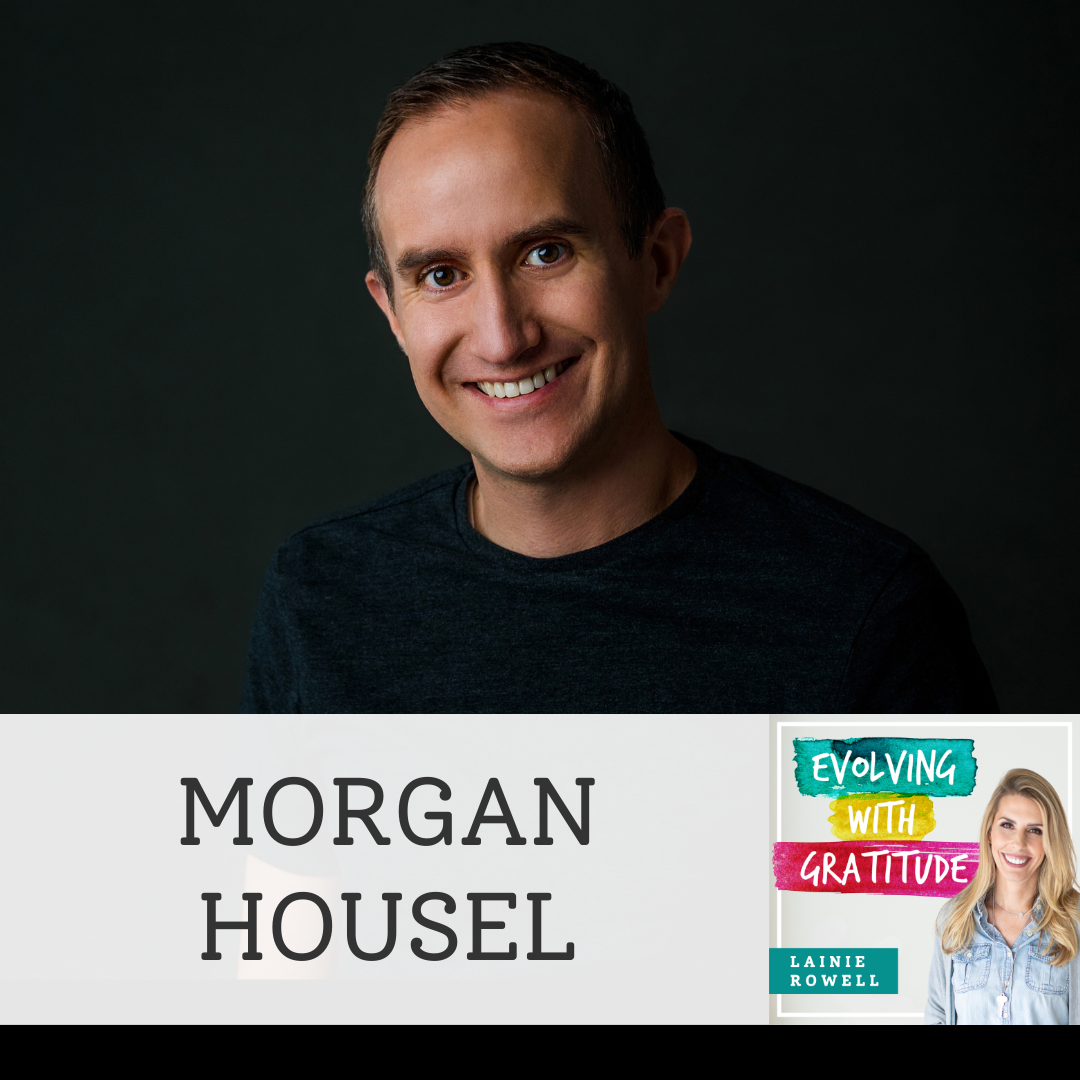
Shownotes:
What if the way you spend money says less about your finances and more about what you actually value? NYT Bestselling author Morgan Housel reveals why smart spending is an art, not a science, and how the choices we make with money are often driven more by status than we'd like to admit. We explore the difference between chasing happiness and finding contentment, why saving is really about purchasing independence, and how asking one simple question before every purchase can change everything.
Thrive Global Article: Morgan Housel on the Art of Spending Money
About Our Guest:
Morgan Housel is the New York Times Bestselling author of The Psychology of Money, The Art of Spending Money, and Same As Ever. His books have sold over 11 million copies and have been translated into more than 60 languages.
He is a two-time winner of the Best in Business Award from the Society of American Business Editors and Writers, and winner of the New York Times Sidney Award. MarketWatch named him one of the 50 most influential people in markets. He's a partner at The Collaborative Fund and serves on the board of directors at Markel.
About Lainie:
Lainie Rowell is a bestselling author, award-winning educator, and TEDx speaker. She is dedicated to human flourishing, focusing on community building, emotional intelligence, and honoring what makes each of us unique and dynamic through learner-driven design. She earned her degree in psychology and went on to earn both a post-graduate credential and a master's degree in education. An international keynote speaker, Lainie has presented in 41 states as well as in dozens of countries across 4 continents. As a consultant, Lainie’s client list ranges from Fortune 100 companies like Apple and Google to school districts and independent schools. Learn more at linktr.ee/lainierowell.
Website - LainieRowell.com
Instagram - @LainieRowell
LinkedIn - @LainieRowell
X/Twitter - @LainieRowell
Evolving with Gratitude, the book is available here! And now, Bold Gratitude: The Journal Designed for You and by You is available too!
Both Evolving with Gratitude & Bold Gratitude have generous bulk pricing for purchasing 10+ copies delivered to the same location.🙌
Just fill out the forms linked above and someone will get back to you ASAP!
Transcript:
[00:00:00] Morgan Housel: I think in an innocent well-meaning way, I think we often chase the wrong emotion. The emotion that a lot of us are trying to chase in life is happiness, but happiness is always a fleeting emotion. Most people are rarely happy for more than a few fleeting moments at a time.
[00:00:14] And I think it's similar to humor. If I told you the funniest joke in the world, you might laugh for 20 seconds. You do not laugh for 20 years. Like, like humor is a fleeting emotion and that's what happiness is as well. But if you are daydreaming about having the bigger house, the nicer car, paying off your student debt, whatever it might be, if when you're daydreaming about that and it feels good, what feels good is you imagine yourself with those things and being content with them.
[00:00:39] Mm-hmm. So I think the emotion that you actually wanna chase is not happiness, it's contentment. And that's what, that's what feels good.
[00:00:46] Welcome to the Evolving With Gratitude podcast. I'm your host, Lainie Rowell. I'm an author and speaker, and I'm here to help you optimize happiness, relationships, and performance.
[00:00:57] What if the way we think about money is the very [00:01:00] thing getting in the way of spending it well? Morgan Hausel is the New York Times bestselling author of The Psychology of Money, The Art of Spending Money, and Same as Ever. His books have sold over 11 million copies and been translated into more than 60 languages.
[00:01:16] Where his earlier work examined how we think and feel about wealth, his latest turns to the spending side of the equation. Not how much we spend, but why and whether those choices are actually making our lives better. Enjoy Morgan Hausel.
[00:01:32] Lainie Rowell: Morgan. Welcome.
[00:01:34] Morgan Housel: Thanks so much for having me.
[00:01:36] Lainie Rowell: Now I have to tell you a little story before we get into your latest book, the Art of Spending Money, which I'm very excited about. When my son was 11, he asked us to get him a copy of The Psychology of Money.
[00:01:49] I would love to say this is like some magical influence I had over him, but he just kind of came to us and we're like, this is great. He has, I actually have it right here. If he, once [00:02:00] he listens to this, he might be mad at me. I'm not gonna show you what's in here, but he had the book and he took notes the whole time.
[00:02:06] So I asked him, 'cause I said, we're gonna have a conversation. What did you learn? That was the most important thing from Morgan's book. And he said, can I, is it okay if I share these with you?
[00:02:16] Morgan Housel: Yeah, yeah. It was great.
[00:02:18] Lainie Rowell: He said, number one, enough is important. Wealth is what you don't see. Become financially unbreakable. And spending money to show off is the fastest way to have less.
[00:02:35]
[00:02:35] Morgan Housel: Yeah, he's, he's, he's putting that together at age 11. That's, that's pretty impressive.
[00:02:38] Sounds like he's about 20 years ahead of me in that game. So the fact that he can piece that together when he's in what, fourth or fifth grade? That's pretty impressive.
[00:02:46] Lainie Rowell: Well, he is reading it like, I think between fifth and sixth grade.
[00:02:51] And he asked me knowing what you know now, if you could go back to your 12-year-old self and give your 12-year-old self advice, what would you give? [00:03:00]
[00:03:00] Morgan Housel: Oh, wow. What a what? A what a great question. I didn't start thinking about money at all in the slightest until I was.
[00:03:09] 16 or 17.
[00:03:11] So it was, it was a different, a different time, a different era for me, um, back, back in, in, in that period. But what is so true, and I think this is not uncommon at all, when I was 16, 17, I was constantly worried about what other people thought of me. And I, I had this, this idea. I, I didn't even know it at the time, but looking back, this was my thought process.
[00:03:34] If only I had that nice car, then people would pay attention to me. If only I had that watch or those clothes, then people would pay attention to me and that was kind of my sole driver back then. And I, when I look back at it now. Again, I, I didn't, I, I was not smart enough to, to tie this together back then, but I will look back at it now,
[00:03:53] I didn't have anything else to offer the world. I didn't have any intelligence, humor. I didn't know [00:04:00] how to be a good boyfriend. I didn't know how to be a good friend. I didn't know how to be a good worker. And so since I had nothing else to offer, I think I automatically went to the last remaining lever, which was, if only I had a BMW, then they'd pay attention to me.
[00:04:13] They're not gonna pay attention to me for all, for all these other things. And so there's part of me, again, I, I, I, I, I don't regret that. I don't look back and say, I wish I didn't do that. It was, I think that's part of the, the learning, the growth process. But today when I look back at that, I say, no. Today I wanna get my attention from my intelligence, from my ability to love my family, from my ability to be a good dad and a good husband, maybe from humor, from being a good friend.
[00:04:39] That's where I wanna get my attention from, and I wanna get it from a very small number of people. I want, I desperately want my son and my daughter to love me. Mm-hmm. I desperately want the attention of my wife. I could not care less about what a bunch of strangers think of my car couldn't care less.
[00:04:54] And so, I guess to answer your, your, your son's question, when I look back at this, I think a very important [00:05:00] question to ask is, who do I want attention from and what are those people gonna give me attention for? I think that's the question. When I look back at particularly how young people spend their money, how I spent my money when I was a young man, that was the not flaw.
[00:05:15] I don't regret it. It's not a flaw, but just something I look back and say, oh, I like, I was playing a game back then and it took me 20 years to understand the rules of the game, and when you actually piece it together, it's a pretty silly game to begin with.
[00:05:27] Lainie Rowell: I like how you're framing it, like that was where you were at that time.
[00:05:30] It made sense for that time and you don't necessarily regret that, but you just have a different perspective now. And one of the things you said where you were, you no longer are trying to impress like this large number of people. And this is a thread that I've seen throughout your work, is what is the motivation? Why are you spending money the way you're spending it? Your brand new book, the Art of Spending Money, which is amazing, talk [00:06:00] about why it's art and not science.
[00:06:02] Morgan Housel: It's a very good point because I think a lot of bad financial problems in the world happen when you are following advice that is good for somebody else, but not for you. Okay. And to the extent that we think of money as a science and in a science, there is one right answer for everybody.
[00:06:18] What I should do is the exact same of what you should do, just like. Two plus two equals four. There's the same answer for me. It doesn't matter where you're from or how old you are, this is one answer for everybody. And when we think of money like that, it can lead to a lot of problems because the truth is you and I are very different.
[00:06:32] People from different generations are very different. Different family situations, very different. Different own psychological scars that they have in their life are gonna influence them and their social aspirations in very different ways. I'm the youngest of three. My brother, sister, and I. Are all so different despite growing up in the same household with the same values and the same parents couldn't have ended up more differently as adults.
[00:06:54] And so it's an art because you have to figure out what works for you. Art is subjective. It's different from [00:07:00] person to person. It's different from generation. It'll change throughout your own life. I'm not the same person I was when I was 20, and I will be a different person at 60 and a different person at 80.
[00:07:09] Very different values and learning along the way. And so we can't ever just say, here's the formula for how to spend money, spend your money on this, don't spend your money on it. It never works like that. It, there's, it's never, it's much closer to an art. And if you thought about it, like your taste in food, uh, it would be ridiculous to say the formula for food is, uh, Mexican food is good, Italian food is not.
[00:07:31] People would be like, no, no, no. It's all subjective. It just whatever, whatever works for you. And I think spending money is very much like that as well. It's a very individualistic endeavor.
[00:07:39] Lainie Rowell: There's these very specific scenarios that we're in and these preferences that we have, but there's also some universals as far as what you should consider when it comes to spending money.
[00:07:52] Is that fair to say?
[00:07:53] Morgan Housel: I think it, it, I think it is. I mean, so the idea of utility versus status, uh, are, are, are very different things. There [00:08:00] are some, and I think every dollar that it gets spent. In the world that you spend, that I spend is one of those two things. It's either utility or status.
[00:08:07] It's either, is this a tool to actually feed your soul and live a better life, or is it a yardstick of status to measure yourself against others by? It's one of those two things. And when we live in a world of relative material, abundance and wealth, even among middle and lower class people, relative to most of history.
[00:08:25] Then a lot of it, a tremendous amount of it gravitates towards the status side of the equation. This, that's always been true in a social media world it is like dumping gasoline on that fire and so much of our aspirations and how we spend our money and how we compose ourselves and the performance that we put on social media for other people is a status seeking endeavor. Nothing inherently wrong with that. I do it. Everyone does it because life is a competition. It's a competition for resources. It's a competition for mates and spouses. It's a competition for jobs. It's a competition [00:09:00] for attention. And so the idea of you should never try to signal is not the message because it's inevitable.
[00:09:05] Yeah. And it's not always bad. But I think we overestimate the happiness that we're gonna get from status. It is too easy to tell yourself, as I did when I was 19, if only I had this car, then people would love me. If only I had this jewelry, then they would think I'm amazing. And I think we just massively overestimate what we're gonna get from that.
[00:09:26] And the truth is, the, the kind of attention that I think really feeds people and really drives them is from your spouse, your children, your very close set of friends, maybe your parents. It's probably, it's, it's rarely more than like a dozen people. And the truth is what they will admire you for and give you attention for tends not to be the things that we're spending on, on, on status items. Yeah. My 6-year-old daughter does not care how many horsepower our car has. My 10-year-old son does not many care how many carrots might be in, in, in my watch. You [00:10:00] know, like the, the, those things don't matter. They care that I listen to them.
[00:10:02] They care that I play with them and spend quality time with them. And so the attention that I think most people seek tends to be disconnected from what we are aspiring to spend our money on in terms of material goods.
[00:10:15] Lainie Rowell: Yeah, I appreciate you making that distinction of a tool versus a yardstick, that's something really important.
[00:10:22] And also you mentioned social media, which I think there's there, I do think there's good in social media, but I think there's a lot to overcome in the challenges of social media and one of them being, yeah, that yardstick and it's like, I think it impacts our expectations.
[00:10:37] Yeah, and what we think huge. We need to have the good life.
[00:10:41] Right. So can you talk a little bit about that gap between what we have and what we want and how do we keep our expectations in check so that we can feel wealthier without necessarily like, oh, if I just made 10% more money, or if I just got that raise, or if I just, you know, if I just, if I [00:11:00] just, how can we do that? Help us?
[00:11:01] Morgan Housel: Well, you right that before social media, by which I mean like 10 or 15 years ago. Like this is not ancient history. Yeah. It used to be that most people, when you compared yourself to others, you were comparing yourself to your neighbors and your coworkers and people in your town. And Yes. You know, when you and I were growing up, we had MTV cribs to see how the other half lived, but we knew that those were not peers.
[00:11:22] We were like, that's Master P, this is not a peer of mine. Yeah, that's Shaq. And then so it was easy to be like, yes, they live like that, but I'm not supposed to. But social media means that in an literally an endless infinite way that a hundred times a day, there are people on Instagram who you think ostensibly should be your peers, who no matter how well you're doing in life, no matter how happy you are or how well you're doing your job, there are infinite number of people who are happier, prettier, more successful than you are.
[00:11:51] At least appear that way. Yeah, and appear is the right word, because everybody knows that you do not post on social media. You perform on social media. [00:12:00] This is all an act. I do it as well. I post cute pictures of my kids on Instagram. I do not post pictures of the tantrums and the meltdowns that of course I have.
[00:12:07] Everyone's doing this. Yeah. And so when you are keenly aware of the internal. Uh, downsides of your own life, your own stresses, your own anxieties, your own insecurities, but on social media, everybody is just posting the upside, the upside performance of it. It's easier than ever to be doing well in life and to feel by comparison that you are doing poorly.
[00:12:27] Better than, like, more than it's ever been. My wife and I talk about this all the time of people who we know very well. Yeah. And then, and, and we know like everybody else, the stresses and the downsides that they're going through in life. And then they post their, their Thanksgiving pictures on social media and we're like, that ain't, that ain't real.
[00:12:43] That, that's not what's happening right now. Okay.
[00:12:46] Lainie Rowell: Right.
[00:12:46] Morgan Housel: But everybody deals with this and so I think one other important point here though is that in, in, in a weird, almost ironic way, I don't wanna live in a world where people keep their expectations in check because the fact that most people [00:13:00] wake up every morning saying, this is not enough other people have more than me and I need to go get it, is the driver, is the seed of all progress. Yeah. The fact that most people wake up and they're like, whatever we have, right? It's not enough. We need better technology. We need better medicine. We need more and more and more. That's amazing at the society level.
[00:13:16] And so keeping your expectations in check at the society level is stagnation. And I want to live in a world in which my kids and my grandkids appear spoiled rotten by the standards of today. Where they don't have to deal with things like cancer and infectious disease because it's all been solved and the reason it's been solved is because millions of people woke up today and tomorrow and saying this isn't enough.
[00:13:38] So that's great. At the individual level, I think you can recognize the rules of engagement of this game and how this game is not susceptible to keeping you happy. The idea of runaway expectations makes is the, is the fuel of progress. It's not a fuel that's gonna keep you happy. And I, I, I think the truth is whatever motivational evolutionary force this is, is not designed to make you [00:14:00] happy.
[00:14:00] It's designed to push us forward. And so I think at the individual level, you can recognize, sort of what, what I said earlier, that we overestimate the attention that we're gonna get from this signaling game. The great comedian, Jimmy Carr phrased this recently. I just heard this a couple weeks ago.
[00:14:16] I thought it was so good. He said, in your twenties, most people say, I worry what other people think of me. In your thirties, you say, I don't care what anybody thinks of me. And in your forties you finally realize the truth, which was that nobody was thinking about you to begin with. And like, like most comedy, like it's funny 'cause it's true.
[00:14:34] Like you finally get to the point you're like, I've been spending all this time showing off for strangers and they're not even paying attention to me. They're busy worrying about themselves, and then they're not paying attention to my car. They're spending all of their time worrying about what other people think of their car.
[00:14:46] And so once you come to terms with that, look. I like nice things. I like nice cars. I like nice houses. This is not a plea to like wear a burlap sack and live like a monk. I, I like those things, but you need to like them for the right reason.
[00:14:57] Lainie Rowell: Mm-hmm.
[00:14:58] Morgan Housel: I want a nice house because I [00:15:00] love having my friends and family over and spending time with them.
[00:15:02] I don't want a nice house because I think a bunch of strangers driving past my driveway are gonna turn and say, wow, that guy's cool because they're not. And so once you just become aware of what that game is. I think it pushes you closer towards the kind of attention and admiration that you want, the durable attention from probably no more than a dozen people in your life rather than trying to get the attention of strangers.
[00:15:24] Lainie Rowell: So if I'm understanding correctly, it's kind of like awareness is the key. Like we want to have that aspirational, we want to be pushing ourselves and society forward. We want to have that drive, but at the same time, we have to acknowledge, and to go back to one of my son's takeaways, enough is important, right?
[00:15:41] Yeah. That's like, it seems like a really difficult needle to thread. Like when
[00:15:45] Morgan Housel: it, it, it, it is. Let's not pretend that this is an easy thing and I think even when you are aware of it, I think it requires daily reminder to yourself about what this is? I, I think it's close to, if you're familiar with meditation, A, it's extremely [00:16:00] difficult to get to some kind of mental clarity spot. It takes hundreds, maybe thousands of hours of effort to get to there. And once you get there, you have to practice it every day or else it goes away. And I think this is a similar thing. Let's not pretend that you can just read a sentence in my book and say, oh, great. I have enough and I can just move on now.
[00:16:16] Right. This is a very difficult social. Uh, you know, idea philosophy to wrap your head around and even when you do, I need to remind myself almost daily that the urge that I have to tell myself, if only I had that car then, then people would be like, oh, Morgan is awesome. I have to remind myself daily about how, how silly that game is, because the knee-jerk reaction towards chasing it is so powerful.
[00:16:40] And so I think just becoming aware of it though is 80% of the battle. And I think when you're young, you are completely oblivious to what that game is. You're just, you're so driven by the natural power of it. But once you just become aware of it, even if you haven't mastered it. And even if it requires a daily reminder, just being aware of how powerful it is can make a huge difference [00:17:00] in your life.
[00:17:01] Lainie Rowell: I agree. I also love the advice you give, minimize future regret. I think this is an interesting concept too. You write, if you don't mind, I'll, I'll read something that stuck out to me. Uh, "good advice is never as simple as saying live for today. Or save for the future. The only good advice is minimize future regret."
[00:17:22] And I feel like that's kind of related, right?
[00:17:24] Morgan Housel: I mean, I'll tell you one, one quick story. This didn't make it in the book. Uh, it, it should have, but I then, one, when I was, uh, a teenager, I worked at a, a ski resort in Lake Tahoe, and I had a coworker there. I was, I was 17. He was probably 25.
[00:17:37] That's, that's probably about right. And he was $25,000 in credit card debt from ski trips that he had taken all over the world. He had skied in, in France and Italy, and I thought he was the biggest moron I'd ever met. I could not fathom the, like 25,000 in credit card debt.
[00:17:53] Lainie Rowell: You made me anxious just saying it like,
[00:17:56] Morgan Housel: oh, I, I, I could, I gave him so much grief about it and I, and [00:18:00] I, I, I, like on a daily basis, I would just, I just, this guy is an absolute maniac.
[00:18:04] And the very tragic punchline here is when he was probably about 30, he died in a ski accident.
[00:18:10] Lainie Rowell: Oh.
[00:18:10] Morgan Housel: And I remember at that time how quickly my mindset shifted to, I'm so glad he took those trips.
[00:18:17] Lainie Rowell: Yeah.
[00:18:17] Morgan Housel: I'm so, so glad that he lived while he did. Now, you and I should not live a life with the idea that we're gonna have a tragic death in our thirties, but it did remind me of this idea that like, the only way to think about this, rather than live for today or save for tomorrow, the only way to think about it is on your deathbed, whenever that might, may be, and I hope for everyone listening, it's in their late nineties, let's say. And you have a moment to look back at your life and reflect the only strategy that you and I should have today is to have as few regrets on that death bed as possible.
[00:18:49] I think that that's the way to think about it. It's never as simple as live for today or save for tomorrow. It's just what are you gonna regret? And you and I might regret different things and 'cause because we're, we're, we're all very different [00:19:00] in this thing. I've been a big saver for my entire life since I earned my first dollar at that ski resort when I was 17 and, if I were contemplating the end of my life tomorrow. This is getting very grim and tragic, but let's just use that mental exercise. If I were on my deathbed tomorrow, looking back, I would not have any regret whatsoever, right at the trips I didn't take and the cars I didn't buy because I was a saver, because I would take so much pleasure knowing that my wife and kids were gonna be okay because I had saved this money.
[00:19:26] So there'll be zero regret there. But let's say I'm 97 years old and looking back at my life with kids who are hopefully, very established and on their own, at that point then I might have regret looking back and saying, I should have given this money away while I was alive. I should have, taken the kids and the grandkids on these trips while, while I could have then I might regret.
[00:19:45] So your, your sense of regret is gonna change throughout the course of your own life as well. And so even this is another thing where even when you understand that concept, it's a daily reminder and I think always pausing and asking yourself. How [00:20:00] good am I at anticipating what I'm gonna regret? Yeah. I made decisions 10 years ago.
[00:20:05] Um, did I know that I was gonna regret doing that thing, whatever it might be. Small regret, big regret, whatever it might have been. Do I have any ability to forecast my sense of regret? Yeah. And I think for a lot of people, for me it's kind of. A little bit, and I think I'm getting better at it. I think most people get better at it as they age, but it's not an easy thing.
[00:20:23] No. Most people, when they are in the middle of making a bad decision, what does it feel like? It feels great because they think they're making a good decision at the time, and so most people don't have a very good ability to forecast themselves 10 years in the future and say, what am I gonna regret?
[00:20:37] Jerry Seinfeld is a great quote where he is like, self-control. Empathy with your future self. It's the ability to say, Hey, I'm not gonna do this thing right now because I'm empathetic to who I'm gonna be a year from now, and I know a year from now that me in the future is gonna regret doing this today.
[00:20:54] It's a very difficult skill.
[00:20:56] Lainie Rowell: It is, it is. Hopefully, you know, when we're, when we're. [00:21:00] Blessed enough to have people in our life who, who help us with that. Like my husband has been good at reminding us these kids are only gonna be with us for so long. It's worth spending some money on experiences like trips that they're, you know, not gonna be able to take with us forever 'cause they're gonna go off and live their own lives and it's gonna be harder. So I do really appreciate that sage advice of minimize future regret. Yep. So I love that. What are some other just practical like. If you just were meeting someone for the first time, and by the way, you're very empathetic, you are very kind to appreciate that we're all in these different circumstances.
[00:21:36] There's no one size fits all. I get that. But what are just some tips that are generally helpful for people as far as making the better decisions? So, you know, minimize the future regret, you know, think about is it, are you using the money as a tool or a yardstick? Are there other tips that you have for folks that can help them make those better decisions?
[00:21:58] Morgan Housel: I think one is that, [00:22:00] and I think in an innocent well-meaning way, I think we often chase the wrong emotion. The emotion that a lot of us are trying to chase in life is happiness, but happiness is always a fleeting emotion. Most people are rarely happy for more than a few fleeting moments at a time.
[00:22:14] And I think it's similar to humor. If I told you the funniest joke in the world, you might laugh for 20 seconds. You do not laugh for 20 years. Like, like humor is a fleeting emotion and that's what happiness is as well. But I think when most people, if you are daydreaming about having the bigger house, the nicer car, paying off your student debt, whatever it might be, if when you're daydreaming about that and it feels good, what feels good is you imagine yourself with those things and being content with them.
[00:22:40] Mm-hmm. So I think the emotion that you actually wanna chase is not happiness, it's contentment. And that's what, that's what feels good. And so when you imagine yourself, I, I had this experience. This was, this was such a, a, a painful thing to admit to myself, but, so I took, took my family to, to Maui two years ago.
[00:22:56] This is not that long ago, two years ago. And we, we got there the first [00:23:00] day and we had a balcony overlooking the water and it's awesome. And I had this thought, it was almost like a subconscious thought, but I had this thought of like, wouldn't it be cool if we could come back here next year? And it was like, are you, are you like, how stupid are you?
[00:23:13] You are here right now and all you can think about is coming back next year. Yeah. Like you can't, you cannot enjoy. And so, but I think, I think here's what it was in the moment. For whatever reason, I was not content, but I imagined myself next year being content with that view. Yeah. And that felt really good.
[00:23:30] Lainie Rowell: Yeah.
[00:23:30] Morgan Housel: And so that's why dreaming about coming back felt better than it was to actually be there. And there's this weird, but I think, I think that happens quite a bit, that when you're daydreaming, what you imagine is you, you imagine yourself being content in the future, and that feels great. Being content is great.
[00:23:43] And so I think. That's what I wanna get to in life. I wanna be content with what I have. Yes, I want nice things, but I wanna be content with those things. And but more common is you tell yourself, you, you daydream about the bigger house. And then let's say you get the bigger house and the day you move in, you look [00:24:00] across the street and you're like, oh, the neighbor's house is a little bit better than this, isn't it?
[00:24:03] Like you're never content with what you have. And so I think, I think that's, I think that little trick of you don't necessarily wanna chase happiness, you wanna chase contentment, and being okay with what you have is pretty important.
[00:24:13] Lainie Rowell: Yeah. And another thing that you shared in the book is money using us versus us using money. Are there some specific signs that money is influencing kind of like something in our identity or decisions that are unhealthy? Is there something we should be on the lookout for there?
[00:24:33] Morgan Housel: I think it's, it, it's very common that you're not using money as a tool. It, it is a tool that is using you, it is controlling your identity.
[00:24:39] It is controlling who you can be friends with. It might control who you can marry and where you can live and how you can dress, even if those things are not actually who you are it's like playing you like a puppet. And that's actually very common. It's most common in upper income.
[00:24:53] People who are, are fortunate enough and we don't have a lot of empathy for these people, but we. I don't have a lot of sympathy for these people, but if [00:25:00] you, they are fortunate enough to have, you know, tens of millions of dollars, you might think that would be great and that can be great. But a lot of those people are kind of culturally and socially forced.
[00:25:11] Yeah. Or influenced, let's say, to live a life and to be a person who they're not. And I, I think for, this is not for everybody, but there's probably some portion, I'm making this up, but let's say it's 20% of rich people do not wanna live rich. They're actually like in their, in their personality, they want to be a simple Norman Rockwell tiny little house with two kids in a white picket fence.
[00:25:30] That's who they wanna be. That's what's actually gonna make them the most happy and the most content. But because they find themselves having a lot of money, they're like, well, I should have a huge house. I should take fancy vacations. I should have a fleet of cars because that's what society tells me I should do.
[00:25:46] And like, again, this is probably 20% of them, 80% of 'em, like that is the right thing to do. But I think there, there, there is a, a, not. Insignificant subset of people where money just completely hijacks their personality and it becomes who they are. And I think for even lower income people, this happens [00:26:00] too where, if you wake up every morning and you just kind of feel empty a little bit, it is so easy to tell yourself, if only I had more money, that hole would be filled and I'd feel better.
[00:26:10] I think part of the reason we do it is because money is so easy to quantify and count. And I've used this example of like if I said I wanna be a 10% better dad. Very good goal. Very, no, I would love to be a 10% better dad. But how do I measure that? How do I measure the progress of my dad's score? How do I compare my parents' score to your parents' score?
[00:26:29] You can't do it. So even though it's a great goal, we tend to ignore it. But if I said I wanna raise my net worth by 10%. Then, then that I can track very easily. I can compare my net worth to your net worth. And so because it's so easy to count, having more money becomes the target of so many of our goals.
[00:26:48] Yeah. And the solution to so many of our problems that we, that we tell ourself, even if there are so many other things of, I like to be a better dad. I like to be a better husband. I like to be a better citizen, like to be in better health that are just great goals, but hard to [00:27:00] quantify. So they tend to be swept under the rug.
[00:27:02] Yeah.
[00:27:03] Lainie Rowell: Just that, that idea of contentment and the, the thought that like the richest people in the world are some of the people who struggle the most to be content. Yeah. That is just so profound , and just really jarring and I so appreciate you saying how it's so much easier to quantify money than other things that are even more important in our life.
[00:27:23] Yeah. Arguably more important in our life.
[00:27:24] Morgan Housel: So yeah. I would love it if I could, if there was a good, honest apples to apples dad score. And because, 'cause look for my, you know, for 25 years now, I have tracked, and I would even say chased net worth as a score in life. Yeah. And you can track it down to the penny.
[00:27:42] How much does it go up this year? How much is it, you know, what, what percentage is it going up by? But for something that is so much more important, like my ability to be a dad, there's no score. I have vague feelings about how well I'm doing, but you can't track it. So it's, yeah, I think that's one of the problems with money is that it's so easy to [00:28:00] quantify that it becomes a solution for everything.
[00:28:02] Lainie Rowell: Yeah. I'm gonna ask you a question that I think you might like, because I've heard you say this. But maybe you liked it better when you were asking other people. What is an idea for you that has changed over the last 10 years when it comes to money? Because you've, obviously Psychology of Money, your books are huge.
[00:28:18] Uh, we're super excited about the Art of Spending Money being out now. Like what has maybe changed in your thinking that you're really, I want people to know this.
[00:28:28] Morgan Housel: I heard this idea from Keanu Reeves. Uh, he said this a couple years ago, and I think Keanu Reeves is one of those like, yes, A-list celebrities, but he's actually incredibly smart.
[00:28:38] He's, he is one of those people that's like, it's easy to make a caricature out of him, but he is actually a brilliant guy. Um, Matt Damon is, is also one of those people, but yet, but I heard this from Keanu Reeves. He said, I'm at the age now where I don't argue with anybody. And he said, even if you say two plus two equals five.
[00:28:53] Good for you. I'm happy for you. And I think, I think I have gained that philosophy for for money. And [00:29:00] 15 years ago I got into more financial debates with people or even arguments with people where I would say, effectively, I'm doing it right and you're doing it wrong. And the, and, and you doing it that way is just because you are uninformed or, or, or unintelligent.
[00:29:14] And I, I, and, and I think I have much more to the Keanu side now of like, look, if it's working for you, great. Happy for you. Let's, let's just move on. The idea that there is not a one right answer for any of this, for how you make your money, for how you save your money, for how you invest your money. There is no one right answer.
[00:29:31] And I have a lot of quirks that you might disagree with and that I can't explain rationally. Like how, how I spend my money and save my money. There's things that I do where I'm like, yeah, it doesn't make any sense. I, and it's probably the wrong thing to do, but it makes me happy. So like who cares? And I think, and I'm sure you have that, we all have those to some extent.
[00:29:50] And I, I think I've just become much more comfortable with that. I'm much less cynical about other people's bad behavior because I know that when they are making what I think are bad decisions, it makes sense to [00:30:00] them in that moment and more power to you.
[00:30:02] Lainie Rowell: I'm not sure if you said this on the podcast or in the book, but I've heard you talk about the lottery. Can you talk a little bit about that 'cause that was kind of fascinating to me.
[00:30:11] Morgan Housel: Yeah. I, I heard this statistic many years ago that the vast majority of lottery tickets in America are purchased by the poorest Americans. And it's, I think it's literally 90% of like scratcher tickets are purchased by the bottom 10% of income earners.
[00:30:25] These are literally people that are struggling to feed their children and feed themselves, and they're spending the most money on scratcher tickets now as a kneejerk reaction, it's be very easy for you and I and people listening to say, you morons what? Like, you absolute imbeciles for doing this. I can't believe you can't feed your kids and you're buying scratcher tickets.
[00:30:47] What in the world are you doing that? That might be the right answer. Like maybe we could end there. But I think if you squint a little bit and try to put yourself in their shoes, it is not uncommon for people in that situation. [00:31:00] Minimum wage workers to feel like they are trapped in that situation, that there is no ladder out of there, particularly if they are not young people, but they are older, you know, parents to feel like this is just where they're stuck in life.
[00:31:12] And in that situation, buying a lottery ticket might be the only thing in life that gives them a little bit of hope. Of escaping that trap that they're in. Yeah. And then maybe that hope is worth two bucks to them. And then, and it's easy for, for you and I, who might say, like, who have a stronger belief of if I work really hard, I can move up and earn more money and more value.
[00:31:32] But if you don't have that hope Yeah. And you are, and then, then maybe the lottery ticket gives it to you. And I, I, I, I think I really put pieces together when I had a friend of mine who, uh, grew up in abject poverty, grew up homeless for a lot of his childhood, is now a very successful financial advisor.
[00:31:47] But he told me, he said. He remembers being a child and his refrigerator was empty, and his mom had $3 in the bank, and he said that $3 is not gonna fill the refrigerator, but it will buy three lottery [00:32:00] tickets that will give you the chance of filling the refrigerator. And that, and that was worth it. And even, I, I, I could still push back on that and say it's still a bad decision, but when you frame it like that, yeah.
[00:32:11] I'm like, I, I get it. I kind of get it. Yeah. All right. I think there's, I think there's also analogies here with health where a lot of, yeah lower income people are obese and not healthy, but they still smoke.
[00:32:22] Lainie Rowell: Yeah,
[00:32:22] Morgan Housel: and you could see even in like in a similar way, you could say, look, if, if you feel like you're stuck in a low wage dead end job and your family situation is a mess and broken, I even though I, it's the wrong decision.
[00:32:34] I understand while a cigarette is the only comfort that you get during a day. During that, you know, I think there's a lot of areas in life where you can try to say, that's a terrible decision, but I get why you do it. Yeah. And I think that makes you a little bit less cynical about your own flaws and other people's.
[00:32:50] Lainie Rowell: I, I really appreciate that perspective because I, I definitely, and, and my parents had such good, they still do have such good values with money and they've passed that [00:33:00] on to me, and I think I make pretty good choices. I'll tell you, my mom was never so proud was when she saw my credit score, thought she was gonna cry.
[00:33:05] That's, but, uh, but. I, I had a different background growing up than other people did. It's not my place to judge the choices that other people make because of the situation that they're in. So I, I really appreciate, that's a great perspective.
[00:33:21] Morgan Housel: I mean, I think a, a important question to ask all throughout life is when you see somebody making a different decision than you would or believing something that you don't believe, rather than asking, why do you believe that?
[00:33:33] I think it's important to ask what have you experienced that causes you to believe that? Yeah. And if I experienced the same thing, would I believe the same thing? Would I be doing the same thing? Yeah. If, if I grew up in abject poverty or if I was in abject poverty, would I be spending half my income on lottery tickets?
[00:33:50] Lainie Rowell: Yeah.
[00:33:50] Morgan Housel: And I think it, so like, I, I think it just makes you a little bit less cynical about other people's decisions.
[00:33:54] Lainie Rowell: Yeah. One of my questions that I love to ask people is, would you please share [00:34:00] something that you either haven't had a chance to share or you just can't share it enough, like you would be on the rooftop screaming, I need you all to know this.
[00:34:07] Morgan Housel: I think I have always just wanted, what I've always wanted outta money was independence. I didn't necessarily, even though I like nice things, what I really wanted more than anything and value more than anything today is the ability to wake up every morning and to say, I can do whatever I want today.
[00:34:24] I can hang out with the people who I want. I can work where I want. I can do the work that I want. I can stop when I want. I can retire when I want, and I think. Back to how, how we, how we started this. Everyone has different goals and desires and whatnot, but the desire to be independent is pretty universal.
[00:34:40] The desire to just live life in your own way, uh, on your own terms, I think is, is something that everybody from every generation across cultures and societies. Wants. And so I think if you view money as a, as a tool towards independence, and what I mean by that is I've always been a big saver, but I don't really view it as saving money.
[00:34:59] I view it [00:35:00] as purchasing independence. Mm-hmm. If I save a hundred dollars, I view it that I just, I just purchased a hundred dollars independence token. And what's also important is that is not delayed gratification. I'm not saving money to buy something in the future. I get benefit outta that today by the savings that I have to wake up this morning
[00:35:18] with a sense of, I can do whatever I want today because I have this pile of independence tokens. Which what I mean by that is savings and net worth, um, that will allow me to do whatever I want and to face the ups and downs of life that we all face, but with having more options to deal with them. And so I think that's, that's, to me, that's always been the ultimate value of money is as a tool to do what you want, when you want, with whom you want.
[00:35:41] Lainie Rowell: I think that's a really healthy mindset, and so I think that's one that, that I identify with that that resonates with me. I think that probably resonates with a lot of people, so I want to make sure that people know how they can connect with your work, Morgan. So The Art of Spending Money: Simple Choices for a Richer [00:36:00] Life is already out right now.
[00:36:02] You're listening to this. Go grab it. My son has not had a chance to read The Art of Spending Money yet, but he will because he's already said, I get it next. And then, The Psychology of Money is one that he can't recommend enough, so. Right. Morgan, what are the ways that people can stay connected to you and your work?
[00:36:18] Morgan Housel: Well look, those, those, those books that you just mentioned, that's where the majority of what I believe has has ended up so if you're interested in this topic, I think those books, The Psychology of Money, The Art of Spending Money, that's where I've kind of chronicled everything I believe about these topics.
[00:36:31] Lainie Rowell: Amazing and you have a podcast.
[00:36:34] Morgan Housel: I have a podcast, it's called, it's, uh, very creatively named The Morgan Housel podcast to put a lot of effort into that name, obviously. But it's, uh, you know, very short episodes, usually eight to 12 minutes where I just kind of chronicle some of these ideas that I've put together and telling a story around them.
[00:36:48] Lainie Rowell: I actually really like, I like long form, but I also really like, as you said, you have one of the shortest podcasts out there, but I love getting the information so succinctly. It's all really, really helpful. Morgan, thank you so much for this time. [00:37:00] I'm so excited for people to stay connected with you.
[00:37:02] Morgan Housel: Thank you so much for having me.
[00:37:03] Lainie Rowell: Thank you all for listening.
[00:37:05] If you're grateful for this episode, please be sure to subscribe today. And if you're feeling really thankful, please submit a review and share with others so they know the value. One last thing, please connect on social media using the hashtag EvolvingWithGratitude to share your gratitude stories.