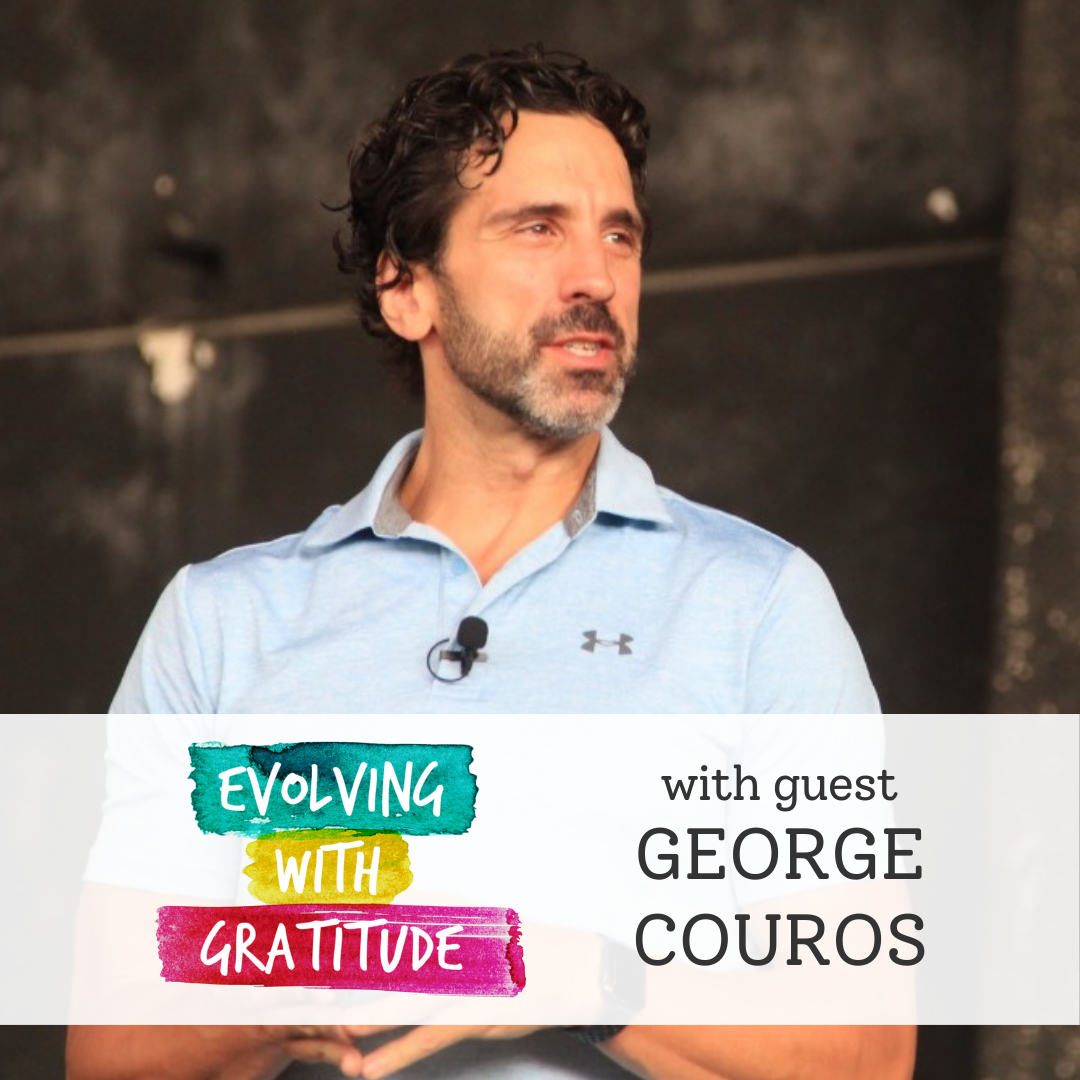
Shownotes:
What if the way we handle disagreement is one of the most important lessons learners will ever absorb?
In episode 150, George Couros returns for a fun, honest, and deeply practical conversation about what it really takes to move forward together in contentious times. George shares the story behind his new book, Forward, Together, and why the work of building community starts with what we model, not what we say.
You will hear about:
How to disagree without damaging trust
A simple shift that helps people feel seen, valued, and willing to stay in the work
Why progress is not about avoiding conflict, but learning how to navigate it well
If you are craving a better way to lead, teach, parent, or collaborate, this one will give you both hope and next steps.
About Our Guest:
George Couros is a worldwide leader in the area of innovative teaching, learning, and leading, and has a focus on innovation as a human endeavor. Most importantly, he is a proud father and husband.
His belief that meaningful change happens when you first connect to people’s hearts, is modeled in his writing and speaking. In his 20-plus years in the field of education, he has worked at all levels of school, from K-12 as a teacher, technology facilitator, and school and district administrator, and is currently an Adjunct Instructor with the Graduate School of Education at the University of Pennsylvania.
George is also the author of the books, The Innovator’s Mindset, Innovate Inside the Box, Because of a Teacher, Because of a Teacher 2, and his latest release, What Makes a Great Principal.
Connect with and learn from George Couros:
Website: georgecouros.ca
X/Twitter: @gcouros
Instagram: @gcouros
About Lainie:
Lainie Rowell is a bestselling author, award-winning educator, and TEDx speaker. She is dedicated to human flourishing, focusing on community building, emotional intelligence, and honoring what makes each of us unique and dynamic through learner-driven design. She earned her degree in psychology and went on to earn both a post-graduate credential and a master's degree in education. An international keynote speaker, Lainie has presented in 41 states as well as in dozens of countries across 4 continents. As a consultant, Lainie’s client list ranges from Fortune 100 companies like Apple and Google to school districts and independent schools. Learn more at linktr.ee/lainierowell.
Website - LainieRowell.com
Instagram - @LainieRowell
LinkedIn - @LainieRowell
X/Twitter - @LainieRowell
Evolving with Gratitude, the book is available here! And now, Bold Gratitude: The Journal Designed for You and by You is available too!
Both Evolving with Gratitude & Bold Gratitude have generous bulk pricing for purchasing 10+ copies delivered to the same location.🙌
Just fill out the forms linked above and someone will get back to you ASAP!
Transcript:
[00:00:00] George Couros: Kids learn more from what we do than what we say. So you can say whatever you want, but I'm watching. They're watching you too. I'm not saying that as a threat. I'm saying that there's sometimes my kids do stuff and I'm like, oh, that's me.
[00:00:12] That, that was me. Oh no. Oh no. That came totally from, not that I told 'em to do it, it's something they saw me do. And so we have to pay attention to that. And so a lot of the stuff that we see in society, we see in education, we would be frustrated if the kids were doing it, but then we do it as adults 'cause we're adults, we can kind of do what we want.
[00:00:32] And then that, I think that to me is really looking at how you interact with people. When I was a principal and was a teacher. How you interact with people when you disagree with them matters more than anything.
[00:00:46] As adults, are we good at that and do we focus on that? And it's not about just agreeing with somebody else and just doing that. It's how you interact when you disagree. So I think the example we are setting to our [00:01:00] kids will continue on and kids will become a certain way, if they see us interacting in a certain way, not what we say to them.
[00:01:07] 'cause a lot of times what we say. Does not line up with what we do.
[00:01:11] Welcome to the Evolving With Gratitude podcast. I'm your host, Lainie Rowell. I'm an author and speaker, and I'm here to help you optimize happiness, relationships, and performance.
[00:01:22] Hey friends, I am really excited to bring episode 150 with George Couros. George is a worldwide leader in the area of innovative teaching, learning, and leading, and has a focus on innovation as a human endeavor. Most importantly, he is a proud father and husband.
[00:01:41] He is here to share his latest book Forward, Together, and I'm so excited for you to hear this. Here's George.
[00:01:49] Lainie Rowell: Welcome George. So lovely to have you back.
[00:01:52] George Couros: Third. Third time. Let's go. Third time's a charm actually said to me, someone said to me recently, third time's a charm. 'cause [00:02:00] I was on their podcast for the third time. I'm like, we're the first two terrible.
[00:02:03] Lainie Rowell: No.
[00:02:04] George Couros: To say that. So
[00:02:05] Lainie Rowell: I think first, second, and third time, all charms,
[00:02:09] George Couros: all charms.
[00:02:10] Lainie Rowell: And I just wanna tell you, here's some numbers for you. Number one, number 100, number 150. That's,
[00:02:17] George Couros: let's go.
[00:02:18] Lainie Rowell: That's the episode numbers for you. We didn't, let's go even plan it that way. Although I did save episode 100 for you, that was intentional. So I'll take
[00:02:26] George Couros: that. I, I appreciate that. And I, I just, I think you are, I was thinking about you today.
[00:02:30] I, weirdly enough, I was thinking about you in the gym, say, and just, you know, all the work that you do to really support teachers. You do a really great job. Uh, before we get, I know you're gonna ask me about my book. I. I want to, can you tell me a little bit about, you're doing some of this stuff with like, time, what I, I wanna know
[00:02:46] Lainie Rowell: what, what is going on?
[00:02:47] This is my podcast. Are you trying tell...
[00:02:49] George Couros: no, I know, I know. I, I have a podcast too, so maybe I'm just used to asking questions, but I, I think, uh, one of the things that I really focusing on, and I I really look at some of the work that you're [00:03:00] doing is really how do you. Make better use of your time. Yeah.
[00:03:03] 'cause I think that's a struggle with everything. Right? And you and I were talking about this yesterday and you got me thinking about it because, you know, it does not matter what decade you went to school. The time amount is the same. The expectations on teachers is so much higher. So like, tell me before we get into my stuff, I want to hear about it from you.
[00:03:19] So what do you got?
[00:03:21] Lainie Rowell: Something I've been thinking about lately is, uh, a previous interview was with Jennifer Wallace and she talked about mattering, and one of the things that I really connected with for mattering is how you could actually matter too much. And educators matter too much. Like they're depended on so much.
[00:03:40] There's some studies that say that they have to make between 1500 and 3000 decisions in a single day. Right? Like, it's just wild, right? And so one of the things to do with time management is just really thinking about like time, attention, and energy, right? And so for example, for time I think people know about the Eisenhower Decision Matrix.
[00:03:59] I [00:04:00] do love it. Right? It's like really thinking about is this important? Is it urgent? Is it both? Is it neither?
[00:04:06] George Couros: Mm-hmm.
[00:04:07] Lainie Rowell: But a lot of times we use that matrix like after we've already got the to-do list. And I think we actually maybe need to use that as a filter. Like, I'm not even gonna say yes to something until I determine that it's important.
[00:04:21] I don't know. Does that resonate with you at all? Like, I feel like it's hard to say no. We're in a helping profession. How do we say no to people? Like
[00:04:28] George Couros: I think, I think too, this is, um, you know, I was just speaking at a conference recently and we're talking about how we leverage time and I feel that at the organizational level, people are just like being bombarded with stuff.
[00:04:42] It's like we have so little time together and it actually then you are so overwhelmed that you do nothing with it. And I think that, I think your work is really crucial for that too, is because you, we suck time from people to we can as an administrator, [00:05:00] one of the things I used to say is central office, um, is my job is to like
[00:05:07] basically make teachers' lives easier. Mm-hmm. Where I feel a lot of stuff coming from central office is actually, hey, I need you to do more work to justify my job. Is that fair to say? It just Right. So like, so I think people appreciated my approach is like, hey, we're trying to take stuff off the plate.
[00:05:23] We're not gonna like send you a million surveys to like say, I'm doing a good job, but we'll bring you pizza and all that stuff. Right. I think that that's like, it's, it's not just an individual thing. I think it's an organizational thing. I think that's something that you're really doing a good job of focusing on.
[00:05:38] So I just, I, I really like it because I like, I'm, I'm very, uh, you know, Paige will tell you, she sets your clock to me. Like I'm very thoughtful of how I use my time. And so yeah, I just, I just love that. I love that work and I think it's super beneficial to anybody.
[00:05:54] Lainie Rowell: I appreciate it. And one of the things I love about your work.
[00:05:58] Is that [00:06:00] you do
[00:06:00] George Couros: switcheroo.
[00:06:01] Lainie Rowell: Switcheroo. Uh, was that a good segue or what
[00:06:05] George Couros: a good one? It was
[00:06:05] Lainie Rowell: pretty good, but, uh, this is for the people who listen to this podcast. They know I'm usually talking to people who I have never even met before, and George and I are friends. So this, this podcast will have a slightly different vibe and I think you're gonna love it because George is not only smart.
[00:06:21] But he is so just like fun to be around. So just a little plug for George as a friend. Like he's a, he's a great guy and, and Paige is so wonderful too. Gosh, I love your whole family. I need to get over to Florida and see you guys.
[00:06:36] George Couros: You do. You do.
[00:06:37] Lainie Rowell: Well, one of the things I love about your work is you do have that mind of like, okay, well we need to be in this together.
[00:06:44] We need to like, I have to be taking care of you and the different perspectives and everything. And I do wanna talk about the new book Forward, Together. Oh my goodness. Yeah. This is flying off the shelves and it's something that people [00:07:00] really are, it's resonating with people.
[00:07:02] And I'm just gonna open this up. Tell this story of how this book came to be, because I think it, I think sometimes there are books inside of us that just are gonna make their way out. And in my opinion, this happened for Forward Together.
[00:07:13] Is that fair to say?
[00:07:14] George Couros: Right. And the, when they. You know, I, I write all the time and I, I, I've been sharing this quite a bit lately and I think a lot of people like owning a publishing company. You know, as a little side thing, uh, there's a lot of people like, I wanna write a book, and I'm like that's not a good reason Right.
[00:07:33] To say you just like, it's not a checklist thing.
[00:07:35] Lainie Rowell: Yeah.
[00:07:36] George Couros: What do you wanna say is, is kind of where to start and when you write as consistently as I do, and I, I've honestly, I've been writing, I'm almost hitting 2000 blog posts in, you know, 15. This is a lot, this is a lot over the years. Plus, you know, multiple books.
[00:07:52] But I write consistently every single week, you know, multiple times. And I publish them at the same time. And the thing is [00:08:00] that when you share in those spaces, what I really have realized is that it's not just about sharing my voice. It's kind of, that's very secondary to me. It's really finding your voice and finding what you wanna say, and sometimes just percolates under there.
[00:08:13] So I was never really ever focusing on writing this book that was never. You know, the idea never came to me. And then I'm, I'm sitting at the gym one day and I, I do not look at my phone and you, and I've had a conversation about this except for near to the end when I'm like a little bit tired, I'm like, ah, I started going on it.
[00:08:32] So I see this tweet, um, from a gentleman named Jesse Foss, and he tags me in it, but it's like, you know, it's a reply to something. So I don't know what's going on in the reply. He just tags me. And I'm like, wow, what is this? I'm like, it's obviously about me. Why would you tag me being such a narcissist? And then, uh, I actually, uh, looked at it and it was this really great video from, um, uh, west Islip schools in Long Island, New York, and I've [00:09:00] worked with them before.
[00:09:01] And it was these kids sitting around a table, they're talking about like the slogan for next year. And they're coming up with these ideas and then the superintendent comes in. They're all excited about that. But then they just say, you know, we shouldn't be doing this on our own. This is something our community should be doing together and you should fill this out and you should do this.
[00:09:18] And I was just sitting there. I was like, I love this. I am not, I was nowhere in the video and I'm just sitting there. I remember I was actually on sitting on the calf machine. Probably someone's mad at me 'cause I'm not getting awkward watching this like video. I was like, I got an idea, like I have an idea for a book.
[00:09:35] So I told, I, I called Paige on the way home. I said, I, I think I have a book in me. And she's like, what? Like, 'cause this has never, ever come up. And so I said, yeah, like I, I think this, you know, there is this obvious contentiousness that's happening in schools and it can be between, you know schools and families or, you know, there's like a political side of it.
[00:09:54] There is, you know, sometimes administrator, teachers, it's like professional learning, trying to, you know, [00:10:00] implement new initiatives. There's always that kind of, that un, you know, under the surface there. And I, I started to realize, I kind of like touch on this, on like how we connect with people, how we bring ideas forward.
[00:10:11] And then I was so obsessed and I, maybe I shouldn't say obsessed, I was so focused on the problem as many people are. It's like, oh, like society, we don't get along, blah, blah, blah, all this, that the solution is already happening in schools. And so I wanted to kind of point to that, and that was the inspiration.
[00:10:29] And that's, that's what I really love about it, is that that's what kind of opened my eyes. And I think, you know, more people that read it, but there is, you know, like I talk about some of the things I've, you know, done wrong, kind of push people away. And I really, if I'm pointing fingers at anyone in the book, it's, it's myself and, uh, in, in, in a negative way.
[00:10:45] And I'm not, you know, it's not all bad stuff. It's some of the things I figured out along the way, but it's really also schools that are doing it well and, you know, communities that are really bringing together and doing really incredible things because, not because they're agreeing, but they're finding.[00:11:00]
[00:11:00] When we disagree, how do we move forward? And I think that that is really kinda the premise and it was in, I love that. To be honest with you. I love that it was inspired by a teacher who is not in a video bragging over his district and watching kids. And I think that's just something really, really powerful.
[00:11:15] Lainie Rowell: It is very compelling. And I just love, I love honestly, just even as your friend just watching how excited that you have been about this, but even. More so how everyone else is responding to this, because I do feel like there are so many people who just want to find a way to move forward together, but aren't necessarily sure.
[00:11:37] Now, you're very clear in the book that it's not, that this is not being done somewhere. It is being done, but it's not being done everywhere. And so you're not really giving necessarily a. Do this, do this like a checklist of things to do. Right, right, right. But you are giving principles and perspectives that will guide [00:12:00] people through.
[00:12:00] Can you tell us about, you know, that's the, the two parts in the book, the principles and the perspectives. Yeah. Like how does that help people? And what was your thought in that?
[00:12:08] George Couros: So the, so it's like, what are like really foundational things that we have to like kind kind of hold true to ourself? And when I, you know, when I hear someone like, you should try this.
[00:12:19] I pay way less attention to what they say and focus more on what they do. Right? Like, are you asking me to do something you'll never do? I think that's like what frustration in education a lot of times is like, Hey, this leader is asking us, and I shouldn't say leader, I should say administrator 'cause admin, not all administrators are leaders.
[00:12:37] And some of the best leaders in schools are teachers. The the administrators asking you to do something. They're like, you don't do any of that stuff. What are you talking about? And so it's like, really? What, what is the stuff that we kind are foundational to our core and what, what really matters? And like, what do we hold onto?
[00:12:52] And so like the first, for example, the first principle is point at yourself first, right? It's really. Like I have to look at what I'm doing. Like, [00:13:00] Hey, why aren't these people moving forward? It is. That's like such a bad place to start. Because you're, you're already placing blame on someone else's. Like, Hey, what, what can I do differently?
[00:13:09] What can I kind of focus on? And so those principles are really kind of the, the values that you really kind of hold true to, especially when they're really hard. And I think that's where the perspectives come in, because anytime there's a book that says, Hey, do these six things, do these four things.
[00:13:24] There, there is this perception that when you are conveying that message, if you do these four things, it'll work and you're good. But I like outright acknowledge these six principles will sometimes falter because as much as they are a constant and you need to really hold onto 'em, the variable is always people and people react differently to things and, and like how do you stay true to your principles when it is hardest?
[00:13:50] 'cause that's actually when it matters most. So the perspectives really kind of help you navigate some of that stuff and navigate through some of the things that might go [00:14:00] wrong and, you know, are, are meant to. And I think one of the things I love about this book, you, if you read a title, people are like, oh, this is, like, this is gonna be a lot, but it is meant to be humorous.
[00:14:09] Like there's that, you know, I, I do have a lot of fun in it and joke around 'cause I think it is easier to deal with top topics with a little sense of humor. And, you know, a lot of jokes are at my expense and that's okay. You know,
[00:14:20] Lainie Rowell: you have served yourself up a lot in this book, and it is, it is, it is appreciated.
[00:14:26] It is appreciated. So,
[00:14:28] George Couros: well, I think, you know, I think that's, I, I, it's, you know, as we were talking at the beginning, you know, I've written 2000 posts and like one of the posts I still have up is featured in the book. And it was like, this was terrible. And this actually did the opposite of what I was trying to intend to do.
[00:14:44] And I, and I said I'm very proud. To share this with you, uh, because I'm, I'm amazed how much I've grown, but I'm also a little embarrassed that I wrote it in the first place. And I think that that shows growth. And I say this to teachers all the time, if you are not a little bit embarrassed about your first [00:15:00] years of teaching, you probably haven't grown.
[00:15:01] You should be. And it's not because you're, you're bad then, but because we always get better. Exactly. And so I love that, having that. Kind of that reference to kind of go back to and share that with people and, you know, take it easy. 'cause like, I, I think this book could have been very easily written in a very condescending manner.
[00:15:20] And it would do, and if you did that, it would do the opposite of the title. So it's meant to be conversational. It's meant to get people to be really reflective and think, have I done that? Like, have I been that person? Because it's easier. 'cause if I just say it is like, no, I haven't, it is like, oh yeah, have I done that before?
[00:15:38] So I think that's, that's the, that's the approach I, I really try to take with it.
[00:15:42] Lainie Rowell: Well, I mean, you lived through this book and the way that you, again, generously served yourself up as, and I've heard you say before, you know, you'd like you share your mistakes because you want your hindsight to help other people in their foresight.
[00:15:56] Right. And I think that's a really, really helpful thing. I also [00:16:00] think that you doing that in that manner, which I know, I know that, you know, it's a little embarrassing at times, but you're generous enough to do that. And I think to me it is you being the example of doing right over being right?
[00:16:18] George Couros: Mm-hmm.
[00:16:18] Lainie Rowell: Because if you wanted to just be right, you could certainly put out the book that says, here's all the things you should do.
[00:16:26] George Couros: Right.
[00:16:27] Lainie Rowell: But what you are doing is you're doing right. You're actually saying like, look, let me share with you the things that I did wrong. Right. And I hope it helps you. And I still don't even know your context.
[00:16:39] I don't know your circumstance. I don't know the people you're around. So here's, I like the, the, here's the universals.
[00:16:46] George Couros: Mm-hmm.
[00:16:46] Lainie Rowell: And you are still going to have a very specific situation that you're gonna have to adapt it to.
[00:16:51] George Couros: Well, and that's, that's why it's like, you know, that's why it's meant to be reflective because I, I outright say that I don't know your context.
[00:16:57] I don't know your community. Uh, but I think, I [00:17:00] think it's, it's weird too that I write this book and I know there's a lot of things I screw up. I have no insecurity about it at all, and I actually share, I, I actually share this spectrum and it, it is resonating with people. I talk about kind of the variable of insecurity, confidence, and arrogance, right?
[00:17:18] Insecurity, you feel you don't know what you're doing and so you, you make some bad leadership decisions because you're trying to hide something. Whereas arrogance is, you think you know better than everybody. And so like, of course I'm right and so I don't even wanna listen to you. And confidence is in that, that middle space.
[00:17:37] And that's, yeah, I, it's almost like confidence has got a, a, a bad, you know, name. Yeah. Because we mix it up with arrogance and insecurity. And that is kind of covered that way sometimes, because sometimes that is what people are trying to project. What I, what I really define confidences as is that, you know, knowing I've made mistakes, but I'm still growing and getting better and [00:18:00] I'm being okay with that, that is part of what you're doing.
[00:18:02] So it, it's okay for me to share some of those things because I've grown and probably five, 10 years from now I'll look back and say like, oh, I wish I didn't write this in the book, or something like that. Because that is where a lot of your growth happens and where, where do you start to like get your perspective.
[00:18:16] So like there's some things I, you know, I said like, Hey, in Innovator's Mindset I said this. Here's what I would like to say now. So that's okay. I don't say it as like, Hey, this will always be true forever, forever more. But that is something that, you know, being comfortable with some of your flaws, and maybe there's a little control freak in me if I call him out.
[00:18:35] What are you gonna do? You can't do anything. I've taken that power away from you. Right. That is the trick. I think that is a really important thing, is I'd rather me say it, acknowledge it, address it than you say it behind my back or to my face. And then I, then I, I feel like a little powerless in that, that situation.
[00:18:51] Lainie Rowell: I think you're doing the right thing more than you're trying to get in front of it. But it can do both, right? It can do both.
[00:18:56] George Couros: All right. Right, right.
[00:18:58] Lainie Rowell: So one of the other [00:19:00] things, and I thank you for the advanced copy, and I was very happy to endorse the book because it's a lot. You are a thought leader and a mentor to me, and so to be able to look through this and be able to tell other people what's really important about it. And I really did. I called it a clarion call, and I really do believe that because I think that we're in a time where it's easy to just say, well, that person's wrong and I'm right. And so to, to give people tools so that they can, and oh my gosh, I, I do this all the time.
[00:19:38] I just think my way is right. And to be able to step back and be like, well wait. Is that the right way or is that just my way that I would like to do it? Right. I think it's really important for us to check ourselves on that. And so I think you do a really good job of modeling that throughout.
[00:19:54] George Couros: Yeah, and, and what I think is important is like to, to have confidence in some of your belief [00:20:00] system too.
[00:20:00] But also when you listen to people, maybe they change a little bit, maybe some things like when you're provided with new evidence, you should be comfortable with changing some of your beliefs. No, no offense, anybody, especially in education, that's what we teach kids, right? So I think it is really important to, to do that.
[00:20:19] So, you know, it's not that, Hey, I'm gonna let everyone just walk all over me. I'm gonna do whatever they say. You can still, like, one of the things I talk about is like, I encourage people to challenge me. And my workshops and you know, my talks. I want that because I'm still trying to get better. But I do say like, I might challenge you back, but I think the way that you do it really matters and that you're not challenging to be right.
[00:20:41] You're, you're challenging to find the right way. And, and it can be sometimes a shared could be more, and there is a, there is a comfort level that I could be wrong and I'm okay with that. Or I could be wrong in how I present something to your community. And you gimme new information, I'll say, oh, I never, I [00:21:00] didn't know that.
[00:21:00] What about this? So I think that's where that really comes in, is that you have to be, it don't, it doesn't mean giving up your beliefs. Yeah. It doesn't mean going that it, it, it just means we need to listen more and hear what other people are saying and really try to understand their perspective and try to find.
[00:21:17] Some of that middle space that I think we, uh, it is very, very trendy to be divisive. I think that's a, a thing that, you know, a lot, a lot of people are like, I don't wanna read this because I actually like being divisive. There is, they might not say it, but you know, it could be there too. And that we want people to, you know, I think there's more people that want to figure out a better way together.
[00:21:40] Lainie Rowell: So if you're comfortable with it, I'd love for you to share a very specific example that you mentioned in the book. About where you talk about like you'd like people to, if they don't agree with you, address it with you, not in the parking lot. And you give a very specific example in the book, which is, there's a lot of giggles for me in this book.
[00:21:58] I hear your voice,
[00:21:59] George Couros: [00:22:00] right.
[00:22:00] Lainie Rowell: So clearly I can just like, I literally hear you narrating it for me.
[00:22:04] George Couros: It's funny 'cause I'm, I'm going back there. I, I go back to the same event every year, but it's always a new cohort. And, um, we talk about kind of the future of education, you know, things to kind of consider it's school board, uh, trustees and superintendents.
[00:22:20] And so I'll share some insights, but then we get really into conversation and every single year, some of, you know, some of my insights will obviously change, but the conversations are very different 'cause it's a different group, it's a different year. Um, so we were talking about a lot of, with AI and technology.
[00:22:37] So I always share with people after, hey, like, I'm gonna give you some time to reflect, and they like write it down and see their ideas and thoughts. Uh, but before we get into some of the things that you wrote down, I want you to share your ideas with me. I also, uh, share any questions you have with me, but also want you to challenge me.
[00:22:55] And I, I, I always say this, and you, you kind of mentioned it, there's only [00:23:00] one rule for this. You have to challenge me in the room. You cannot challenge me at the end of the day in the parking lot with your buddies when I am not there. And, and you know, and I, I kind of joke, don't be a parking lot parent.
[00:23:12] 'cause we all know what that means in education, right? Because here, here's the thing, you're getting challenged no matter what you say, but do you have the opportunity to address it? Because there might be like, I don't necessarily agree with that. And it goes outside and then. It builds momentum and that little thing that might become bigger because it, you had no opportunity.
[00:23:32] So I think people are, people are kinda shocked when I do that. They look at me thinking like, really? You want to be like, you're the speaker. You, you really want people pushing back and stuff. Yeah, that's actually 'cause I'm there to listen.
[00:23:43] Lainie Rowell: Like inviting heckling is what they think.
[00:23:46] George Couros: Yeah.
[00:23:46] Yeah. Well the thing is, do you know what?
[00:23:47] I think as soon as you actually invited in. It, it calms it down. Like if it's mm-hmm. I don't think people are nasty when you say like, Hey, I actually, I want to grow and tell me what you think. And [00:24:00] with the full, you know, humility, I might be wrong. Yeah. Like I don't, I don't know everything. So there, this, the one time I was doing it, you get, and it is funny 'cause sometimes I see like eyes light up, like, oh yeah, I've been waiting for this moment.
[00:24:13] I didn't know it was coming. So there's a gentleman, there's a gentleman sitting there and. He says, I remember he is like, I'm gonna challenge you. And I'm like, okay. Uh, you know, you sound like my grandson, you know, talking all this tech stuff. And I, you know, it's like great way to start. I'm like, Hey, before we get into this.
[00:24:34] What is your name, sir? And he said, well, my name's James, but my friends call me Rusty, but you have to call me James. Okay.
[00:24:41]
[00:24:41] Lainie Rowell: I love that. My friends call me Rusty. You'll call me James.
[00:24:44] George Couros: Thank you.
[00:24:45] Yeah, you call me James. I was like, it was kinda like a little dig or so, I don't know, but I laughed and I was like, that's, that's pretty good.
[00:24:51] Okay. I liked it. Good. I thought it was pretty funny. So, so I did laugh out loud when he did it. I said, okay, I got you James. Like, tell me. So he [00:25:00] is like, you know, you're talking about this technology stuff, I think it's really bad, you know, and he kinda goes on and I, so I said, okay, I got a question for you.
[00:25:07] Do you think kids are better at technology today than we were as kids. He is like, I do. Absolutely. And I said, I actually wanna push back. I don't think they are. And he is like, what are you talking about? So I said, well, they, I said, I'm making an assumption here, James, can you, can you change the tire? He's like, yeah.
[00:25:22] I said, listen, you're older than me. You know, probably not by much. I don't know how to change the tire. And if my tire goes flat, I'm grabbing my phone. I ain't looking at because I'm just calling somebody. Yeah. If you know me, I don't touch that stuff. So already if you look at it, that is a technology that you're very comfortable with.
[00:25:39] You have an understanding. And so when you think of, for example, an iPhone, when you got your first manual, do you remember the manual that came with it? And people are like, yeah. I'm like, no you don't. 'cause there was no manual. It was just buttons that it told you what to do. So the technology has actually become so good
[00:25:55] that we don't really have to think about it. It does everything for us. And [00:26:00] so what I want you to understand, James, is that you have a certain experience in wisdom that you understand some of the stuff, some of the things that are good and some things are bad. And these kids, if they aren't guided by people like you
[00:26:12] they're going to, they're gonna, they might become dumber to be, in all honesty, they might do some bad things, and that's why I need you in this. I'm not saying we should be using technology all the time. I'm saying that actually we need to be involved with our, our kids. That's where kind of the conversation led.
[00:26:27] So you could see him like changing and he was like kinda like, huh, and just kind of interesting. So we talked a little bit and then I left the conference in probably six hours after I left he writes me this email and he, you know, he is writing some stuff. One of things he said was, you know, I really appreciated how you you encourage challenge, not as a way to beat somebody down, but as a way to teach and to learn to together. And that's one of the things that stuck out to me. But the best part of it, he signs the email Rusty, which is like, I'm in, I'm in, you're in. [00:27:00] He likes me now. So, so it's just interesting because. And it's one of the things I talk about is how do you elevate people to see themselves in the story?
[00:27:08] Yeah. And, and so James, you know, sorry, rusty, my buddy.
[00:27:12] Yeah.
[00:27:13] Uh, you know, when he first started talking to me, he sees himself as an outsider. Like, oh, it's, this is what other people do. Now he sees himself as a crucial character. Yep. And not because I've manipulated him. I, I share everything. I share I believe, like I actually believe.
[00:27:28] Yep. I use it all the time. Apple two C, that's what I grew up with. I had know, programming, coding, iPhone, you don't have to know anything. It tells you to do whatever you want, right? So you can obviously manipulate and do some stuff. That's like way easier. But you know, thinking about, I just made a video of captions, you know, like probably 10 minutes before we got here.
[00:27:47] It took me like 30 seconds. I remember making a video, like a commercial for a class. It took us like four days with double VCRs, right? Like it was way harder to do so. So then, you know, he sees some of that that [00:28:00] in him, and I think that's. That's why I don't talk about buy-in as much as ownership. Now he has ownership over the solution and so it doesn't mean he totally agrees, you know, about AI and all that stuff, but he's like, I want, I need to get in on this.
[00:28:14] I need to get in on this. That's, that's the shift.
[00:28:17] Lainie Rowell: Well, and to me what you're naming is like you're removing the identity friction, right? Because if someone comes in and says I am gonna show you how the path forward and this is how it looks in the future and doesn't do what you did and say, here's your value in it.
[00:28:32] All they start to hear is, I need to change because I'm not good enough.
[00:28:37] George Couros: Right.
[00:28:37] Lainie Rowell: And when that's the mindset, you're going to trigger all sorts of like. Like, oh my gosh, this is terrible. Maybe I'm not supposed to be in teaching anymore. And you
[00:28:47] George Couros: Right.
[00:28:47] Lainie Rowell: And you're really activating a part of the brain that is gonna put people in not a receptive mode. They're not gonna be open to new ideas. They're just gonna feel threatened.
[00:28:57] George Couros: Yeah. And that, and that is like you're, I, [00:29:00] I think there has to be like a, a genuine. Uh, reach to find those spaces where people, you help people see that like it is, again, it's not a manipulation. You, you and I were talking about this before.
[00:29:15] One of my big pet peeves is when someone tries to get me to say or ask them to do something without just asking me straight up, like just. Just tell me because I, I don't want to feel manipulated. Yeah. 'cause it, it, it actually pushes me away even when I can start telling what you, I don't want to do it because I feel you're trying to trick me into doing something.
[00:29:39] Yeah. But it's really seeing people and making sure they know that you see their value. And, and really kind of connected that way. I think that's what really matters because there is a lot of that too, right? Where we talk around people, we kind of, you know, we might throw some compliments just, you know, that have no sense.
[00:29:57] But, you know, like I, I could tell [00:30:00] just by Rusty, he's, he's there, he's really concerned about what's going on in schools. He wants to help kids. And, you know, I kind of made some assumptions on, you know, experiences that he might've had that are crucial to helping. And then he, he, he sees that, and, you know, and you know, again, you know, when I say that, I know this seems like a such a little throwaway line.
[00:30:23] I don't know how to change a tire. So it's like, so, so, but he sees like, Hey, that guy I know something he doesn't know. Then it's like that's, that's where the, the, the voids are starting to be filled. It's like, Hey, I, I'm good at this. You're good at this, and that, that's how we need, we need all of that together, and that's where we benefit each other.
[00:30:44] It wasn't, it wasn't meant to, you know, I really don't change at tire, if any, if that's a great takeaway from the podcast.
[00:30:52] Lainie Rowell: I mean, I already had a feeling
[00:30:54] George Couros: can figure out, I probably, I already had a feeling, but figure, I just don't wanna, I don't wanna, you're saying it could [00:31:00] wanna,
[00:31:00] Lainie Rowell: I, I think it's a really great example of an interaction where you can find the common ground, you can respect the other person.
[00:31:10] Let them know that you see the value in them. I think that there's a lot of times we have conflicts because people just don't think we see the value in them. And they get into this position of like, we're gonna fight. So I think this book is super important. I wanna ask you a couple more questions, and then you can decide if there's anything you wanna talk about after that, but what, what was that face? What was that face?
[00:31:32] George Couros: No, I can't wait. I was just like dying.
[00:31:34] Lainie Rowell: I'm really building up this question, aren't I? Yeah, you're, it's the question I always ask at the end, and now you're on it three times.
[00:31:39] So I'm gonna, I'm gonna narrow the question a little bit, but what is the thing that you can't say enough that you would shout from rooftops? And since this is your third time and we're really talking this conversation about Forward, Together. If there was one thing that you just could not tell people enough, like what's one thing from Forward, [00:32:00] Together that you wanna shout from rooftops, what is that?
[00:32:03] George Couros: My, my biggest thing, and this is obviously in Forward, Together, is that the kids learn more from what we do. Than what we say. So you can say whatever you want, but I'm watching. They're watching you too. And, and I'm not saying that as a threat. I'm saying that I've, there's sometimes my kids do stuff and I'm like, oh, that's me.
[00:32:25] That, that was me. Oh no. Oh no. That came totally from, not that I told 'em to do it, it's something they saw me do. And so we have to pay attention to that. And so a lot of the stuff that we see in society, we see in education. We would be frustrated if the kids were doing it, but then we do it as adults 'cause we're adults, we can kind of do what we want.
[00:32:44] And then that, I think that to me is really looking at how you interact with people. And I, I, I'm not gonna share that story 'cause like, I don't wanna share all the stories, but one of the big things I talk about is that, you know, we, we really focus on when I was a [00:33:00] principal and was a teacher. How you interact with people when you disagree with them matters more than anything
[00:33:08] as adults, are we good at that and do we focus on that? And it's not about just agreeing with somebody else and just doing that. It's how you interact when you disagree. So I think the example we are setting to our kids will continue on and kids will become a certain way, um, if they see us interacting in a certain way, not what we say to them.
[00:33:31] 'cause a lot of times what we say. Does not line up with what we do. So that, that to me is, is one of the biggest things that I'm really, that's why I want it to be reflective and you know, a lot of the stuff I said I screwed up on that I can own it is something I expected my kids. When you, hey listen, when you screw up lying about it not cool.
[00:33:50] You gotta tell, tell me what happens. 'cause then we can fix it. So that's, I'm, I'm okay doing the same thing.
[00:33:56] Lainie Rowell: I am so happy this book is out here. I know it's [00:34:00] gonna change the conversation. I know it's going to change relationships for the better and I think everyone needs to look it.
[00:34:07] I'm like really? Like I got this on camera A lot for those of you that can't, for those of you listening, not not watching, I was holding up the book cover, but Forward Together, Moving Schools from Conflict to Community in Contentious Times is first of all like just. I know it's a, like a very serious topic, but you handle it in such a way that it's a joy to read, and it gives me so much hope for what we can accomplish, not just in school communities, but everywhere.
[00:34:35] So even if you're, if you're listening and you're not in a school, I think you would get a lot of value out of this book because it really does, uh, lead by example and give you some really, really important principles and perspectives for moving it forward.
[00:34:50] George Couros: Thank you so much. I, I, I, I'll tell you, I have never loved writing something as much as I love writing this book.
[00:34:58] It just, it, I loved it. It was [00:35:00] really, it, it meant a lot to me. 'cause I, you know, I was saying this to, um, someone recently, like, I want to be, you know, maybe it's just I'm getting to that age. I wanna be the guy that people are like, oh, that's the guy who's always trying to bring people together. Yeah. That's what I wanna be.
[00:35:15] So I think that's why it really matters to me about what's in this book.
[00:35:19] Lainie Rowell: You are my friend. I'm so excited for people to read it. Grab your copy today, George. How can people, if they don't know you, which would be sad?
[00:35:29] George Couros: No, I'll be
[00:35:29] Lainie Rowell: allowed. They should already know you, but if they don't already know you, what's the best way to connect with you?
[00:35:33] George Couros: Yeah, it's always, uh, just that my website, uh, GeorgeCouros.com and you'll find everything there. And you know, if you just Google my name, you'll find me everywhere. So, uh, yeah. I love connecting with people talking and I, and I, you know, I'm trying to be reflective and share some insights on different social media too.
[00:35:51] And hopefully, and it, it is been good to see some of the conversations that are and what's resonating with people. So if you read the book and something sticks out to you or, you know, maybe [00:36:00] something you have questions about, please feel free. 'cause I, I love having conversations about it.
[00:36:04] Lainie Rowell: He means it reach out to him, friends.
[00:36:05] I do you have, I do. If you wanna question or comment. Reach out. He's so responsive. And George, my, my friend. So now the, the tough hitting question. Who's your best? Who's your best friend?
[00:36:16] George Couros: In this moment? In this moment is you obviously.
[00:36:18] Lainie Rowell: Okay. Okay. I'll take it in this moment.
[00:36:20] George Couros: Listen, I, before I'm gonna, I don't know what your question is. I'm gonna ignore it right now. So you are, I will tell you anyone who's listening to this or watching this on YouTube now, 'cause you can watch it on YouTube, right, Lainie?
[00:36:30] Lainie Rowell: Yeah. I feel like whatever you're gonna
[00:36:31] George Couros: say, I
[00:36:32] Lainie Rowell: might need to edit out.
[00:36:33] But
[00:36:33] George Couros: go ahead. No,
[00:36:34] yeah, absolutely. I will be so upset if you edit this out. If you know Lainie, one of the things I really appreciate about you, you've always advocated for me, and that really means a lot. You also, uh, you are so willing to try stuff and to really push yourself, and I just am like, I've known you for several years and it's just amazing to watch you continuously try to expand and grow.
[00:36:55] So yeah, right now you're my favorite person right now.
[00:36:58] Lainie Rowell: I'll take it. I'll take it. Right. That's very generous of [00:37:00] you, George. You're always very generous to me. Thank you for being such an incredible human and for being my friend and mentor and for all the work you do to move us all forward. Together.
[00:37:10] Gotta get that in there. Right. And so, George, thank you so much for being here and thank you all for joining us.
[00:37:18] George Couros: Appreciate you.
[00:37:19] If you're grateful for this episode, please be sure to subscribe today. And if you're feeling really thankful, please submit a review and share with others so they know the value. One last thing, please connect on social media using the hashtag EvolvingWithGratitude to share your gratitude stories.