Shownotes:
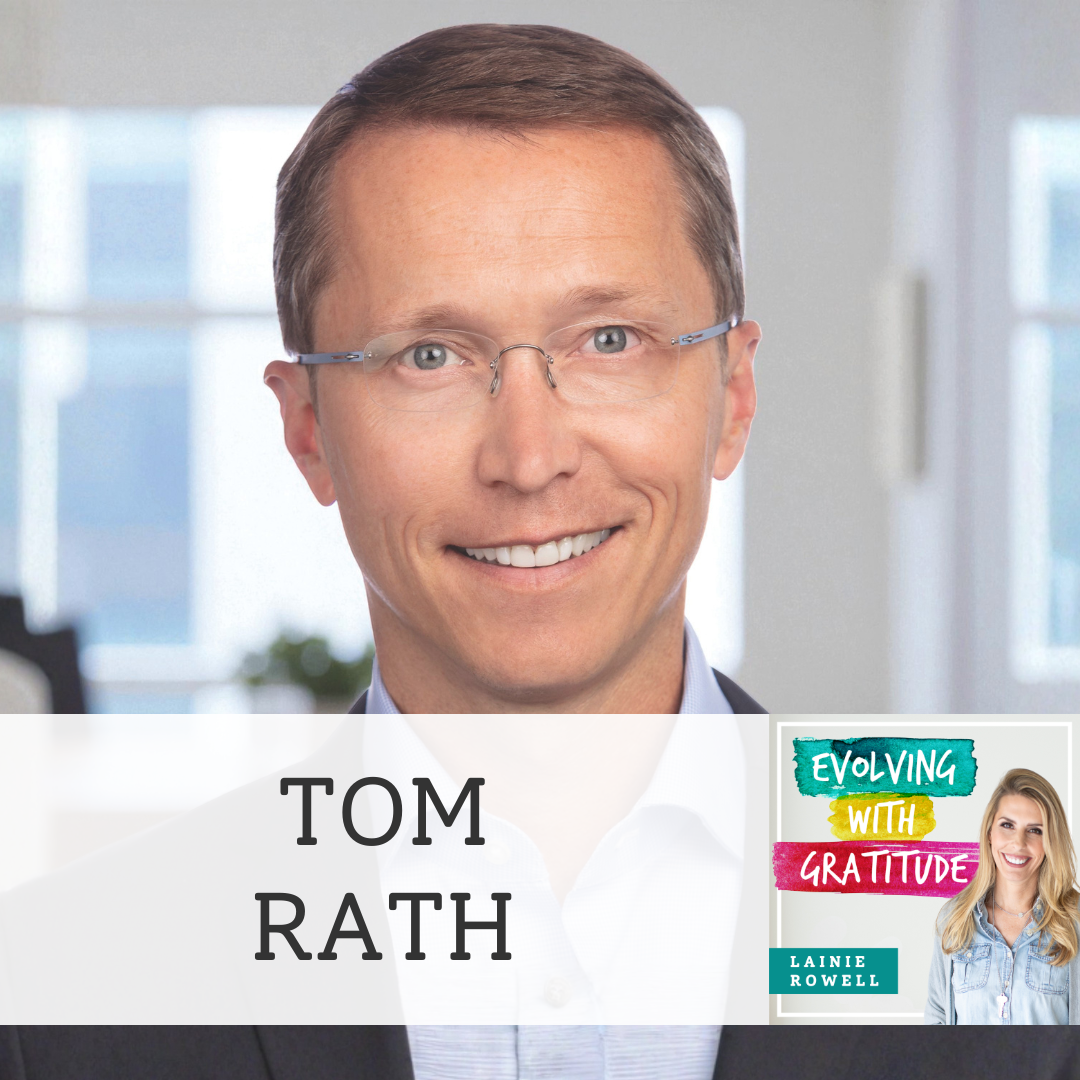
What if purpose isn’t something we find, but something we build? In this episode, bestselling author and researcher Tom Rath breaks down purpose in a way that feels practical, not pressuring. We talk about why “purpose” can feel loaded, how service and relationships create meaning, and simple ways to notice the impact we are already having, especially in hard seasons.
Thrive Global Article: Tom Rath on Turning Purpose Into Your Daily Superpower
Explore his books, tools, and work at TomRath.org and follow Tom on X.
About Our Guest:
Tom is an author and researcher who studies how careers impact health and wellbeing. He has written 12 books that have sold more than 10 million copies and made hundreds of appearances on global bestseller lists.
Tom's first book, How Full Is Your Bucket?, was an instant #1 New York Times bestseller. His book StrengthFinder 2.0 was listed as Amazon's top-selling non-fiction book of all time. Tom's other bestsellers include Strengths Based Leadership, Wellbeing, Eat Move Sleep, and Are You Fully Charged?
Tom is currently co-founder and CEO of CareerSight. He previously led Gallup's workplaces business and served as a Senior Scientist. Tom was also a Vice-Chair of the VHL cancer research organization. He is a graduate of the University of Michigan and the University of Pennsylvania, where he has also been a guest lecturer.
About Lainie:
Lainie Rowell is a bestselling author, award-winning educator, and TEDx speaker. She is dedicated to human flourishing, focusing on community building, emotional intelligence, and honoring what makes each of us unique and dynamic through learner-driven design. She earned her degree in psychology and went on to earn both a post-graduate credential and a master's degree in education. An international keynote speaker, Lainie has presented in 41 states as well as in dozens of countries across 4 continents. As a consultant, Lainie’s client list ranges from Fortune 100 companies like Apple and Google to school districts and independent schools. Learn more at linktr.ee/lainierowell.
Website - LainieRowell.com
Instagram - @LainieRowell
LinkedIn - @LainieRowell
X/Twitter - @LainieRowell
Evolving with Gratitude, the book is available here! And now, Bold Gratitude: The Journal Designed for You and by You is available too!
Both Evolving with Gratitude & Bold Gratitude have generous bulk pricing for purchasing 10+ copies delivered to the same location.🙌
Just fill out the forms linked above and someone will get back to you ASAP!
Transcript:
[00:00:00] Tom Rath: I realized three or five years ago that most people get all the way to the end of their life, and I would argue that 80% never even had a chance to see what they could have been best at in life.
[00:00:11] And so when I look at my kids who are 15 and 17 right now, and they're kind of getting to the point where they're gonna be forced to pick majors or jobs or whatever it might be, and I ask them about what jobs they're interested in my daughter said, well, maybe I could be a writer or maybe a teacher.
[00:00:27] That's what my wife does, and she's seen maybe two careers, three, four, and she would need to see 50 different careers just to see half of what's out there in the US workforce. So the odds of her ending up in the right career and finding what she might've been best at, if she's only seen three or four things are about zero.
[00:00:44] Right. So I think we've all gotta start asking questions much earlier on in life about how did I really end up here?
[00:00:51] Welcome to the Evolving With Gratitude podcast. I'm your host, Lainie Rowell. I'm an author and speaker, and I'm here to help you optimize happiness, [00:01:00] relationships, and performance.
[00:01:02] Hello, friend. Did you know that 90% of people feel anxious when they hear the word purpose? That's what the research told Tom Rath, and he thinks it's a sign. We've been thinking about it all wrong. Tom Rath researcher and bestselling author behind StrengthsFinder 2.0. And How Full is Your bucket? Has spent the better part of his career studying what makes people in workplaces thrive.
[00:01:26] His new book, What's the Point? Turning Purpose Into Your Daily Superpower, challenges some of the most deeply held assumptions about meaning, contribution, and how we spend our time. Enjoy Tom Rath.
[00:01:40] Lainie Rowell: Welcome Tom Rath.
[00:01:42] I am so excited for this conversation. I am familiar with your work and happy to be talking about your very latest book, What's the Point? For the people who are joining us in this conversation.
[00:01:53] Why this book? And I think your story is such an important part of it. You talk about it in the book, but for those who [00:02:00] haven't read the book yet, you know what life experiences really led you to What's the Point?
[00:02:06] Tom Rath: Yeah. You know, I've spent most of my career studying what leads to kind of successful workplaces, studied individual performance, personality management, leadership, and all these things.
[00:02:18] And at some point, and it seems like this is becoming a more urgent and important question right now, when there's so much uncertainty and automation and the like we really need to step back and say, why am I doing this and who does it serve? And you know, so I first started working on this book and thinking it's about career and purpose, to be really honest.
[00:02:38] And I spent three to five years on this. And then last summer I was at the beach and going through a bunch of research and reading, and I was kind of struggling with the title of the book and we were calling. Purpose Unlocked at the time, and I read a study showing that 90% of people, when they hear the word purpose, it actually gives them anxiety.
[00:02:57] So it it led me to step back and say, [00:03:00] wait. Purpose isn't something that should give anyone anxiety because it's really more about what we do every hour throughout the day than some grand thing that descends from the heavens on a sunny day that we have to go find over a decade, right? So that's why we kind of shifted the focus of it to say, every day and what you're doing, ask, what's the point?
[00:03:18] What's the point of this meeting? What's the point of this conversation? And when I think about my purpose as I've worked this through a little bit more. I mean, I, I'm finding huge purpose in sitting down with my kids at dinner each night and asking 'em really good questions and making sure none of our phones are out and genuinely listening to those answers.
[00:03:35] And it's, I think it's really in those moments that we kind of build purpose over time, and it occurs throughout the day. So what's been kind of reassuring to me personally as I got into this research is that purpose is actually easier and more practical than I would've guessed when I first started exploring.
[00:03:52] Lainie Rowell: Yeah. Well, is it fair to say that. That your career and the direction that [00:04:00] it has taken has been definitely shaped by early in your life where you were faced with more adversity than most people. And could you talk a little bit about that, about some of the struggles that you had early in your life where it kind of forced you to think about time and contribution and what not to postpone more than the average person.
[00:04:26] Tom Rath: Yeah, it's, it's a good question because it's a big part of what got me here is that when I was 16 years old, I was diagnosed with a very rare genetic syndrome called VHL that causes, uh, tumors to grow in my kidneys, my pancreas, my brain, my spine. I lost my left eye to cancer when I was 17 or 18 years old after several surgeries because of that, and that's how doctors discovered it.
[00:04:47] So. That did help to get me very focused early on around what I could do to make a difference in whatever shape of a lifetime I might have. Back then, the life [00:05:00] expectancy was 37 when I started reading things when I was in college. So I knew I had kind of a compressed timeframe to do things and. I think the one thing that it really did help me with and I benefited from was I realized that, you know, we all have limited time here on earth and so I tried to spend as much of my extra time as possible working on things that could continue to grow when I'm gone.
[00:05:25] Lainie Rowell: Mm-hmm.
[00:05:25] Tom Rath: And as I've interviewed people in all walks of life and, you know, ever since uh, the pandemic happened, I feel like we all kind of got a little taste of that and are thinking about what matters more. There's, there's a little bit of benefit to that, and when you start to ask that question, I mean, the things that you would put on a resume or how many followers you have, or your title, or how much money you make.
[00:05:50] None of that is really going to matter much, even by the time people get to our eulogy after we pass away, let alone 10, 20, 30 years after that. It's, [00:06:00] it's mostly about the direct people around you who you have a real powerful and meaningful impact on your friends, your family members, your colleagues, your customers, your loved ones, and then.
[00:06:10] Maybe you get to build something, a product, an application, a book, a business that can continue to grow for decades after you're gone. And so that's shaped a lot of my thinking for 20 or 30 years. And when you really get into what makes for a great career, I feel like the earlier in our life that we can all orient our daily work on what it does for others, the better off we do year by year.
[00:06:37] Lainie Rowell: I, I appreciate that connection too. And like when we think about the pandemic, the fragility of life really came, that was the shared experience of the pandemic. Mm-hmm. That in my lifetime we haven't seen. And so something that you were aware of from a very early age, just how fragile life is is something that we all collectively experienced [00:07:00] during the pandemic and to really put into focus like what are the things that we want to spend our days doing?
[00:07:07] And I appreciate that. Can you talk a little bit more about purpose, anxiety and the little "p" purpose that you talk about in the book?
[00:07:17] Tom Rath: Yeah. You know, it's, that's what was so interesting to me is, um. You know, you hear all these things, especially from a career standpoint early on about follow your passion and go through and figure out what your interests are and all those types of things.
[00:07:31] And I've realized that to some degree that's missing the point because really your gifts and your talents and your strengths and who you are. Don't make much of a difference until they meet the demand side of the equation in terms of what other people need, what your clients need, what your community needs, what the world needs.
[00:07:50] And so if we're able to do more of a thorough analysis and look around and say, what do the people around us need? And then [00:08:00] bring it back to what we can do each day. I think that's where you connect those moments with that little "p" purpose. It's not as intimidating and it's a lot more practical. And when you're able to say that I helped someone, let's say it's in a retail environment, who is struggling with a problem when they were trying to return an item or what, what, whatever it is.
[00:08:19] If it's a nurse in a hospital who really helped a patient that day and he acknowledges how it made a difference and how much that meant to the family. Then you come home, you have a little bit more energy, you're a little bit better parent, you're a little bit better spouse. You're a little bit better friend, and so what I've seen is that purpose is really built into those interactions throughout the day, but we don't do a great job of acknowledging that for ourselves, and most of us don't do enough of
[00:08:49] put enough effort into helping other people to see and realize that throughout the day as well. So I think we've gotta kind of bake that into our daily routine because, um, the subtitle [00:09:00] of the new book is, uh, Turning Purpose Into Your Daily Superpower. And I, I think it kind of brings down to the practical pavement level, these things about purpose being a big every 10 years.
[00:09:11] You have to find it. It's one thing. And also the superpower deal I would argue that both purpose and your superpowers are what you do that helps just one other human being today.
[00:09:21] Lainie Rowell: Hmm. Yeah. I love that the, the focus on serving others, but in the daily, it can have a huge impact, but just the kind of, the day to day that makes a huge difference over time. Is that fair to say?
[00:09:34] Tom Rath: Yeah, I think, I mean there's also, with all the automation and changes in jobs in the next five, 10 years, people are feeling nervous and unsure and a little bit less hopeful about things.
[00:09:46] And so being able to connect what you're doing regularly with that impact is gonna be even more important here soon.
[00:09:53] Lainie Rowell: Oh, that's a really interesting point. Do you wanna talk more about that? Because I think that is a very interesting [00:10:00] concept of what are the human things that will never be automated, like the just,
[00:10:08] Tom Rath: yeah.
[00:10:08] I mean, to your point, that might be one of the most base human needs to serve and to be of need and to do something that's useful for another person and the world might be different five, 10 years from now where we don't have to spend as much time doing some of the things that we might not want to do as much on a daily basis today, but we're still going to have to find those little breakthroughs to make a difference for a student or for a patient or for someone who you're helping to repair something in their house, whatever it might be.
[00:10:37] And so there we're get, I do think kind of an underlying common denominator will be those moments of connection and service just to another human being
[00:10:47] Lainie Rowell: and, and I guess just to be like optimistic, maybe overly so, but ideally we can leverage the tools so that we're, and I'm gonna use some of your language here, uh, maybe [00:11:00] less reactive and more initiation.
[00:11:03] Is that fair to say? Like, we're really,
[00:11:05] Tom Rath: I love yeah.
[00:11:06] Lainie Rowell: A little more thoughtful about what we put our time into.
[00:11:09] Tom Rath: Yeah. I love putting it that way because all of us have things that we spend anywhere from 20 to 90% of our day on that are pretty reactive, and it's paying bills, it's responding to emails, and we don't get to spend a, most of us don't get to spend a very high proportion of our time on things that really get us wound up and really make a difference for people.
[00:11:29] So if we can shift the distribution of that, even if it's less time per day, that might be a more enjoyable and meaningful workday, um, than spending as much time as we do on accounting and expense reports. And that's, for me, those are the things I struggle with.
[00:11:46] Lainie Rowell: Yeah, I mean for me time is like closet space.
[00:11:50] You're going to use up however much you have, so
[00:11:52] Tom Rath: I love that. Yes.
[00:11:53] Lainie Rowell: You have to be kind of careful, right? Like if you do get to automating stuff, uh, you know, what is the point of that [00:12:00] time? Mm-hmm. If you're not careful with it. Could we talk a little bit about time, because I did love that that was one of the themes in your book, and so can you talk a little bit about how you approach, like even just a day, like what, what do you do to think about how am I gonna spend the time today?
[00:12:19] Do you, or I don't know if you're a morning person, a night person, like do you have a priority list? What is your way of managing time? Just even a single day?
[00:12:29] Tom Rath: Yeah. You know, because my time's been so seemingly limited and kind of threatened over my lifetime, I've probably thought about that too much.
[00:12:37] Um, and so I, I am militant about doing everything possible to make sure I get at least seven or eight hours of sleep, because I know that if I'm not able to do that, I am going to be at 60, 70% of my capacity for the next 12 hours. Not just in terms of how much writing I can do or editing or whatever it might be, but I'm at 60% of my capacity at [00:13:00] being a good husband and being a good dad too when I don't get that one.
[00:13:03] So I, I kind of view that as the reset button on a computer or smartphone or video game or whatever, where I know I need to get that. And even if I have to budget 10 hours of a window when I'm traveling in order to get seven or eight hours, I make sure to do that so I can try and be my best so it starts with that foundation and then.
[00:13:22] I've tried to be pretty deliberate about being more active early in the morning, so I kind of get moving and get my mind and my body in gear and can be more thoughtful and energetic throughout the day. And then trying to do as much of my more creative work early on in the day and schedule my Zoom meetings with my colleagues and conversations in the afternoon when I'm, I'm kind of introverted to start with, so I'm a little more talkative and I've already gotten some things done, so I feel okay to have personal, meaningful conversations and so forth, and then to...
[00:13:52] I've learned from, I grew up around a lot of real hardworking adults who just had, who worked 300 day or kind of traveled 300 days a year, [00:14:00] worked 60 hour weeks. And so I've been more cognizant with my condition and threats to make sure I disconnect and spend a lot of time in the late afternoon evenings with my kids and family and get outdoors and do things.
[00:14:11] So, um, that's my distribution of a day and I'm pretty cautious about protecting times that are sacred, because I realize that time far more than money or anything else is the one thing that, as you put it, I mean, you can't buy more of it.
[00:14:28] Lainie Rowell: Yeah. Yeah. It is, it's a very precious resource and how you, how you spend it makes a big difference.
[00:14:33] Tom Rath: Oh. I mean, it's just watching so many people waste so much time drives me crazy, to be honest, because I, I mean, it's the, one of the, one of the reasons I wrote this book is because I realized three or five years ago that most people get all the way to the end of their life, and I would argue that 80% never even had a chance to see what they could have been best at in life.
[00:14:57] And so when I look at my kids who are, [00:15:00] uh, 15 and 17 right now, and they uh, they're kind of getting to the point where they're gonna be forced to pick majors or jobs or whatever it might be, and I ask them about what jobs they're interested in my daughter said, well, maybe I could be a writer or maybe a teacher.
[00:15:15] That's what my wife does. Um, and she's seen maybe two careers, three, four, and she would need to see 50 different careers just to see half of what's out there in the US workforce. So the odds of her ending up in, in the right career and finding what she might've been best at, if she's only seen three or four things are about zero.
[00:15:33] Right. So I think we've all gotta start asking questions much earlier on in life about how did I really end up here? Most of the time it's what mommy did, it's what daddy did. It's uh, you might've seen one mentor or someone, it might be what the social and financial expectations are. You might've just fallen into the default of your socioeconomic class and where you grew up.
[00:15:54] Um, and I, I'll admit that's exactly what happened to me. That's what happened to 95% of people I interviewed. And [00:16:00] we kind of make up these stories, so we feel like it was all free will, but when I ask people to trace back, it just never was. So I, I think we've gotta challenge some of these assumptions about how we can be of the best use to society much earlier on in life.
[00:16:15] Lainie Rowell: I don't think I had ever thought, I mean, I know that to some extent that yes, it is not uncommon for people to follow in their parents' footsteps, and I won't be able to rattle off the statistics in the book but the way that you illustrated that so clearly that we have really kind of just narrowed our potential path by the, just the circumstances that we're in, the family and the people that we're around.
[00:16:40] So. I really appreciate the idea of thinking much more broadly about what we might do with our lives and. Yeah, I don't know. I don't, I don't even have a question for that. I just, I just wanted to share that I actually really appreciated that point in the book because I do think, and to some extent, [00:17:00] you know, I, I work in education and we ask kids to, you know, do these pathways, career technical education pathways, which I think are, are so good.
[00:17:09] But I think that there's also, we have to be careful that the message is not like you're gonna choose this and you're gonna do this your whole life. Mm-hmm. The message is we're just going to give you some, we're gonna make sure you have some skills that when you leave, you could go on to college. You could also go on to a job that is for highly skilled high pay.
[00:17:28] Um, but the, there's still a lot that could happen, like, and should really.
[00:17:33] Tom Rath: Yeah. You know, I spent my, I started my career working in, um, kind of higher education. It was the, it was really first year, uh, freshman orientation programs we were putting together. And it was trying to help kids in their first year of college think about what they should be doing.
[00:17:48] Um, so they'd be more likely to stay at a two or four year institution. And one of the things I really learned from that is I think in late high school, early college, at the one point in time [00:18:00] when we should be broadening the aperture and field of view of people about all the careers that are out there and what their hidden superpowers might be and what they might not have seen growing up and where they could contribute to the world
[00:18:10] we're forcing narrowing at that exact moment and going in the opposite direction. So I, I've been working on that kind of, on a different pathway here in the last few years. But I, I mean, if, just for the sake of my own kids, if nothing else, I do want to try and help young people to think broader, somewhere between, especially between the ages of 15 and 19 before they're forced to try and narrow in for a longer period of time.
[00:18:33] Because I mean, like we were talking about in this new world of work, people are gonna be moving around a lot. So to think that you need to stay in one narrow channel for 20, 30, 40 years, I mean, I think that's gonna be a relic of the past.
[00:18:46] Lainie Rowell: Yeah. And I wanna be super clear, like I love Pathways. I think it's really great to give kids this, this opportunity, but I just like.
[00:18:55] I hope, I hope I was clear, like I, I agree with you. Like I don't think we wanna [00:19:00] narrow, this is just one thing you're doing right now that could lead to this, but it's not what you're gonna probably do your whole life. And I think this, this generation that's in school right now is gonna see that much more so than, than we did.
[00:19:13] Tom Rath: Yeah.
[00:19:15] Lainie Rowell: I couldn't help, but as I'm reading this book, also make the connection to your previous work, like StrengthsFinder. And how would you, if someone asked you to make that connection, I guess that's me right now, how did this work, follow that work?
[00:19:30] Tom Rath: Yeah, I think a lot of my early work, which was driven by work that I did with my, uh, grandfather Don Clifton, who he was a psychologist working on a lot of the original strengths research and, um, I went to work with him after college 'cause I went to work with family business like we were talking about.
[00:19:46] Um, and we were working on building the, an online version of all the strengths interviews he'd done that turned into StrengthsFinder. And in the middle of that, um, he was diagnosed with stage four gastroesophageal cancer and knew he only had a few months to live. [00:20:00] So he asked me to write a book with him and I was a horrible writer.
[00:20:03] I was kind of a math and tech guy. Um, but he said, can we do this in two months? And that book turned into How Full is Your Bucket? That really caught on and is used in classrooms all over now and so forth. And so that brought me into a whole new world there. But a lot of his work, that's where a lot of it started was based on how can you do deep diagnostics with someone to help them find some of their natural threads of talent or places where they have a lot of potential and things they could be great at in life.
[00:20:31] And so that was our first iteration of putting that together, um, in a lot of that original strengths finder work. And then as I've gotten deeper into that, I think that and a lot of tools out there have made a pretty good contribution to helping people all over the world to be more self-aware and to understand themselves a little bit better, which it's invaluable because so many people don't start out with much of that knowledge.
[00:20:56] And really what the StrengthsFinder works done, in my opinion that's [00:21:00] been most impressive, is it gives people a common language to talk together in teams and families and groups about what they do really well. And so that's, I kind of between How Full is Your Bucket? And some of that StrengthsFinder work.
[00:21:11] Those are two of the things that it's been most fun to be involved with in all of my career. Um, but I think the one extension that people need to make after they understand their own talents is how do those apply to the purposes they can serve in the world. Because if I, if someone walks into my office here interviewing for a job and all they do is want to tell me about themselves and their strengths, and then the next person walks in and tells me about all the opportunities they see and how they could apply who they are to what these customers need or these communities need
[00:21:46] that's just a night and day different conversation. Right. So I, I think the. A big part of the future will be starting with what other people need, and then tying back to who you are and how your talents connect between point A and [00:22:00] point B essentially. So this is, I, I hope that a lot of this recent work can help people to apply their natural talents, their personality, and who they are to some of those missions and purposes.
[00:22:12] Lainie Rowell: There's, there's a theme already in this conversation, which is like, contribution, serving others. And you know, the question I guess that, that keeps coming up is like, who benefits from my work? Is that fair to say? Mm-hmm.
[00:22:26] Tom Rath: Yes.
[00:22:26] Lainie Rowell: And so can you tell us a little bit more about why that is such an important question and something that you hope people take away from the book?
[00:22:36] Tom Rath: Yeah. You know, in some of the previous work, a couple of the last books I've done, I spent quite a bit of time with, uh, K 12 teachers and educators with the kids' books we've done. And, um, I also, with one with the book, eat, move, sleep, I got pulled into the group of hospice and home care nurses and did a lot of work with that group.
[00:22:52] And both, I would argue from my kind of, just kind of a heart standpoint that those are two of the most admirable, amazing groups of people [00:23:00] I've ever had time to work with, interview and spend time with. And I would assume that in those lines of work, the inherent meaning and purpose is just obvious every day, and you don't really need to do much.
[00:23:14] And the exact opposite was true. So you, I mean, you get more burnout among nurses and hospice and home care professionals than you do in about any other profession. Uh, they're poor at taking care of themselves, higher rates of diabetes and obesity and the like. Um. And I was with my wife and one of her best friends who's in town this weekend who's a a K 12 teacher, and she was talking about how burned out she was with all the administrative hassles and politics and things going on in school.
[00:23:41] And I've given her a copy of the new book and she was saying, you know, that's what I'm not doing a good job of is just thinking about and connecting with the difference my daily work makes with the kids in my classroom every day. And it sounds so obvious, but yet none of us do a good enough job of
[00:23:56] making those connections ourselves. And I think [00:24:00] especially for people who are managers or leaders or mentors, I've learned, or sometimes people ask me, what's the most valuable strength out there? And the easy answer for me is that the most valuable strength and thing that you can do for any other human being, a loved one, someone you manage or care for, is to spot what they're doing that makes a difference
[00:24:19] and to call it out and to. Tell them that in great detail and to remind them of that on a day-to-day basis, because I mean, we all need that motivation almost every day just to kinda keep moving through and seeing if we can do a little bit more on a daily basis.
[00:24:35] Lainie Rowell: Absolutely. And I, I, I also wanna make a connection for contribution, how you talk about in the book, moving from consumer to creator, and I think that we're not talking about necessarily the creator sense of like Instagram reels. Right. Although I make my share. Mm-hmm. Um, but you know, what does that shift look [00:25:00] like? Why is that important to shift from consumer to creator?
[00:25:04] Tom Rath: You know, I almost didn't get into that in the book because I, uh, I was concerned that some people don't identify as creators and that that's not, that might not be a realistic thing to put out there for everyone, um, to be honest.
[00:25:19] But then the more I thought about it, I do think that there's kind of a continuum, you could call it creating versus consuming, or you could call it maybe a better way would've been initiating instead of just responding. But I, I think there's a, a, an enormous epidemic kind of rolling down the hill here where, uh, a friend and former teacher of mine, uh, Jonathan Haidt has done all the work on students and screen time and all that.
[00:25:47] That's made a huge difference in the country, and I think that's gonna trickle into the workforce and our lives and our mental health in the next 10 or 20 years where we're, it's not healthy or acceptable [00:26:00] or Okay in my opinion, to spend a majority of your time just consuming and responding and kind of doom scrolling and it's, I think it's gonna be a huge challenge for all of us to.
[00:26:11] Try and wrestle as much time as we can outta that mindset on a day-to-day basis to contribute to something that's building and that's initiating and that's contributing, and that's creating. And it's, it's for all of us. I mean, for me it's probably five times more difficult to do than it was five or 10 years ago.
[00:26:29] Um, but at the same time, for every hour that I can spend creating and building things now. It essentially gives me a bigger headstart on a lot of other people out there because so many people are just sitting back and kind of letting life happen to 'em. Hmm. And I, I think when you let life happen to you, I, I, my background's in kind of psychology and positive psychology and, um, when you let life happen to you, that's kind of the state that Marty Seligman talked about originally called [00:27:00] Learned Helplessness.
[00:27:00] Right. Um, so. I think we've all gotta wrestle to get out of that no matter what our profession is. So it's, it's a great question because that might be one of the most difficult balancing acts of the next decade for people when they think about their work and what they do each day.
[00:27:16] Lainie Rowell: Yeah. I think about when I go on social media and I fail.
[00:27:23] A lot. But my goal when I go on social media, to go back to a point you made earlier about like acknowledging others, as I think about, uh, and, and, um, Catherine Price was on here. She did the latest book with Jonathan Haidt. Okay. And she is very good about talking about like, why are you grabbing for that device?
[00:27:42] Like, what is it? And so I've, I've tried to get better about training myself. Like if I'm getting on that device, it should be to share something, to learn something, or to show Gratitude. Like those are the three things that I try to do because otherwise I'm just grabbing that device and. I'm just gonna spend the time [00:28:00] scrolling and reacting.
[00:28:01] Like, and I've never spent any decent amount of time scrolling, put the device down and go, I feel amazing. So good about myself. Right. So I think that does all
[00:28:10] Tom Rath: kind of, I, that's a great way to think about it though, is, I mean, if, when you can draw those connections between.
[00:28:15] When you go out and have a great conversation or dinner or go for a walk with a colleague or a friend or a loved one, and how you really do feel good after that versus the after effect of an hour spent consuming like that. Right. So it's, I think the more people can train themselves to have that approach each day.
[00:28:31] That's a good way for me to think about it.
[00:28:34] Lainie Rowell: Well, like I said, I don't win it every time, but I'm trying. That's great. So I, I appreciate that. I appreciate that you did put the consumer to create or in there. And I think it's, you know, not that we're obviously creating all the time, but I do think we have to challenge ourselves to shift and to move into that space because we all have things that are of great.
[00:28:51] Tom Rath: Yeah. And you don't have to go write a book or an article. You can just go have a really good conversation with someone you care about for a half hour.
[00:28:56] Lainie Rowell: Yeah.
[00:28:56] Tom Rath: I mean, that's, that's, that's creating and that's a meaningful thing to do. Yeah. [00:29:00]
[00:29:00] Lainie Rowell: Yeah. I love that. Okay. I'm gonna come back to time because I'm kind of a time nerd.
[00:29:06] I don't know if it's because I turned 50, but I just love talking about time and so you're someone I wanna talk about it with. Um, could we talk about time compression? How should that change the way we think about impact time compression?
[00:29:25] Tom Rath: Yeah. You know, that was an interesting kinda late part of the book research that I was working on where, um.
[00:29:32] Like you, I, I spend too much time thinking about time, and I just turned 50 in December myself. And it really helped me to kind of do a retrospective over the month that followed about, um, what I've been doing, how I have been spending my time, and how I hope to spend my time over the next decades of my life or however long I get out of this thing.
[00:29:50] And I, I think the time compression piece is important because there have been. Uh, trips I've taken with my family where [00:30:00] we, we go away for a week and kind of are disconnected and have great time with the people I love most where I would trade that week for an entire year. And there have been moments where I've been so dialed in working on a book
[00:30:13] I'm really wound up about that. I get more done in a week than I would in three or four months. And, um, so there. You know, when we have moments like when a birth of a child or, like the, the time I mentioned before where my grandpa asked me if I'd write a book with him in two months
[00:30:28] 'cause he knew his time was so limited and I mean, I can still picture like the hotel we were in when he said that and every day. And it's, I mean, it's almost like it, he studied great athletes in this kind of elongated time with basketball and hockey players where like everything slows down. And I think we all have that.
[00:30:44] It's not just reserved for rare athletes where there are hours that are more important than weeks, and there are days that are more important than years. And once you acknowledge that and realize that, I think it's a lot [00:31:00] easier to say, Hey, I'm going to shut everything off and spend the next five hours trying to create something that seems like a much bigger and more ambitious goal.
[00:31:10] Or I'm going to finally take the trip with my family and disconnect and tell my colleagues that, and not respond to people about my day-to-day work stuff and actually enjoy the trip that I spend a lot of money on and plan for and do that. So I think we've gotta be, get better about concentrating and maximizing time so that it does have that compounding effect.
[00:31:31] Mm,
[00:31:32] Lainie Rowell: Again I don't know if it's 'cause I'm getting older, but I've just become such a nerd about time and how sometimes it just feels like it's lost and wasted. And so what can I do to, to try and maximize it? Use it in the best way.
[00:31:44] Tom Rath: Yeah. And I, the other thing I'm realizing I get is I think time is wealth.
[00:31:47] I mean, if you said to me what's important for your wealth, I would put time ahead of money.
[00:31:52] Lainie Rowell: Mm-hmm.
[00:31:52] Tom Rath: And I in a hot minute. Right. So I think that's, people need to think about it that way. Where, I mean, it's. It's the [00:32:00] one thing that's kind of limited and you can't create more of it so if you, you need to figure out how to maximize it on a day, week, month, year basis.
[00:32:08] Lainie Rowell: Yeah. I think Sahil Bloom was on the podcast and he mentioned
[00:32:12] Tom Rath: Yeah,
[00:32:12] Lainie Rowell: the example of like, Warren Buffet. Would, would he trade all of his money for your youth? He absolutely would. Right? Like, what is it?
[00:32:19] Tom Rath: Right.
[00:32:20] Lainie Rowell: What good is it to be the wealthiest man? And running out of time. So
[00:32:25] Tom Rath: yeah,
[00:32:25] Lainie Rowell: a little dark, but, uh, okay.
[00:32:27] I know I need to let you go here pretty soon, what I'd love to know is what is something that you haven't had a chance to share yet here, or it's so important you
[00:32:38] wanna share it again, like it's the thing that you would shout from rooftops, like the most important point that you think people need to take away from It can be this specifically that's most recent book or just your work in general?
[00:32:51] Tom Rath: Yeah. I think the one thing that um, has, it's kept me up at night for 10 or 20 years is that I think there's [00:33:00] an unbelievable mismatch, like a bad arbitrage between the
[00:33:06] population and the workforce out here on one side and the labor force out here on the other side. And right now, the way that we match people to jobs in the modern workforce, I would argue, based on all the research and math that I've done, is no better than chance if you were to just flip coins for everyone when they graduate from high school, right?
[00:33:26] Lainie Rowell: Mm-hmm.
[00:33:26] Tom Rath: And so we're doing such a poor job with that, that I, I'm. I kind of optimistic and hopeful that as AI emerges that we'll be able to make better connections and assessments and permutations to help prevent the, um, my grandfather used to always tell me a story, and a friend of mine, Susan Cain, featured it in the book Quiet, which was that old kind of cobbler in the general story where, um, uh, a guy gets to sees St.
[00:33:57] Peter at the gates at the end of life and says, um, who's that [00:34:00] cobbler over there? And he said. He would've been the greatest general of all time. Right. And that, that's always kind of haunted me, that story because I think mathematically it's true. And that I, I live across the street from this huge sprawling cemetery here in Arlington, and I think I, I kind of walk through there for reflection sometimes, and I, I'm confident that at least 80% of people there never even got to see or try or do the things that they could have been great at in this world.
[00:34:25] So I've spent the last four or five years sending teams out all over to interview, uh, really passionate and engaged veterinarians and pilots and plumbers and doctors to kind of say, here's what a day in the life looks like in this job. The good parts, the stressful parts, the enjoyable parts, the boring parts, the meaningful parts to kind of help people at any age
[00:34:49] to potentially get a glimpse and see new things that they could do if they need to start a new job, or if they need to figure out what they might be able to do. Um, and then to kind of [00:35:00] prioritize that to get a bit broader view. Because I, I think the one thing I'd like to try and correct in the next
[00:35:06] decade here is that right now we're all looking through that little pinhole of what mommy or daddy did or family expectations or societal, and if we could broaden that so people can see even 20 or 30%, then maybe there's a 50% chance you see what you could have been great at at the end of your career.
[00:35:21] Right? I mean, I feel like my superpowers probably would've been in medicine or finance, to be honest, and I ended up doing something else and maybe it's too late now, but I think the more we can be open to that and think like that, even in the middle of our careers when we're 50 years old. The better off we'll be when we're 70 or 80, if that makes sense.
[00:35:38] Lainie Rowell: Yeah. Well, I'm personally happy that your superpowers are here with us in this way. Um, and I really appreciate, one of the phrases I wrote down when you were speaking is widen the aperture. And I think that's something that we can all do. And, and this will be the Pollyanna in me, but you know, there will be, there will be things happening with ai.
[00:35:57] There already is. And so what do you, [00:36:00] what are you gonna do? When, when things change, right? Like that's your right, that's your opportunity to widen the aperture and look around and say, well, what else could I be doing? So.
[00:36:10] Tom Rath: It's an enormous opportunity to do more of what you're best at and reach more people if you master it and get good at it.
[00:36:15] I've, I've never seen anything in my career and I started my, I started, uh, work outta college in 1998, 99, when the internet was just blown up and this is 10 times more exciting to me and gives me the opportunity so much more that it's just kinda like being a kid again. So I think when, when people can take what they're passionate about and what they know and think about how to do more and reach more people using a new technology like this, this happens once every generation or so.
[00:36:44] And, um, I've been encouraging everybody I know to just get, get on top of it and get ahead of it and have fun with it.
[00:36:49] Lainie Rowell: Have fun with it. Yeah. Yeah. I love that. Well, okay Tom, I know I need to let you go, but before I do, could you just tell us what's the best way for people to stay in touch with you website, [00:37:00] socials?
[00:37:00] Like where do you like to put stuff out there the most often?
[00:37:03] Tom Rath: Yeah, I, TomRath.org is the best hub for all the books and tools and, um, business stuff we've got going on. And, uh, I'll also be more active on, uh, x dot com's, my primary network.
[00:37:14] Lainie Rowell: Okay. Can I ask you, I can cut this out if you don't want this in there.
[00:37:17] What is the relationship with Gallup? Because the, your books, some of them are Gallup books, right?
[00:37:23] Tom Rath: Right. Yeah. So I started my, my grandfather, um. Don Cliff and I mentioned as a psychologist, he started a company doing these kind of talent-based interviews, like around 1969, 1970. Um, and that company really grew into kind of a big business, trying to get the right people and the right jobs, doing these person to person interviews.
[00:37:43] And that company he built called Selection Research, uh, purchase Gallup in. I think it was like 1983. And so, and that was, so that was a family business when I was a little kid. There were, I mean, they kind of like outta out of his basement and stuff. And it was my mom, my dad and uncle, and my grandpa building that.
[00:37:59] So, [00:38:00] um, I've been very close to that and it's kind of been the, it was a family business growing up. And um, when I got outta college, my grandpa had been kind of a father figure and mentor to me, and so I went to work with him right outta college. He'd encouraged me to do that. And those were probably. The most fun and, uh, meaningful years of my career that are getting to work with him right before he passed away.
[00:38:20] Uh, he was kind of in his seventies there. So that, like, that, that's been a blast and it's been neat to see. I'm, I, I don't work at Gallup full time anymore, but it's been fun to see the big impact of all that work over time.
[00:38:31] Lainie Rowell: I was talking with one of my friends and she's in, she's an HR person, and she said, uh, StrengthsFinder 2.0 is their Bible, like that is like the most important, like that is what they're constantly pulling from, constantly referencing. So just thought I'd pass that on.
[00:38:49] Tom Rath: That's cool. Yeah, it's like my, my grandpa and I used to, uh, when we were building the first iterations of Strengths Finder, um, I was kind of the IT project manager on it and.
[00:38:59] [00:39:00] We, we'd get a report every day and we'd always, we'd always print out this piece of paper and run it back and forth from the printer about, oh, a hundred people have learned their strengths now, and then it was a thousand. And he always say, you know, someday, maybe it could be a million when this was before he passed away.
[00:39:12] And so to see that at like 35 million or whatever it's at, that's, it's really cool. It's been, that's, that's really rewarding.
[00:39:18] Lainie Rowell: Well, appreciate you and all that you're putting out there, and so excited for the latest book, What's the Point to get out there? And so we're recording before it's even on the shelves, but you can of course pre-order, so go grab your copy. Alright, well Tom, thank you so much for your time and thank you all for listening.
[00:39:38] Tom Rath: Thanks so much.
[00:39:38] If you're grateful for this episode, please be sure to subscribe today. And if you're feeling really thankful, please submit a review and share with others so they know the value. One last thing, please connect on social media using the hashtag EvolvingWithGratitude to share your gratitude stories. [00:40:00]